
Why are carpet beetles on the windowsill?
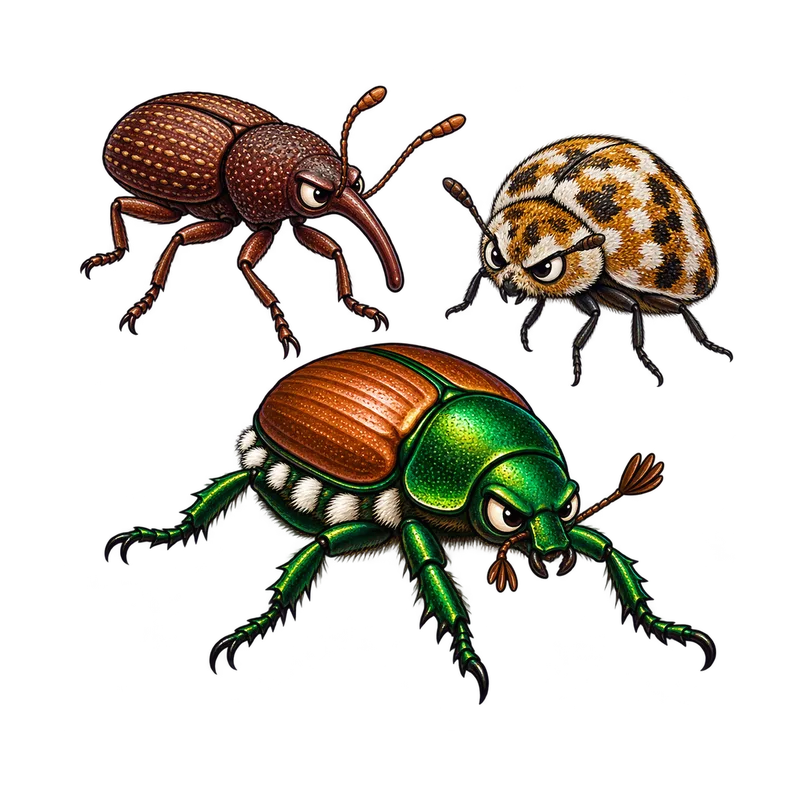
Adult carpet beetles gather on the windowsill because fully grown adults are naturally drawn to bright sunlight as they try to get outside to feed on flower pollen. These window-bound adults measure between 2 and 3 millimeters long and are harmless, but finding them is a warning sign that hidden larvae may be nearby.
What is actually going on
You are walking through the house on a bright Saturday morning, holding a cup of coffee, when you glance at the living room window and notice a small cluster of tiny, speckled bugs crawling along the glass. They look a bit like miniature ladybugs dressed in patterned tweed jackets. You brush them away, wondering how on earth they got in, only to find a few more sitting in the exact same spot the next day. It feels baffling, especially if your windows are tightly shut and your home is generally clean.
The short answer is that adult carpet beetles are drawn to bright sunlight. While their crawling offspring prefer the dark, hidden depths of your home, the fully grown adults undergo a behavioral shift that makes them seek out light. They fly toward windows in an attempt to get outside, where they naturally feed on flower pollen and search for mates. Because window glass stops them dead in their tracks, they end up trapped on your sill, pacing back and forth in the sunshine.
Those beetles usually arrive in your living space in one of two ways. They either emerged indoors from a hidden breeding ground inside your walls, heating ducts, or stored woolens, or they flew in from the garden through an open door or window weeks prior and simply wandered toward the light. It is also possible they hitched a ride inside on a bouquet of cut flowers from the yard.
One detail that often surprises people is that these window-bound adults are entirely harmless to your belongings. They do not eat clothes, carpets, or pantry goods. Their only goal is finding a way outside to eat nectar and reproduce. However, finding them on your windowsill is a classic warning sign that a generation of larvae might be living quietly somewhere out of sight.
How to tell for sure
Adult carpet beetles usually measure between 2 and 3 millimeters long, roughly the size of a sesame seed. Depending on the exact species, they are either round and covered in a scaly mix of white, yellow, and brown zigzag patterns, or they are solid, shiny black with brownish legs. If you look closely with a magnifying glass, the patterned ones look almost like tiny, dusty rugs themselves.
The destructive stage looks entirely different. The larvae are small, hairy, and carrot-shaped, often earning the nickname woolly bears. They usually range from 4 to 5 millimeters long and move sluggishly away from light. If you suspect you have them, you generally will not see the larvae crawling out in the open during the day. Instead, you usually find their physical calling cards in dark corners, such as tiny, salt-grain-sized fecal pellets, empty translucent skin husks from molting, and irregular holes chewed through animal fibers like wool, fur, or leather.
People often mix up these bugs with clothes moths, but the clues they leave behind tell different stories. Moths spin silky webbing and cases, whereas carpet beetles drop brittle, fuzzy cast skins. Another frequent confusion involves skin irritation. Carpet beetles do not bite or sting people, but their microscopic, barbed hairs can break off and trigger an itchy rash that folks often blame on bed bugs.
What usually comes next
The single most practical choice you can make right now is to stop spending all your energy squishing adult beetles on the window and instead start hunting for the source. Swatting the adults on the sill feels productive, but it does nothing to stop the hidden larvae from chewing through your favorite wool sweater or antique rug in the back of a dark closet.
Your next move should be a careful inspection of the dark, undisturbed spots closest to where you spotted the beetles. Pull out the heavy furniture, lift the edges of rugs near baseboards, and check the deep corners of closets where woolens, feathers, or leather goods sit unused. If you find fuzzy larvae or shed skins, vacuum them up thoroughly and empty the vacuum canister outside immediately. For washable items showing damage, run them through a hot wash cycle, or pack delicate woolens into a plastic bag and place them in a deep freezer for a week to kill off any remaining life stages.
When to get help
There are times when a do-it-yourself cleanup falls short, and you need to hand the problem over to a pro. If you keep finding adult beetles on your windowsills month after month despite deep cleaning, or if you suspect the breeding ground is hidden inside inaccessible wall voids, subfloors, or built-in heating ducts, it is time to call a licensed pest management professional. The same goes for high-value antique rugs, taxidermy collections, or heirloom garments, which demand specialized conservation treatments rather than standard household cleaning methods.
On the health side, if you or a family member develop persistent skin rashes, severe itching, or respiratory irritation from the airborne hairs of the larvae, skip the home remedies and consult a primary care clinician or a dermatologist. If you discover an active bird nest or beehive tucked into your attic eaves or chimney flue serving as the outdoor source of the beetles, keep in mind that local wildlife protection laws may prohibit you from disturbing certain nesting birds until the breeding season finishes entirely.