
What do carpet beetle larvae look like?
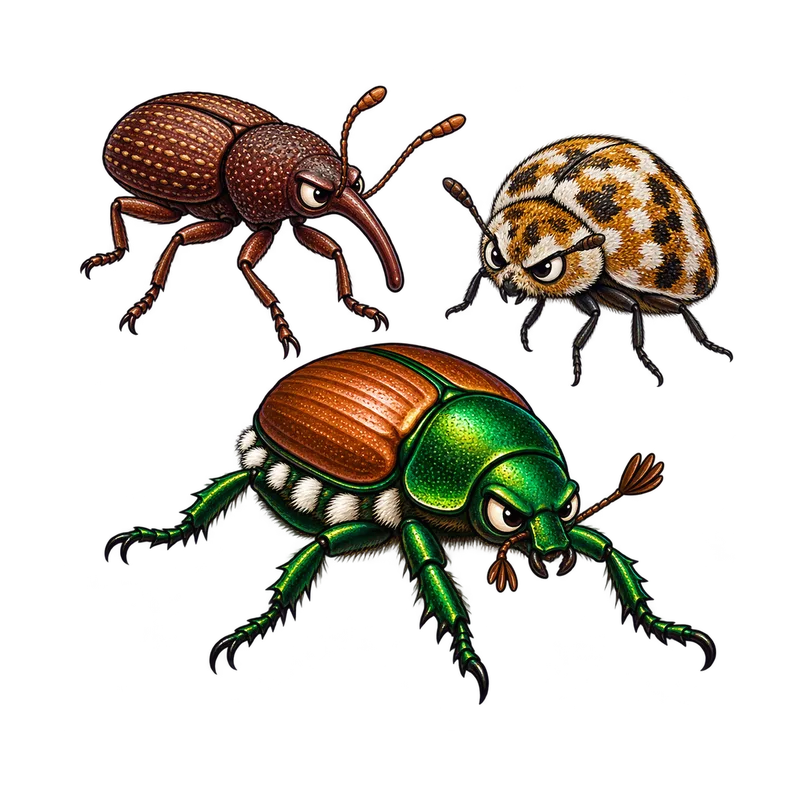
Carpet beetle larvae are small, slow-moving grubs ranging from one-sixteenth to a half inch in length. They appear as tiny, fuzzy caterpillars with alternating bands or as slender, carrot-shaped brown bugs ending in a distinct tuft of bristles.
What is actually going on
You pull a wool sweater from the back of the closet for the first chilly day of autumn, and instead of staying cozy, you notice a few ragged holes near the hem. Before you blame moths, you flip the garment over and spot a tiny, bristly, brownish bug crawling along the fold. That is usually your introduction to carpet beetle larvae. They are small, slow-moving grubs ranging from roughly one-sixteenth to a half inch in length, and they have an appetite for animal fibers that can quietly ruin your favorite sweaters, blankets, and rugs.
Unlike many household bugs that scurry away the moment you flip on a light, these creatures prefer the dark, undisturbed corners of your home. You will usually find them tucked deep inside wool carpets, along baseboards where pet hair collects, or inside old storage boxes. They come in a couple of common shapes depending on the exact species. Some look like tiny, fuzzy caterpillars or miniature woolly bears with alternating light and dark bands, while others resemble slender, carrot-shaped brown bugs ending in a distinct tuft of bristles.
People often wonder how something so small manages to do so much damage to heavy textiles. The secret lies in their biology, as these larvae possess specialized digestive enzymes capable of breaking down tough animal proteins like keratin and wool. Adult carpet beetles are entirely harmless indoors because they feed on outdoor flower pollen and nectar, meaning all the fabric destruction happens courtesy of these crawling immature grubs.
Another detail that surprises many homeowners is that these pests never spin silken webbing or protective cocoons. If you pull up a ruined rug and find masses of fine silk threads, you are looking at clothes moths rather than carpet beetles. Instead of silk, carpet beetles leave behind tiny, salt-sized fecal pellets and empty, translucent brown skins that look like hollow insect suits.
How to tell for sure
Spotting one of these critters with the naked eye is entirely possible once they reach maturity, but you usually need to look closely at their physical traits to confirm what you are dealing with. If the creature is around a quarter-inch long, stout, and banded with brownish stripes, it is usually a varied carpet beetle larva. If it is longer, slender, and ends in a brushy tail of hair, you are usually looking at a black carpet beetle.
You can verify the infestation by checking for the telltale debris they leave behind. They shed their outer skins multiple times as they grow, and these empty amber husks tend to pile up in dark baseboard cracks, closet corners, and air vents. If you take a magnifying glass to the area, you will also spot tiny, hard frass pellets that often match the color of the textile being eaten.
A common point of confusion involves mysterious skin irritation. If you wake up with itchy bumps and assume you have been bitten by the larvae, you can usually relax on that specific worry because carpet beetles do not possess biting mouthparts. However, the microscopic barbed hairs covering their bodies can easily trigger allergic reactions or contact dermatitis when they drift into the air or rub against your skin, which feels remarkably like insect bites.
What usually comes next
Once you confirm that you are dealing with carpet beetle larvae rather than another pest, your primary decision usually comes down to choosing between targeted physical removal and professional remediation based on how far the insects have spread. If you find a single localized population tucked inside a box of winter clothes or along one section of a baseboard, you can usually handle the situation yourself through rigorous vacuuming, hot laundering, and sealing susceptible items in airtight containers.
The real dividing line is accessibility and scale. If the larvae are confined to a washable wool blanket or a few garments, throwing those items into a hot wash cycle or a household freezer set below zero degrees Fahrenheit for several days will stop the cycle. On the other hand, if you find larvae burrowing deep within wall-to-wall carpeting across multiple rooms or hiding inside inaccessible heating ducts, simple domestic cleaning routines usually fall short of clearing the entire population.
When to get help
There are moments when managing carpet beetles moves past the scope of a weekend DIY project and requires outside intervention. If you experience persistent skin rashes, severe allergic hives, or respiratory irritation that does not resolve after cleaning, you should consult a medical clinician or dermatologist to properly evaluate the symptoms.
You should also involve a licensed pest control professional when the infestation extends across large structural areas, such as extensive wall-to-wall carpeting, heavy structural wool insulation, or complex HVAC ductwork that you cannot reach with a standard vacuum. Similarly, if the pests threaten high-value assets like historic museum textiles, antique tapestries, or valuable taxidermy collections, commercial heat treatment or professional vault fumigation is usually required to prevent permanent destruction.
Finally, keep in mind that carpet beetles often originate from abandoned bird, bee, or wasp nests tucked into eaves, attics, or chimneys. If you plan to clear out these outdoor reservoirs, make sure to check local wildlife protection regulations regarding migratory birds before removing any nesting material.