
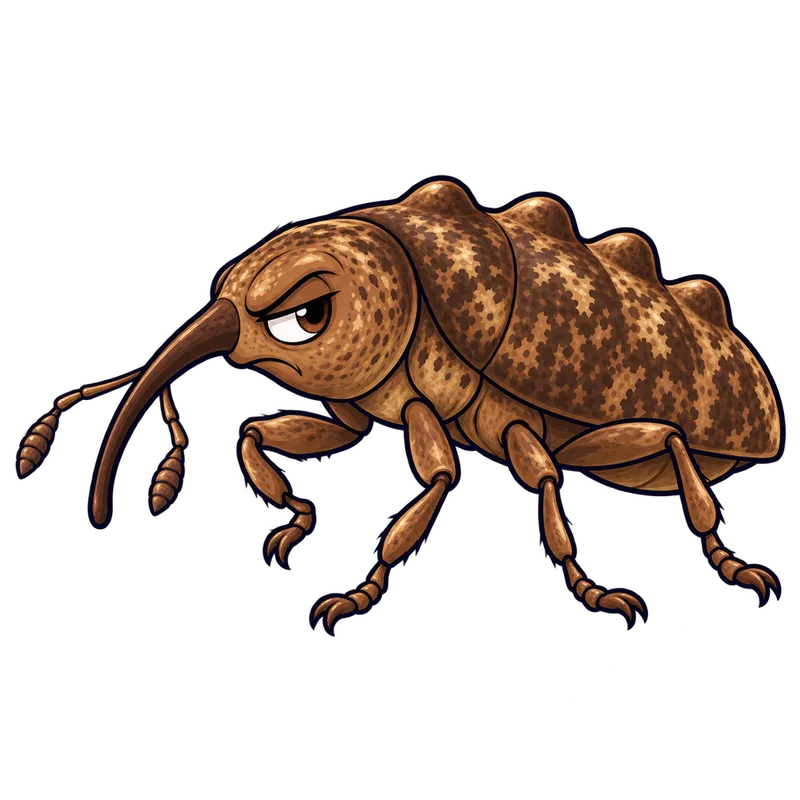
Plum curculio
Conotrachelus nenuphar
- Size
- Not established
- Color
- Not established
- Habitat
- Eastern North America, overwintering in perimeter woods and hedgerows
- Diet
- Apple, peach, nectarine, cherry, plum, and prune
- Life cycle
- One generation annually in northern regions, occasionally two in the south
The signature of this insect is not the beetle itself, but the vandalism it leaves behind. When an adult female makes a deposit, she carves a distinct crescent-shaped incision into the skin of a developing fruit. It looks precisely like someone pressed a tiny fingernail or a miniature crescent moon into the side of a young apple or peach, leaving a small hole at one end of the carved arc where the egg rests. Gardeners holding a young, thumb-sized fruit can spot this mark without magnification once the injury sets and leaves a dimpled depression. The internal resident is equally telling. If you slice open a prematurely fallen fruit, you will find a grayish-white grub featuring a distinct brown head capsule and no legs at all. That absence of legs is the key to telling it apart from caterpillar pests, which carry true jointed legs and crawl with purpose.
Habitat & behaviour
These beetles do not spend the winter lounging in the middle of your orchard or garden. They hunker down in the leaf litter of perimeter woods, overgrown hedgerows, and brush lots, waiting for the weather to turn. Once spring arrives and blossom petals fall from the trees, rising temperatures wake them up. When daytime and evening readings tick past 60 degrees Fahrenheit, the adults begin their march or flight, invading the orchard edges first. You will rarely find an even distribution of damage across all your trees at the start; the outer rows take the brunt of the assault because that is where the border crossers land. Early-blooming fruit varieties that size up rapidly after petal fall act like a dinner bell, drawing in females eager to cut their crescent marks into the fastest-growing skin available. As dusk falls, warm evenings exceeding 70 degrees Fahrenheit trigger peak aggregation along those orchard borders.
Visual variations
The insect changes form completely as it goes from a hidden egg to a soil dweller and finally to a winged adult. The process begins with that tiny egg tucked away safely inside the crescent-shaped cut on the fruit skin. Once it hatches, out crawls a plump, legless grub with a brownish head that eats its way straight toward the center of the fruit. When the larva finishes feeding, it drops out of the fruit and down into the soil to transform, popping back up as an adult beetle later in the summer. In northern areas, this entire sequence happens just once a year, but warmer regions further south can squeeze in a second generation before cold weather returns.
Why it matters
An unchecked infestation can ruin an entire harvest, leaving orchards or backyard trees with heavy fruit loss, deep scars, and deformed fruit that drops long before it is ripe. The fruit reacts to the egg-laying injury by growing into hard, knobby shapes that no one wants to eat. Finding those signature crescent cuts on your harvest tells you right away that the pest is at work. The real problem is not the fruit that stays on the branch, since those eggs rarely survive, but the fruit that falls to the ground where the grubs can burrow into the soil safely. Raking up and disposing of those fallen fruits stops the cycle in its tracks, keeping the next wave of beetles from making it out of the dirt.
Similar species
 Emerald ash borerAgrilus planipennis
 Asian longhorned beetleAnoplophora glabripennis
 Common furniture beetleAnobium punctatum
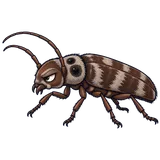 Old house borerHylotrupes bajulus
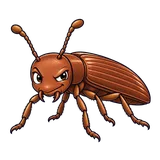 Powderpost beetlesSubfamily Lyctinae
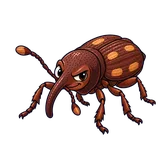 Rice weevilSitophilus oryzae