
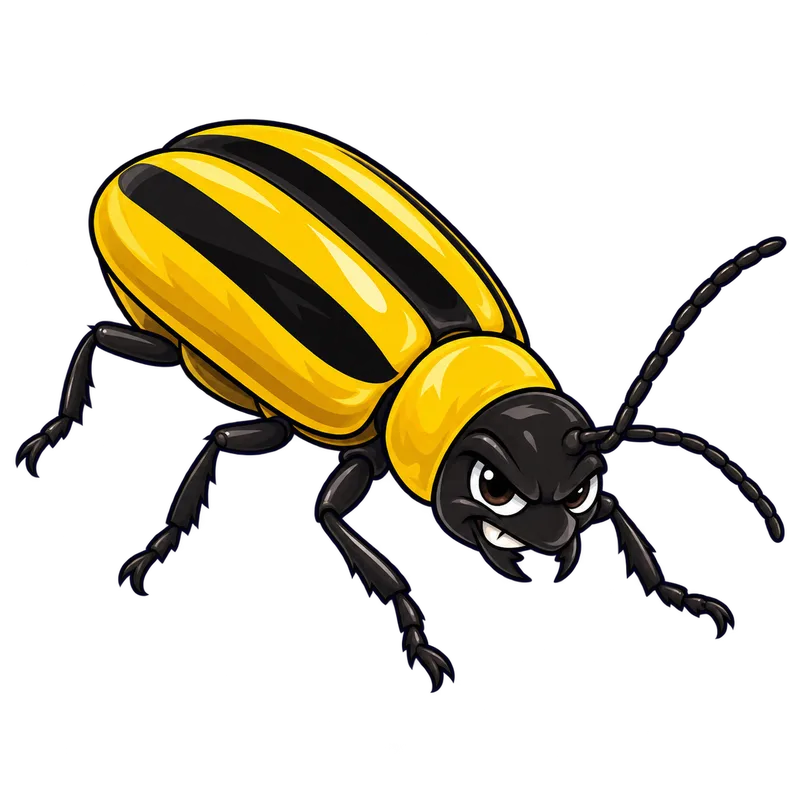
Striped cucumber beetle
Acalymma vittatum
- Size
- Not established
- Color
- Yellow to cream with black stripes
- Habitat
- Cucurbit crops and gardens
- Diet
- Cucurbits, beans, corn, peanuts, potatoes
- Life cycle
- Overwintering adults, spring emergence, soil pupation
The striped cucumber beetle is a specialized leaf beetle scientifically known as Acalymma vittatum, belonging to the family Chrysomelidae within the order Coleoptera, and you will usually find it directly on the leaves and stems of garden cucurbits. If you are crouching in the vegetable patch trying to figure out what is chewing up your young melon plants, you are looking for an insect featuring distinct longitudinal black stripes running the full length of its yellow or cream-colored wing covers, accompanied by a dark head and dark legs. While exact millimeter or inch measurements for adult length are not specified in standard agricultural documentation, the beetle is small enough to require a close look at the foliage, though the striking black-and-yellow striping is easily visible to the naked eye under normal daylight without needing magnification.
Identity
The diagnostic feature of this species is its pattern of continuous longitudinal black stripes running down the yellow to cream-colored hardened wing covers, known scientifically as elytra. This visual key immediately separates it from the spotted cucumber beetle, a related insect in the same family that feeds on similar plants but displays black spots across its yellow-green wing covers instead of stripes. You might also confuse it with the Colorado potato beetle, which also has stripes, but that species possesses an orange head and pronotum with irregular black markings, ten straight black stripes across a much more rounded and convex body, and a preference for nightshades like potatoes and tomatoes rather than cucumbers. Another common point of confusion is the squash bug, a true bug with a dark brown to black shield-shaped body. While squash bugs do not look like striped beetles, their feeding causes vine wilting that growers frequently mistake for the bacterial wilt disease spread by cucumber beetles.
Habitat & behaviour
This insect is strictly an agricultural and garden plant pest, meaning it has no interest in entering your home, does not bite or sting humans or pets, and has no recorded toxicity to domestic animals. Its primary host plants belong to the plant family Cucurbitaceae, which includes cucumbers, cantaloupes, winter squash, pumpkins, gourds, summer squash, and watermelons, while secondary agricultural hosts include beans, corn, peanuts, and potatoes. Pest pressure begins in the spring when overwintering adults emerge from the surrounding environment to feed on available host foliage, continuing active feeding throughout the summer growing season. Gardeners often try to dodge this initial spring wave by delaying planting until after June 15th, subject to local seasonal adjustments. To keep adults off young plants without chemicals, physical barriers like floating row covers can be placed over cucurbits from the time of planting until bloom to exclude the beetles while retaining soil moisture, though these covers must be removed at flowering to allow insect pollination.
Visual variations
Like many beetles, this species goes through a complete physical transformation, changing entirely across four distinct stages from egg to larva, pupa, and finally adult. Once they reach that final winged form, those bold black-and-white wing covers hide a functional set of flight wings, letting them hop between plants whenever they need a new meal or a mate. You will not find any obvious differences between males and females from a quick glance, and since these insects live solitary lives, there are no complex colony castes to worry about. Dig into the soil, however, and the larval stage looks nothing like the adults chomping on your leaves above ground. The grubs are pale, slender, worm-like creatures with darker, hardened head capsules. The pupal stage stays hidden down there in the earth too, showing unattached developing legs and wing pads before the insect finally emerges as a winged beetle.
Why it matters
Finding these beetles in your patch spells trouble for your harvest, since the adults chew straight through leaves, stems, and young fruit, while the pale grubs live underground feeding on roots and stem bases. Direct chewing is only part of the problem, because these insects also spread the bacterial pathogen that causes fatal wilt in cucurbits, turning healthy vines into dried-up debris in no time. The action threshold for stopping disease is remarkably low at just 1 beetle per 100 feet of row, which is a far cry from the tolerance of 1 beetle per 10 feet when you are just looking at chewed-up seedlings. If you decide to treat the patch, organic options like Azadirachtin, Kaolin clay, Neem oil, and Pyrethrins are available. Larger operations that need synthetic treatments or systemic products like Imidacloprid, which requires a 21-day wait before harvest, need to work with certified pesticide applicators and follow local regulations strictly. Other options like Carbaryl need a 3-day wait, while Permethrin can be applied right up until harvest day with a 0-day interval.
Similar species
 Colorado potato beetleLeptinotarsa decemlineata
 Plum curculioConotrachelus nenuphar
 Emerald ash borerAgrilus planipennis
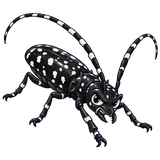 Asian longhorned beetleAnoplophora glabripennis
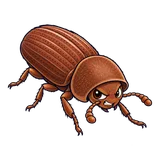 Common furniture beetleAnobium punctatum
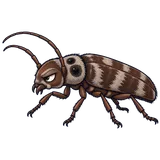 Old house borerHylotrupes bajulus