Silverleaf whitefly
Bemisia tabaci
- Size
- Not established
- Color
- Pale white wings and body
- Habitat
- Agricultural crops, ornamentals, and greenhouses
- Diet
- Plant sap from leaf tissue
- Life cycle
- Egg to nymph, puparia, and winged adult
The silverleaf whitefly is a tiny sap-sucking insect that makes its presence known through an unmistakable habit. When you brush against an infested tomato, potato, or ornamental azalea, a miniature snowstorm of pale white adults flutters into the air.
Identity
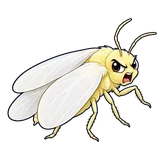
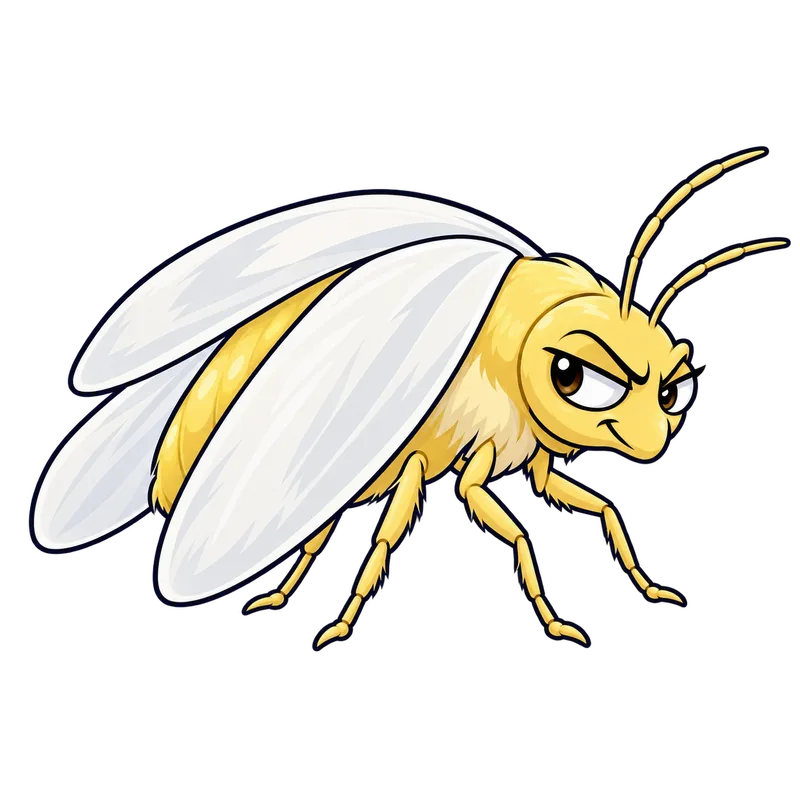
While exact body measurements for the adults are not stated in standard extension guides, they share size categories with other small, soft-bodied plant pests. Their defining field mark is how they rest. They hold their two pairs of powdery white wings roof-like or tent-like over a pale body, making them look like miniature, dusty moths rather than true flies.
If you flip the leaves over, you will not find flying insects. Instead, you will see immobile, flat, oval, translucent nymphs stuck firmly to the lower epidermis. These immature stages look remarkably like tiny scale insects or even fungal spots, which often leads to misidentification. Sometimes you might spot bright yellow spots directly on top of these nymphs. That is not a plant disease, but rather a beneficial fungus doing its job of dispatching the pests for you.
Habitat & behaviour
Outdoors, these insects build heavy populations during the warm spring and summer months, moving freely between commercial crops, home gardens, and nearby weed reservoirs that act as overwintering hotels. When winter sets in outdoors, populations drop or shift into protected environments.
Indoors is an entirely different story. In a heated greenhouse or on a lonely potted begonia sitting on a bright kitchen windowsill, the calendar essentially stops. Reproduction and activity continue year-round without a seasonal break. They are frequently brought into homes entirely by accident, hitching a ride on new nursery stock bought on a whim.
Their entire existence revolves around plants with broad, tender leaves. They avoid woody, non-host items entirely, which is why biosecurity checks on fresh citrus fruit find no association with the pest. Once they settle on a suitable host, they stay put on the lower leaf surfaces, tapping into the vascular system to feed on plant sap while avoiding harsh direct sunlight and heavy rain.
Visual variations
The life cycle of the silverleaf whitefly moves through distinct physical forms that look nothing alike. Adults are winged, highly mobile, and quick to take flight when disturbed. They possess soft, pale bodies covered in a fine, powdery wax that gives them their signature chalky appearance.
The immature stages, known as nymphs and puparia, are entirely wingless and stay in one place. They lack the familiar insect silhouette, appearing instead as pale, yellowish, flattened discs glued to the underside of the leaf. They spend their early weeks anchored in place, feeding continuously before transforming.
Unlike some other insects, adult whiteflies do not display obvious physical differences between sexes that an amateur could spot without high magnification. Their biology relies instead on sheer numbers and overlapping generations, where eggs, crawling nymphs, stationary pupae, and flying adults all occupy the same leaf at the exact same time.
Why it matters
A heavy infestation turns a thriving garden plant into a sticky, stunted mess. Both adults and nymphs pierce plant tissue to extract sap, which drains the host of vitality and causes the leaves to pucker, yellow, and curl. As they feed, they excrete a sugary liquid called honeydew. This clear waste coats the upper surfaces of lower leaves, quickly attracting black sooty mold that blocks out sunlight and halts photosynthesis.
Beyond cosmetic damage and reduced yields, these whiteflies can act as vectors for plant viruses, making early detection vital for vegetable gardeners growing solanaceous crops like eggplants and tomatoes.
If you are dealing with an indoor houseplant, mornings are your best friend. Because the adults are sluggish in the cool early hours, you can gently vacuum them off the foliage before they warm up and scatter. If you choose to use chemical controls on edible crops, you must follow product labels and observe mandatory wait times before harvest to ensure safety. For severe outbreaks or suspected resistance in commercial settings, consulting a local extension agent or licensed crop advisor is the most reliable path forward.