
How can you tell whiteflies from other tiny white insects on a plant?
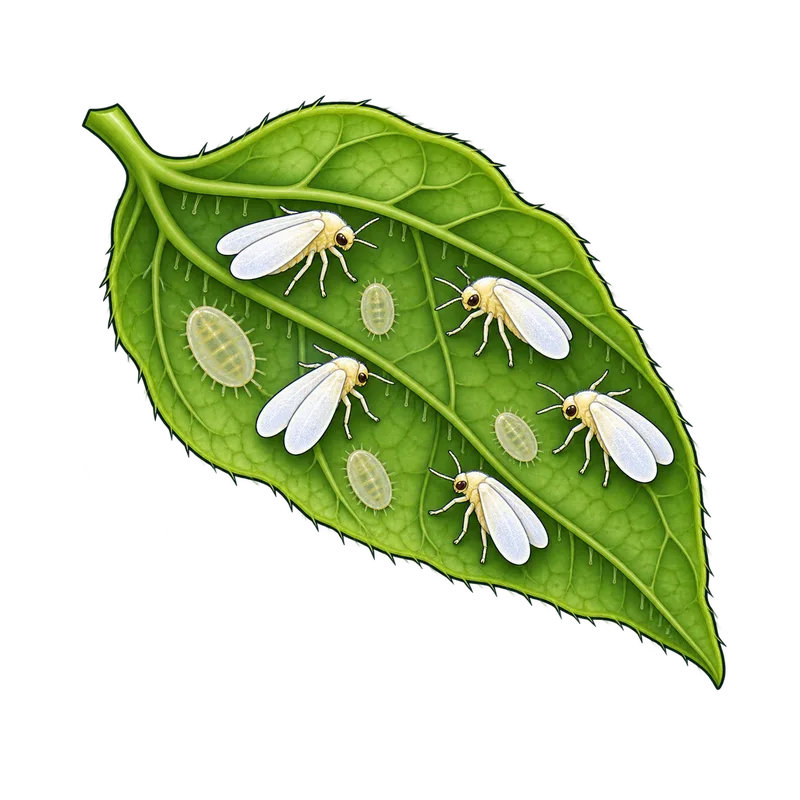
You can tell adult whiteflies from other tiny white insects by giving the plant stem a gentle tap. Adult whiteflies will instantly flutter up into a small white cloud and then settle back down, while lookalikes like mealybugs, scale insects, and woolly aphids stay put.
What is actually going on
You walk up to your favorite parlor palm or greenhouse tomato, brush the leaves aside to check the soil, and suddenly a tiny, ghostly white cloud erupts into the air, dances around for a second, and settles right back down where it was. It looks like a miniature snowstorm happening on a single branch. Naturally, you wonder if you are dealing with whiteflies or something else entirely, since plenty of plant pests wear white, and they all seem to enjoy the exact same green leaves.
The main event here usually comes down to behavior. Adult whiteflies are tiny, moth-like insects that cannot resist taking flight the moment their host plant is disturbed. If you give a stem a gentle tap and nothing flies, but you notice white fluffy bits tucked tightly into the leaf joints, you are likely looking at mealybugs instead. If you see white dust that smears like flour when you swipe it with a finger, you might just be dealing with powdery mildew rather than an insect at all.
Telling them apart matters because treating a stationary, waxy pest with a method designed for flying adults wastes time and leaves the plant unprotected. A quick look at what is moving, what is staying put, and where the creatures hang out will save you from spraying the wrong thing.
How to tell for sure
Start with the tap test because it is the easiest giveaway. Gently brush your hand against the underside of a suspect leaf. If a cloud of tiny, powdery white insects flutters up and then lands again, you usually have adult whiteflies.
When they stay put, you need a closer look, preferably with a ten times hand lens. Whitefly babies, called nymphs, do not fly at all. They are flat, oval, and glued securely to the undersides of leaves, looking a bit like tiny translucent scales.
Here is how the common lookalikes stack up under closer inspection:
- Mealybugs: These look like small bits of cotton wool tucked into leaf axils and stem crevices. They are sluggish or completely stationary, and they never fly up in a white cloud.
- Scale crawlers: Young scale insects are tiny and pale when they first hatch, but once they settle on a stem or vein to feed, they lose their legs and hunker down under a hard or soft waxy cover. They stay fixed in place permanently.
- Woolly aphids: These creatures produce white, waxy, cotton-like masses, but they usually cluster around pruning scars, bark wounds, or root crowns. If you see papery white flakes that look hollow and empty, those are just aphid cast skins, which are empty exoskeletons left behind as the insects grow.
- Thrips: These are slender, fast-crawling insects that can be pale or yellowish. They possess fringed wings, but they crawl or hop rather than forming a powdery white swarm, and their feeding leaves behind silvery scars peppered with tiny black dots.
- Spider mites: These tiny eight-legged arachnids do not have wings. They spin fine silk webbing across the undersides of leaves and cause yellow stippling on the foliage.
What usually comes next
Once you confirm you are dealing with whiteflies instead of scale insects or fungal spots, you still have to look at the whole life cycle. Since the adults fly away while the immobile nymphs stay anchored under the leaves, any control method needs to address both stages. Treating only the flying adults leaves a fresh generation of nymphs waiting underneath to take their place.
For a modest indoor infestation, a physical approach works well before reaching for any bottle. Vacuuming adult whiteflies in the early morning when they are sluggish in the cool air can knock down numbers fast. Follow that by wiping down the leaf undersides with a damp cloth or a cotton swab dipped in rubbing alcohol if you spot stray mealybugs or aphids mixed into the crowd.
If you decide to use an insecticidal soap, horticultural oil, or neem oil, check the product label for the proper dilution and application rules. Always apply these contact sprays directly to the undersides of the leaves where the insects actually live, and avoid spraying plants in direct, intense sunlight or when temperatures climb above ninety degrees to prevent burning the foliage.
When to get help
Sometimes a plant is so heavily damaged, covered in sticky honeydew, or overrun by black sooty mold that do-it-yourself efforts cannot turn the tide. If your houseplants or garden vegetables display severe yellowing, stunted growth, or curling leaves, but a hand lens reveals no obvious pests, the problem might be a plant disease or an elusive organism that requires expert eyes.
In that kind of situation, take a fresh sample of the affected plant and bring it to a local university extension office or a plant diagnostic clinic. They can examine the tissue under proper lab equipment and give you an exact identification.
If you suspect a regulated quarantine pest, or if you are managing a large commercial greenhouse or extensive landscape where commercial application equipment and specialized licensing are required, hand the job over to a certified professional. For any accidental pesticide exposure, severe skin reactions, or concerns about toxicity to pets and family members, contact a physician or poison control center right away.