
Why are whiteflies appearing on tomato plants?
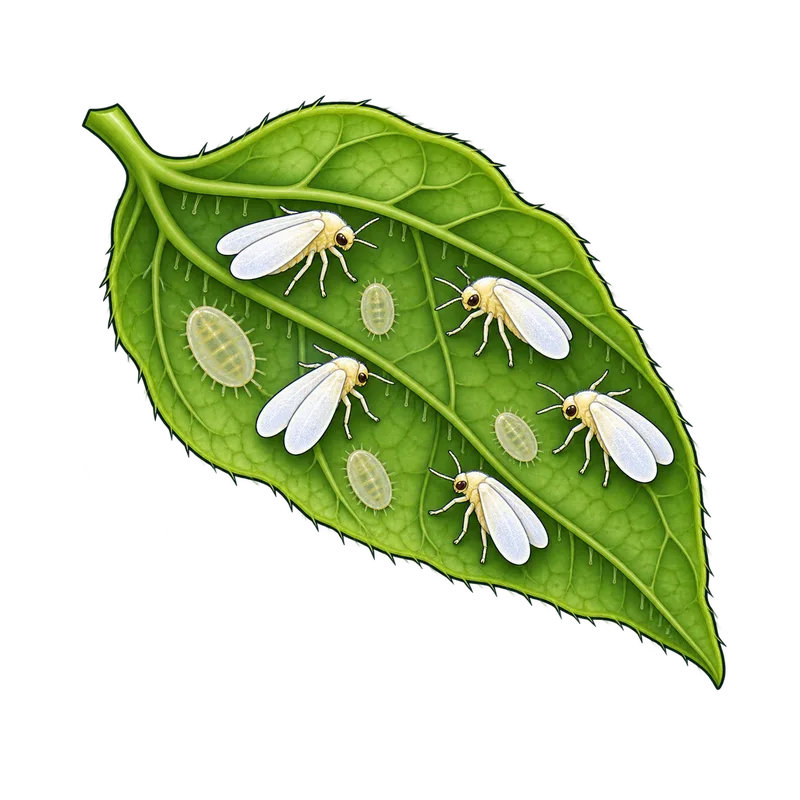
Whiteflies appear on tomato plants because these warm weather crops offer a steady supply of tender, nutrient rich sap. Adult pests fly in from neighboring plots and head straight for the shaded undersides of the leaves. Populations can explode quickly in sheltered spots or during hot, dry stretches of summer.
What is actually going on
You step out to water your garden in the morning, brush past the tomato plants, and suddenly a tiny cloud of white dust lifts into the air. It looks like someone shook flour off the leaves, but within a few seconds, the little specks settle right back down onto the green growth. That is your first clue that whiteflies have moved in, likely hitching a ride on a recent nursery purchase or drifting over from some neglected weeds at the edge of the yard.
Whiteflies show up on tomato plants because these warm-weather crops offer a steady supply of tender, nutrient-rich sap. Adult whiteflies are strong enough fliers to find your garden from neighboring plots, and once they land, they head straight for the shaded undersides of the leaves. That is where the females lay their eggs, and that is where the trouble really starts.
Instead of moving around like caterpillars or beetles, the newly hatched nymphs anchor themselves to one spot on the leaf and start drinking. They consume far more plant sap than they can actually digest, and they pump the excess out as a clear, sticky liquid called honeydew. Think of it like leaving a bottle of pancake syrup open on a warm kitchen counter. It creates a tacky, glossy mess that drips down the stems and coats lower foliage, eventually turning black as an opportunistic fungus called sooty mold moves in to feed on the sugar.
Why do populations seem to explode out of nowhere? In sheltered spots like greenhouses or during hot, dry stretches of summer, their life cycle speeds right up. Without a good rainstorm or a brisk wind to knock them down, a small group of arriving adults turns into a massive colony in no time.
How to tell for sure
Confirmation usually comes down to a quick inspection with a magnifying glass or at least a close look at the plant parts you normally ignore. Adults are tiny, winged insects that resemble miniature moths, usually measuring less than an eighth of an inch long. When you touch a tomato stem, they flutter up in that characteristic snowy cloud.
The immature stages look completely different and are easy to misidentify if you do not know what to look for. The nymphs are pale, flat, and oval-shaped, resembling tiny scales glued tightly to the lower surface of the leaf. They do not crawl around, so they look more like a plant feature or a fungal growth than an insect.
You will also want to check for signs of biological activity that can mimic a plant disease. During cool, rainy stretches, a beneficial fungus can infect whitefly nymphs, leaving them looking like tiny fried eggs with yellow or orange centers. Gardeners often panic and think their tomatoes have contracted a strange blight, but those speckled spots are actually a sign that nature is doing the pest control for you. If you spot tiny circular holes in those scale-like bodies or notice they have turned black, parasitoid wasps have already laid eggs inside them.
What usually comes next
Once you confirm what you are dealing with, your next move depends entirely on how badly the plants are overrun. A handful of adults resting on the foliage does not mean you need to scramble for chemical weapons, but a dense colony plastering the lower leaves calls for a prompt response before your tomato harvest stalls out completely.
Physical removal gives you a solid, chemical-free place to start. Hanging yellow sticky cards right at the canopy level will catch plenty of the flying adults, or you can head out in the early morning when the chill makes the insects sluggish and gently suck them off the leaves with a handheld vacuum. Just be sure to empty that vacuum bag into a sealed plastic bag and drop it in the freezer for a full day before tossing it in the trash.
When those manual tricks are not enough and you need to apply a treatment, the specific product and timing become crucial. If you lean toward organic choices like insecticidal soap, horticultural oil, or neem oil, you can spray right up until harvest day without worrying about a waiting period. Remember that these contact sprays only work if the liquid physically touches the pest, which means you have to crouch down, point the nozzle upward, and drench the shady undersides of the leaves.
If you decide to use a systemic product that moves through the plant tissues to protect it from within, you must follow the legally required waiting period before picking any tomatoes. That kind of treatment demands a strict gap between the spray date and your first bite, alongside strict warnings to protect visiting bees while the plants are in bloom. Always read the product label from top to bottom, since the law requires you to follow those instructions to the letter.
When to get help
Most backyard gardeners can handle a typical whitefly flare-up with steady attention, yellow traps, and careful soap applications. Even so, certain situations call for stepping away and letting professionals handle the workload.
If you suspect you are dealing with an unusual or regulated pest instead of the usual garden variety, or if the infestation has overrun a massive commercial or high-value planting governed by strict agricultural rules, reach out to your local extension office or state department of agriculture. They can examine the insects and confirm the exact species for you.
As for your health, if you or anyone helping in the garden suffers an accidental chemical splash, a bad skin reaction, or swallows any pesticide by mistake, forget about the plants for a moment. Call your local poison control center or head to urgent care immediately, and bring the product container along so the medical staff knows precisely which active ingredients they are treating.