
How do you get rid of whiteflies outdoors?
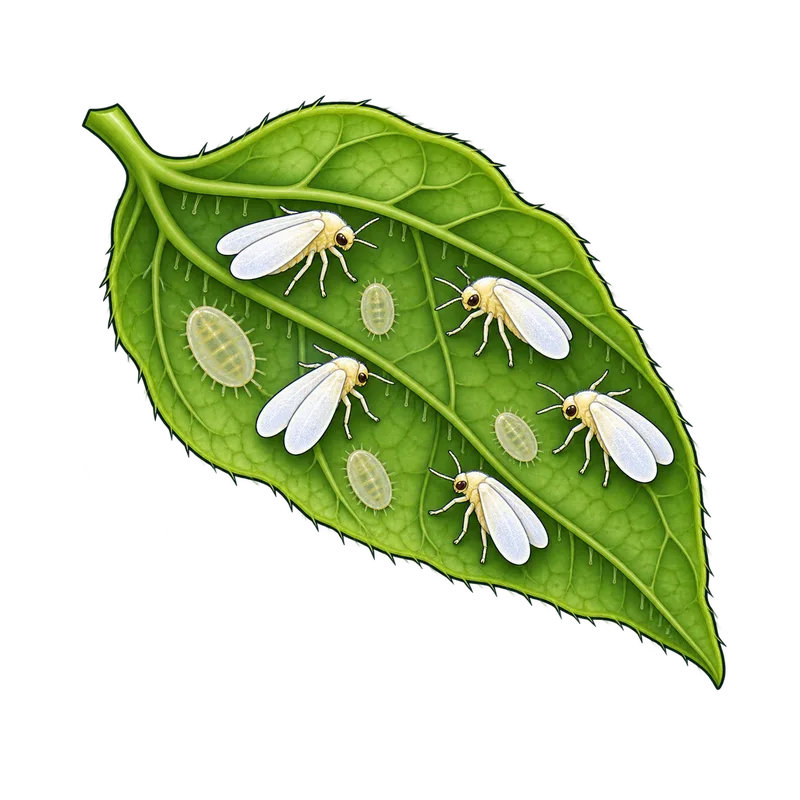
Yes, you can usually get outdoor whiteflies under control by using layers instead of one spray. Control depends on removing the worst leaves, targeting the undersides where flat pale nymphs sit, and repeating soap or oil sprays every seven to ten days without harming beneficial insects.
What is actually going on
You step out before breakfast to see whether the tomatoes have finally stopped sulking, brush one leaf with the back of your hand, and the plant lets out a little white sigh. For half a second it looks like flour dust hanging in the sun. Then the specks settle back onto the leaves as if you imagined the whole thing. You did not. That is the classic outdoor whitefly moment, and the short answer is yes, you can usually get them under control outside, but not with one heroic blast from a spray bottle.
The useful way to think about it is layers, not magic. Confirm the pest first, because winged aphids and thrips can also puff up when you disturb a plant and they are not handled the same way. Then remove the worst leaves, knock down some of the flying adults, treat the undersides of the leaves where the young stages sit, and stop wrecking the lady beetles, lacewings and tiny parasitic wasps that already eat whiteflies without sending you an invoice. Skip one layer and the problem often reloads, because eggs are not impressed by contact sprays and a fresh generation can hatch while you are admiring your work.
The part people misread is the cloud itself. Those powdery white adults are obvious, annoying and mobile, which makes them feel like the whole enemy. They are not. The heavier damage comes from the nymphs, tiny flat pale ovals stuck to the undersides of leaves. They do not chase you, they do not flutter, they just sit there drinking sap. While feeding, they excrete honeydew, a sticky sugary liquid that makes leaves feel tacky. That sugar is also why a black sooty-looking fungus can show up later. The black film is not the insect and not exactly a plant disease either. It is mold growing on the leftovers, and it can shade the leaf and add insult to injury.
So if your real question is, “Why did my one big spray fail?” the answer is usually boring: you hit the adults you could see, missed the nymphs under the leaves, did nothing about eggs, and possibly cooked the beneficial insects that would have helped finish the job. Outdoors, persistence beats drama.
How to tell for sure
Do not identify this from the white puff alone. That puff is a clue, not a verdict. Flip a few leaves, especially on tomatoes, eggplant, potatoes and favorite ornamentals, and look at the undersides. Whitefly nymphs and pupae usually appear as clusters of tiny pale scale-like specks that stay put when the leaf moves. Adults are about pinhead size, powdery white, and hold their wings in a little tent shape. A cheap 10x hand lens makes the whole thing much less mysterious, because the young stages show up as flat translucent ovals rather than random dust.
Use the sticky test as your gauge for how serious this is. A few adults rising off a plant with clean leaves is usually a watch-and-monitor situation. Sticky leaves, yellowing foliage, ants visiting the honeydew, or that black sooty film means the population is established and you should act. Timing matters too. Adults are usually sluggish in the cool early morning and more active once the afternoon warms up, which is why physical removal works better before the garden turns into a tiny airport.
There is one odd identification trap worth knowing in warm humid regions. Whitefly colonies can sometimes be infected by a naturally occurring beneficial fungus that shows as small raised spots on leaf undersides, often described as looking like tiny fried eggs. Gardeners see that, panic, and reach for a fungicide, which can kill off the very organism that was helping them. If the spots are there and nearby whiteflies look discolored or swollen, nature may already be clocking in. When the picture does not fit what you usually see locally, do not guess harder. Get it confirmed.
What usually comes next
The real decision is simple: are you willing to spray the undersides of the leaves properly, and then do it again? That is where most outdoor whitefly plans live or die. Leaf tops shed water like a raincoat, while the whiteflies sit underneath, dry and pleased with themselves. If you mist the top of the canopy and call it done, you have mostly watered your optimism. Whatever product you use, aim upward into the foliage and wet the undersides where the nymphs are stuck fast.
Begin with the cheap moves that do not poison your allies. Look over new plants before they come home from the garden center, because infested nursery stock is a common way outbreaks start. Cut off the heaviest infested leaves and put them in the trash, not the compost. Hang yellow sticky cards near the beds to catch some flying adults and, just as useful, to show whether numbers are climbing or falling. On a cool morning, a small handheld vacuum can pull sluggish adults out of the canopy. Seal what you collect in plastic and freeze it for 24 hours before tossing it. It feels faintly ridiculous, vacuuming a shrub at dawn like someone hunting for a very small earring, but it removes breeders without spraying anything.
For sprays, the usual first choices in home gardens are insecticidal soap or a horticultural or neem oil. They kill soft-bodied nymphs by direct contact while wet, basically smothering or disrupting them, and they generally leave no lasting toxic residue, which is why they are often used on vegetables you plan to eat. The catch is the whole game: they kill only what they touch and do nothing reliable to eggs. That is why one application fails. Repeat on the schedule the label gives, commonly every 7 to 10 days in home garden situations, until no new whiteflies appear. Azadirachtin, a neem-derived growth regulator, works differently by stopping young nymphs from molting into adults, so it is more preventative than knockdown.
Respect the limits. Do not spray oils when temperatures climb above 90°F or in harsh midday sun, because scorched leaves are not a clever trade. In hot weather, soap in early morning or evening is usually the gentler option. If the plant is food, read the pre-harvest interval, the waiting time between spraying and picking. Soaps and oils often allow harvest the same day, while stronger synthetic products can carry waits up to three weeks on vegetables and may restrict use while bees are working open flowers. The label is not a vibe. It is the instruction and the legal boundary.
Also, do not sabotage the cleanup crew. Lacewing larvae, lady beetles and tiny parasitic wasps that develop inside whitefly pupae may already be present, and broad-spectrum sprays, including some organic ones such as pyrethrins, can kill them just as dead as the pest. In a heavy outbreak, knock adults down first with a contact approach, then ease off and let beneficial insects mop up. Releasing purchased ladybugs sounds charming, but outdoors many simply fly to your neighbor's yard, and they are too slow to rescue a plant already dripping honeydew.
When to get help
Most outdoor whitefly problems in a home garden are manageable with the routine above if you keep at it for a few weeks. The moment to call for backup is when the scale stops being a hand-lens problem. If trees or large shrubs are heavily infested, dropping leaves early, or coated in sooty mold year after year, a licensed applicator can judge whether a systemic treatment makes sense, meaning a product the plant takes up internally. Some of those products are restricted to professionals anyway, and the decision depends on the plant, the season and whether it is flowering and feeding pollinators. That is not a thing to improvise with a stronger bottle and hope.
If the insects or damage look unusual for your area, or you suspect the infestation arrived on imported plant material, do not move the plants around to “see if it spreads.” Contact your local cooperative extension service or state department of agriculture for identification, because regulated or exotic whitefly species can need official confirmation and official handling. And if anyone has a reaction to a spray product, or a child or pet gets into one, call poison control right away rather than waiting to see whether it passes.
The short version is not glamorous: confirm on the leaf undersides, prune the worst growth, trap adults, vacuum if you enjoy absurd chores, spray from below on a repeating schedule, and protect the insects already working for you. Whiteflies are persistent, but they are not smarter than a gardener with a calendar and a decent nozzle.