
How do you get rid of whiteflies on plants?
Getting rid of whiteflies on plants requires combining physical removal, such as washing foliage or vacuuming groggy morning adults, with direct-contact biorational sprays like insecticidal soaps or horticultural oils. Because these pests have multiple life stages happening at the same time, you must repeat the spray every week to ten days to catch new bugs hatching from hidden eggs.
What is actually going on
You brush past your favorite indoor fiddle-leaf fig or your backyard tomato plants, and a small cloud of tiny, moth-like white insects lifts into the air, settles back down on the leaves a second later, and leaves you wondering where they came from. That is usually your first real introduction to whiteflies. They look harmless enough, almost like floating specks of dust, but they are actually piercing-sucking insects that camp out on the tender undersides of foliage to feed on plant sap.
As they feed, they drink in far more sugary liquid than they can possibly use, excreting the excess as a sticky varnish known as honeydew. That shiny coating drips down onto lower leaves and neighboring furniture or patio pavers, quickly turning into a breeding ground for black sooty mold that blocks out sunlight. Meanwhile, the plant itself starts looking tired, with yellowing leaves, stunted growth, and premature leaf drop that tells you the sap is draining away faster than the roots can replace it.
Getting rid of whiteflies is rarely a matter of finding one magic spray and walking away because these pests have multiple life stages happening at the same time. You have flying adults, immobile flat nymphs glued to the leaf undersides, and tiny eggs hidden from plain view. If you only kill the adults buzzing around, the next generation is already hatching underneath the leaves.
An effective cleanup requires combining physical removal, such as washing foliage or vacuuming groggy morning adults, with direct-contact biorational sprays like insecticidal soaps or horticultural oils. Because these pests reproduce quickly and hide in plain sight on leaf veins, consistency and thorough coverage matter far more than reaching for the strongest chemical on the shelf.
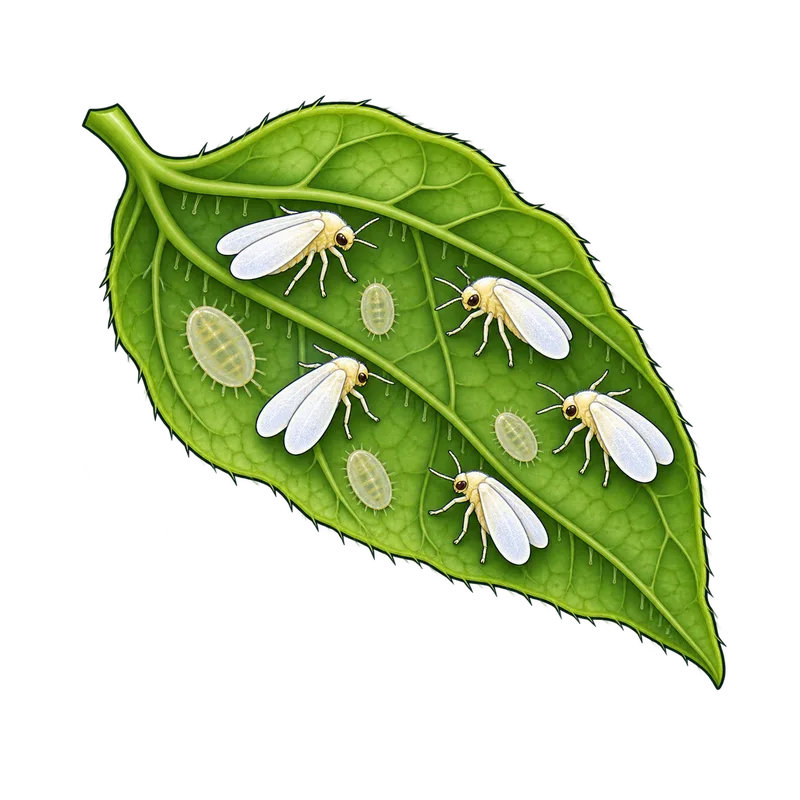
Spotting whiteflies usually starts with that characteristic white cloud rising when you shake a stem, but positive identification takes a closer look at what is happening on the undersides of the leaves. Adult whiteflies are tiny, typically measuring less than three millimeters long, with powdery white wings and yellowish bodies. They resemble miniature moths, but they belong to a completely different insect family and tend to cluster tightly together rather than fluttering aimlessly through the room.
If you turn a leaf over, you usually find the real evidence. The immobile immature nymphs look less like insects and more like tiny, oval-shaped scales or transparent discs attached flat against the plant tissue. They do not crawl around much once they settle down to feed, which makes them easy to mistake for plant bumps or scale insects until you inspect them with a magnifying glass.
You might also notice sticky patches on the leaves or a shimmering sheen of honeydew that makes the foliage feel tacky to the touch. In humid regions, you could occasionally spot naturally occurring fungal growths that look like tiny, raised yellow or orange fried eggs dotted across the whitefly nymphs. That is actually a beneficial fungus doing free pest control, so do not panic and reach for a fungicide if you spot those colorful little markers.
How to tell for sure
Once you figure out that you are actually looking at whiteflies, your first real choice is how to tackle the infestation without turning your living room or backyard into a hazard zone. If you only have one houseplant with a few bugs, carrying it right to the kitchen sink and washing every single leaf underside with lukewarm water and a gentle insecticidal soap is usually the best move. You do not need any fancy tools for that, and it washes away the sticky mess while wiping out both the grown bugs and the nymphs in one sweep.
When you are looking at a whole bunch of houseplants or a large outdoor garden plot, just washing leaves by hand will not keep up with how fast these things reproduce. That is the moment to weigh your options between using a direct-contact spray, like neem oil or special soap salts, and hanging yellow sticky traps to catch the flying adults. Just remember that the sticky cards only catch the ones flying around right now, so no matter what path you take, you still have to spray again every week to ten days to get the new bugs hatching from hidden eggs.
The biggest mistake people make is spraying only the top of the leaves because it is quicker and easier to reach. Whiteflies live and eat underneath the foliage, so any spray or wipe that misses the bottom side is a waste of your time. Take it slow, flip those leaves over, and make sure whatever you are using actually touches the pests hiding down there.
What usually comes next
Most whitefly problems on indoor pots or backyard vegetables get sorted out with a little patience and basic home care, but certain situations mean it is time to step back and call in experts. If you are running a commercial greenhouse, managing a huge farm field, or dealing with large estate landscaping where losing plants means losing serious money, reach out to a licensed pest professional or your local agricultural extension office to set up a proper management plan.
You should also look for professional help if your plants show worse damage than just typical whitefly symptoms, like heavy leaf curling, strange twisting, or weird mottling that does not go away after you treat for bugs. Those signs can mean the whiteflies have passed along a plant virus, which needs a proper lab diagnosis to stop it from jumping to everything else you are growing.
When to get help
Always read the product label from start to finish before putting any chemical spray on your plants, and watch the countdown timer carefully if you are treating food crops like vegetables and fruits. If you think someone got sick from a pesticide, or if you notice strange skin rashes, trouble breathing, or sudden illness after handling garden products, call your local poison center or get medical help immediately.