
What does a brown recluse spider look like?
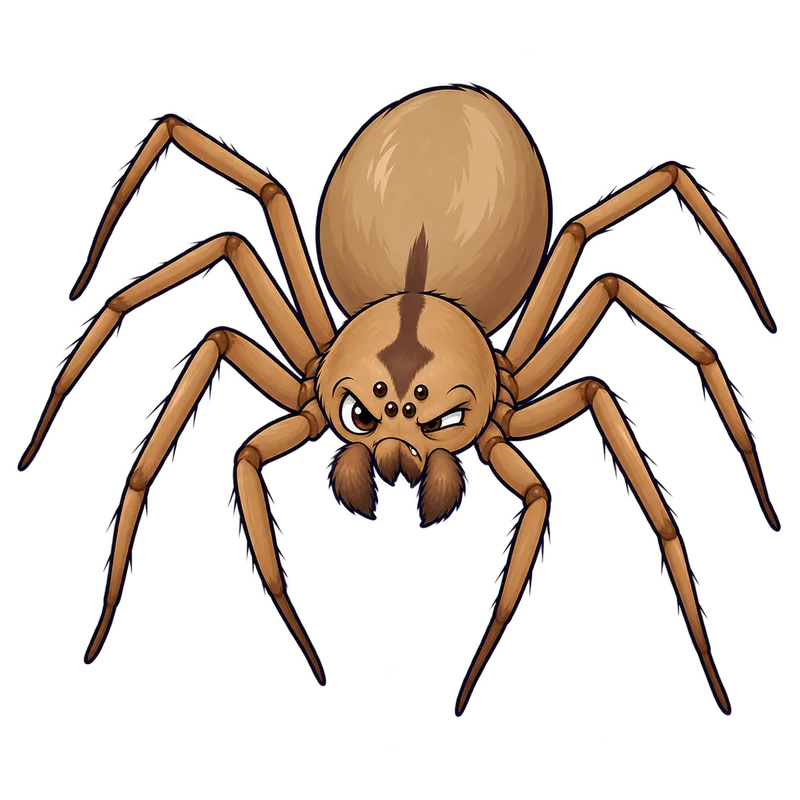
An adult brown recluse spider is a yellowish-brown to light brown creature with a body length of six to nineteen millimeters. Its identification depends on having a dark brown violin-shaped marking on the front body part, six eyes arranged in three distinct pairs, and uniformly colored legs covered only in fine hairs.
What is actually going on
You are hauling a cardboard box of winter sweaters down from the top shelf of the closet, or maybe sliding your foot into a work boot left sitting by the back door overnight. Then you notice a small, pale-brown spider scuttling away across the floorboards. Naturally, your mind jumps straight to the worst-case scenario. You want to know if you are looking at a brown recluse before panic sets in.
An adult brown recluse spider is a yellowish-brown to light brown creature with a body length measuring 6 to 19 mm, which translates to roughly a quarter to three-quarters of an inch. Because of their long and slender legs, they often look much larger than they actually are. They keep to themselves in dry, dark, and undisturbed places, such as basements, attics, and the inside of stored cardboard boxes. They are not aggressive hunters looking to pick a fight, and they only bite when accidentally trapped against human skin inside clothing, shoes, or bedding.
You might wonder how a spider this timid ends up biting anyone at all. The truth is that they possess very delicate fangs that cannot bite through human skin without some form of mechanical counterpressure. That means a bite almost always happens because the spider was squeezed against your body when you pulled on a tight sleeve or rolled onto it in the sheets.
How to tell for sure
Relying on a quick glance or a single field mark usually leads to a false alarm. Lots of harmless household spiders share a brownish color or long legs, which causes plenty of unnecessary worry. A reliable identification requires checking three specific anatomical features rather than guessing based on size alone.
First, look at the head and thorax region, which is the front part of the body where the legs attach. You should see a dark brown violin-shaped marking, often called a fiddleback pattern. The wide base of this violin sits right behind the eyes, while the narrow neck points backward toward the abdomen. Keep in mind that young spiderlings are paler and lack this dark mark entirely, as it develops gradually over time.
Second, count the eyes. Most common house spiders have eight eyes arranged in two rows, but the brown recluse has only six. They are arranged in three distinct pairs, looking like three tiny sets of headlights facing forward and to the sides.
Third, inspect the legs and the belly. The brown recluse has eight uniformly colored legs that lack any thick, heavy spines, carrying only fine hairs instead. Its abdomen is also a uniform color without any contrasting spots, bands, or stripes, and it is covered in fine, soft hair. If you are outside the native range of the central, southern, and midwestern United States, such as in Washington State or the Pacific Northwest, a suspected sighting is almost certainly a harmless native species rather than a brown recluse.
What usually comes next
Spotting a spider indoors generally starts a frantic hunt for aerosol spray or a rolled-up magazine, but your first sensible move needs to center on personal safety and keeping them out. If you believe a spider caught you, wash the spot right away with soap and water, put a cold pack on it to help with the swelling, and prop the limb up. Never try to cut into the skin or squeeze the site.
Dealing with more than a few of these spiders means going well beyond a quick pass with a broom. Getting them under control usually involves clearing out the clutter, sealing up wall cracks, moving stored gear out of flimsy cardboard boxes and into hard plastic bins with tight lids, and calling in a licensed pest control operator if the spiders have settled into hidden wall voids or crawl spaces. Professionals rely on targeted treatments governed strictly by product label directions.
You might argue that sealing boxes and shaking out every pair of shoes feels like an awful lot of work when you just want the house cleared out by tonight. Still, those basic routines remove the exact situations that cause bites to happen, keeping you safe while you work out a lasting plan with a pro.
When to get help
Most brown recluse bites result in mild redness and swelling that clear up on their own, and serious tissue damage happens in under ten percent of confirmed cases. Even so, certain red flags mean you need to drop the home remedies and get to a doctor right away.
Head for an urgent care clinic or an emergency room immediately if you notice spreading purple skin discoloration, an open sore, expanding redness, fever, chills, nausea, vomiting, or joint pain. You can also call the Poison Control Helpline at 1-800-222-1222 for direct guidance. Check your tetanus shot record too, because you will need a booster if it has been more than five years since your last one.
Keep in mind that mysterious skin sores are almost always caused by bacterial infections, tick bites, or minor burns rather than spiders. When a wound or a suspicious mark gets worse by the hour, let a trained clinician figure out what is going on instead of guessing.