
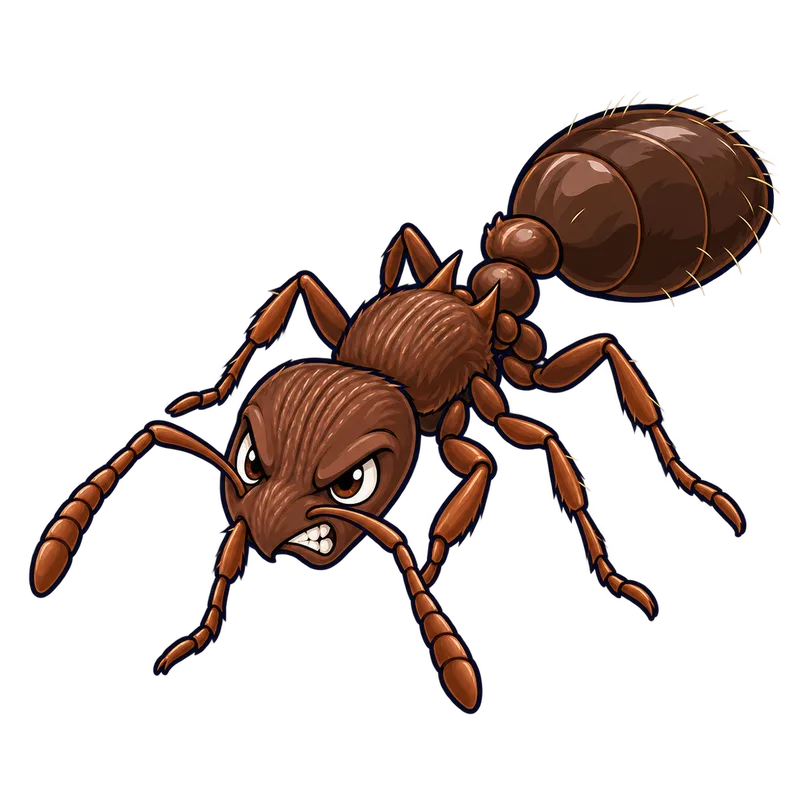
Pavement ant
Tetramorium immigrans
- Size
- 2.5 to 4 mm
- Color
- Dark brown to black
- Habitat
- Soil beneath concrete slabs, rocks, and paving stones
- Diet
- Omnivorous, taking sweets, grease, and dead insects
- Life cycle
- Complete metamorphosis from egg to adult
The pavement ant is a small, stubborn creature that most people first notice when tiny mounds of sandy soil appear between sidewalk slabs or garage floor expansion joints. While exact species-level identification keys for this specific ant can be tricky without specialized tools, its general physical traits are easy to spot once you know what to look for.
Identity
Workers measure between 2.5 to 4 mm in length and display a dark brown to black body, often with lighter legs and antennae. Under magnification, you can see fine parallel grooves running along the head and thorax, giving it a somewhat striped texture. The antennae are elbowed, featuring a long basal segment that bends sharply like a flexed arm.
The most reliable field mark is the waist, which bears two distinct nodes or bumps before connecting to the larger rear abdomen. Reproductive winged forms appear during swarming periods and possess two pairs of clear, unequal wings where the front pair is noticeably larger than the rear pair.
Habitat & behaviour
Pavement ants live where humans lay down hardscape. You will find their colonies tucked beneath concrete driveways, patios, stone walkways, and foundation walls, making use of the trapped heat and moisture these structures provide. They are active from early spring through late autumn, often spilling indoors when outdoor foraging routes are disrupted by rain or lawn mowing.
They are generalist omnivores with a broad palate, recruiting heavily to kitchen spills of sugary syrups, greasy pet food, or crumbs from baked goods. When they find an indoor food source, they establish distinct trailing paths along baseboards, under appliances, and across floor tiles.
Colonies are often polygynous, meaning they house multiple egg-laying queens, which allows them to expand rapidly and form massive networks of interconnected nests beneath a single yard or building slab.
Visual variations
Ants go through complete metamorphosis, which means they transition through four distinct life stages of egg, larva, pupa, and adult. The tiny, oval eggs are carefully tended by worker ants in underground chambers, eventually hatching into legless, grub-like larvae that rely entirely on adult workers for feeding and grooming.
As the colony matures, it produces different castes. Workers are sterile females responsible for all foraging, excavation, and brood care, and they remain wingless throughout their entire lives.
Reproductive castes include virgin queens and males, both of which develop wings for a brief period in their life cycle. These winged forms emerge during warm weather swarms to mate in the open air. After mating, the males die shortly afterward, while the newly fertilized queens shed their wings along a built-in baseline suture and burrow into the soil to found new colonies.
Why it matters
Finding pavement ants indoors is usually a sign that they have found an easy entry point through a foundation crack or a gap beneath a door frame, rather than an indication that they are chewing up your home. Unlike carpenter ants, pavement ants do not consume or nest inside sound structural timber, meaning they present zero risk to load-bearing framing or wooden studs. Their presence is primarily a nuisance issue involving food contamination and unsightly dirt mounds pushed up through flooring or exterior concrete.
When trying to tell them apart from other insects, homeowners frequently confuse winged pavement ants with subterranean termites. You can separate the two by looking at the waist and antennae. Pavement ants have a pinched, narrow waist with two distinct nodes, elbowed antennae, and uneven wing pairs. Termites have a thick, straight waist, straight bead-like antennae, and four wings of equal length.
Similar species
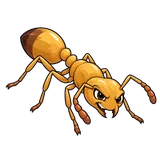 Pharaoh antMonomorium pharaonis
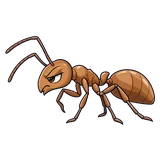 Argentine antLinepithema humile
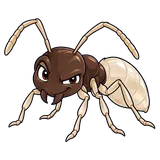 Ghost antTapinoma melanocephalum
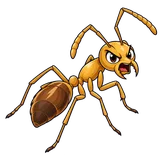 Yellow crazy antAnoplolepis gracilipes
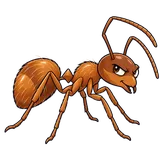 Tawny crazy antNylanderia fulva
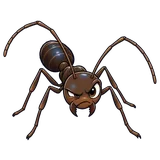 Longhorn crazy antParatrechina longicornis