
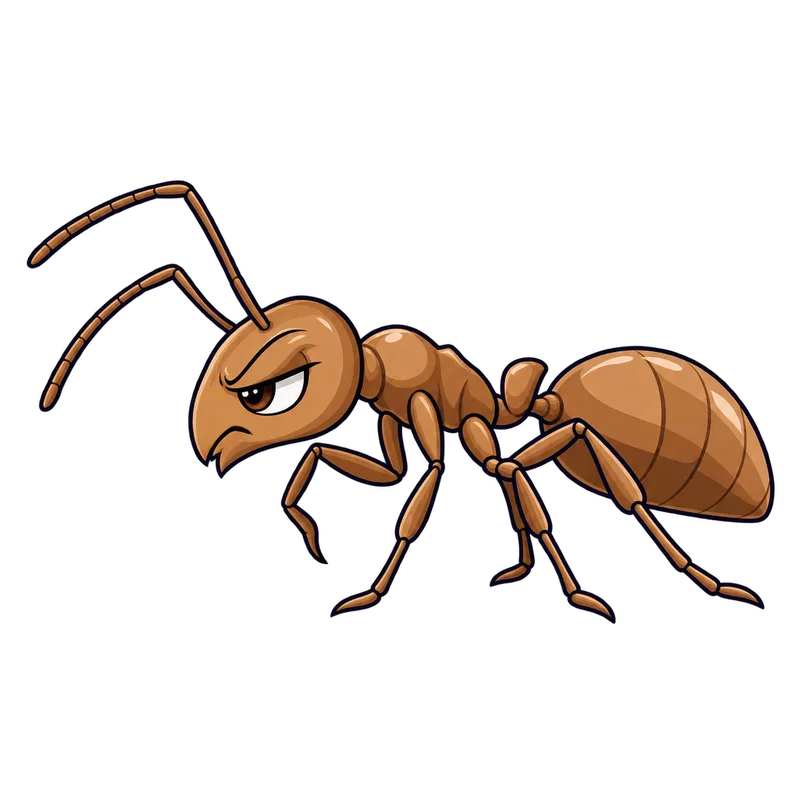
Argentine ant
Linepithema humile
- Size
- Approximately 3 mm long
- Color
- Mid- to dark brown
- Habitat
- Moist soils and indoor wall voids
- Diet
- Sweet substances, nectar, and honeydew
- Life cycle
- Multi-queen colonies spreading via budding
The Argentine ant is a tiny, unassuming insect that manages to turn kitchen counters into crowded highways across much of the globe. If you are squinting at a line of crawling bugs near the sugar canister and wondering what you are dealing with, reach for a standard hand lens.
Identity
Workers measure approximately 3 mm in length and wear a uniform, mid- to dark brown coat from head to abdomen. Under a 10x magnification lens, you will notice a distinct teardrop-shaped head outline with relatively large compound eyes set low on the sides, paired with a notably long first antennal segment. Their bodies are remarkably smooth and hairless across the back.
Unlike many other common ants, this species features a single narrow node, known as a petiole, connecting the thorax to the abdomen. Most importantly for anyone inspecting a trail up close, they completely lack a stinger. They defend themselves and fight rivals by biting rather than stinging.
Habitat & behaviour
These ants have a profound thirst and a strict climate preference. Outdoors, they favor moist environments requiring an annual rainfall threshold of around 500 mm. They thrive where midwinter means temperatures range from 7 to 14 °C and midsummer averages span 19 to 30 °C, which explains why they feel right at home in the Mediterranean climate of California and southern US states, as well as southern Europe and parts of Australia.
When the weather turns dry or cold, their behavior shifts indoors. They use their compact size to slip through tiny foundation cracks, weep holes, and utility penetrations. Once inside, they abandon shallow outdoor spots under stones or leaf litter to nest within warm, protected structural voids like cavity walls and drop ceilings.
They are remarkably adaptable omnivores with an extreme sweet tooth. While they scavenge carrion and other arthropods, they spend a great deal of energy harvesting nectar, floral secretions, and the sugary honeydew excreted by sap-sucking garden pests like aphids and scale insects. During heavy floods, entire colonies can even link legs to form floating rafts, drifting down waterways to colonize fresh banks.
Visual variations
Colonies show clear differences in size and job description, even if their color palette stays stubbornly the same. Workers are monomorphic, meaning every single forager marching along your baseboards is the exact same 3 mm size and completely lacks wings.
Queens are much larger, stretching from 6 to 9 mm long, which makes them up to three times the size of a standard worker. They refuse to stay hidden away in some dark underground chamber. Instead, Argentine ant queens frequently march right out in the open, tagging along with the worker columns on busy foraging routes.
Native ants often launch massive swarms into the air to start new families, but Argentine ants skip the spectacle and expand through vegetative budding instead. Small breakaway groups of workers, developing young, and at least one fertile queen simply walk away from the parent nest, or catch a ride in potted plants, fresh soil, garden compost, or shipping crates to set up house somewhere new.
Why it matters
Spotting these bugs inside your house is mostly a frustrating inconvenience rather than a major threat to your home. They do not eat, bore into, or chew up sound wood. Finding them behind your drywall just means they are taking advantage of hollow spaces for shelter, leaving your timber completely unharmed.
Their real nuisance value is hygienic and ecological. Large foraging crews swarm pantry shelves and kitchen counters, spoiling stored sugars, meats, and sweet items that you ultimately have to throw away. Workers can manage a tiny pinch if you trap them against your skin, but they lack venom glands and cannot inflict a painful sting.
Their massive social network is the real marvel and the biggest headache for anyone trying to evict them. Instead of a single colony with one isolated queen, they form massive supercolonies made of millions of linked nests that never fight among themselves. Some of these groups pack in up to 16.3 queens per thousand workers, and every single one keeps laying eggs at the same time.
Because this empire stretches so far, wiping down a messy counter with soapy water only takes out the current batch of scouts. It leaves the multi-queen headquarters behind the wall completely undisturbed. When infestations settle into hollow walls, drop ceilings, or large building voids, or when a wide-scale baiting program is required, a licensed pest control professional needs to step in. Any chemical treatments must always follow the exact directions written on the product label.
You can easily mix up the Argentine ant with a few other common household pests. Red imported fire ants look somewhat similar at first glance, but they have a two-part waist and a functional stinger that leaves behind a venomous, blistering welt. Carpenter ants are much bigger, with queens reaching up to 19 mm, and they actively chew smooth tunnels into wood.
People also mistake termites for winged ants, but termites have a thick, straight waist, straight beadlike antennae, and four wings of the exact same length. Reproductive ants feature a pinched waist, elbowed antennae, and wings of two different sizes.
Similar species
 Ghost antTapinoma melanocephalum
 Yellow crazy antAnoplolepis gracilipes
 Tawny crazy antNylanderia fulva
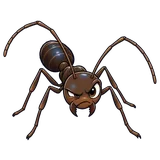 Longhorn crazy antParatrechina longicornis
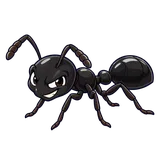 Little black antMonomorium minimum
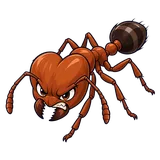 Bigheaded antPheidole megacephala