
What should you do about large ants in the kitchen?
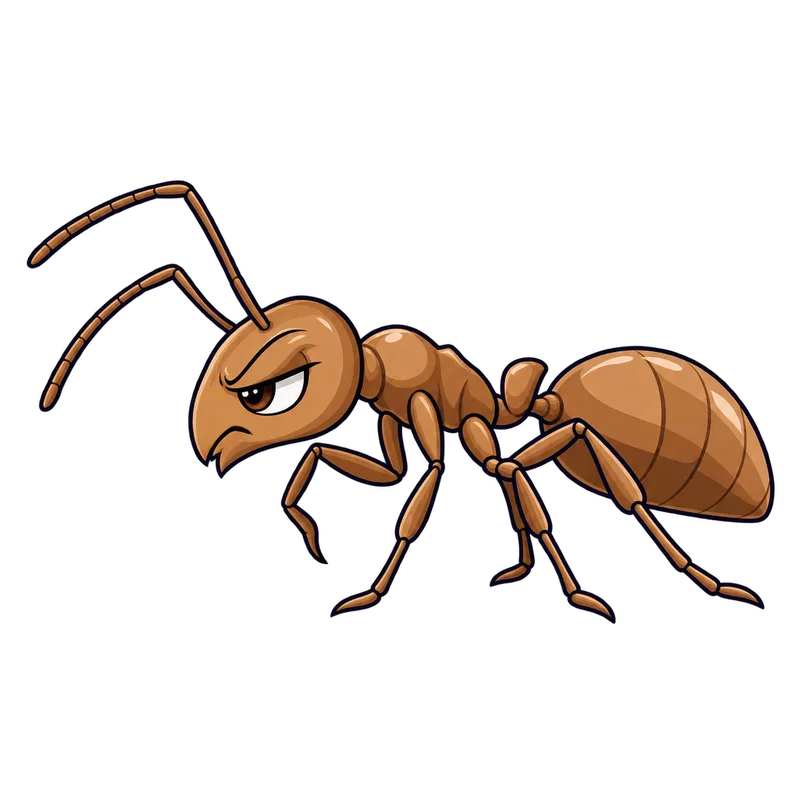
For large ants in the kitchen, which are usually carpenter ants, stop spraying and start cleaning: wipe counters to erase scent trails, store food in airtight containers, and fix moisture sources like leaky plumbing. If activity continues, use slow-acting baits near trails so workers carry poison back to the colony. Call a professional if winged ants appear indoors.
What is actually going on
You walk into the kitchen at midnight to grab a glass of water, flip on the overhead light, and spot a massive, jet-black ant sprinting across the counter like it owns the place. Before you grab a rolled-up magazine, you need to know that killing that single midnight visitor does not solve your problem. Large ants in the kitchen, which are usually worker carpenter ants, are scouting for moisture, sweets, and grease, and they leave behind chemical scent trails that turn your countertops into a highway for their colony mates.
If you are dealing with large ants, you are likely looking at carpenter ants rather than tiny pavement ants or Argentine ants. Unlike termites, these insects do not actually eat your house for lunch. They view your damp window sills, hollow doors, and structural framing as a quiet place to carve out a nest and raise their young. They treat your kitchen like a twenty-four hour diner, marching indoors after dark to harvest food scraps and moisture while spending their days hidden away.
Reaching for an aerosol bug spray on the kitchen shelf feels satisfying, but it usually backfires. Contact sprays kill only the tiny fraction of workers you can see on the surface. Worse yet, many standard sprays act as chemical repellents that cause the surviving ants to scatter, splitting one hidden colony into multiple satellite nests behind your drywall. Managing these invaders requires cutting off their food supply, drying up moisture sources, and letting slow-acting baits do the heavy lifting.
Before you buy any products or start tearing apart your baseboards, you have to confirm what you are actually looking at. Carpenter ants usually measure between one-quarter and one-half inch in length, featuring a dark brown, jet-black, or red-and-black body. If you catch one under a bright light, look closely at its waist. Ants have a distinct, pinched waist with a narrow node, and they carry elbowed antennae that bend sharply in the middle. Termites, by comparison, have thick, straight waists and beadlike antennae.
How to tell for sure
You should also check for frass, which is the coarse, fibrous sawdust these ants kick out of their galleries. Carpenter ant frass looks like irregular wood shavings mixed with dead insect parts and debris. If you find small piles of this sawdust beneath a kitchen window frame or behind the sink, you are usually looking at the work of an active colony nearby. Termites leave behind hard, six-sided pellets or mud tubes, so finding rough wood shavings points directly to carpenter ants.
Size variation is another clue you might notice. Carpenter ant colonies feature polymorphic workers, meaning the colony produces individuals of different sizes, from large major workers with heavy jaws to smaller minor workers that tend the brood. If you see tiny, uniform brown ants running in endless, rapid lines, you are usually dealing with a different species, such as Argentine ants, which require an entirely different approach to management.
What usually comes next
Your single most effective practical decision is to stop spraying the counters and start addressing sanitation and moisture simultaneously. Wipe down every surface to erase chemical scent trails, store your pantry goods in airtight containers, and never leave pet food bowls or dirty dishes sitting out overnight. At the same time, slide under the kitchen sink to inspect the plumbing traps, check the refrigerator line, and look for any slow leaks around the dishwasher.
Fixing a plumbing leak and scrubbing the counters changes the equation for the ants overnight. Carpenter ants rarely choose to nest in bone-dry, sound timber. They need moisture to soften the wood and sustain their colony. When you dry out the wood and seal away their food sources, you remove the primary invitation that brought them inside your kitchen walls in the first place.
If foraging activity continues after you clean and dry the space, your next step involves targeted elimination rather than surface spraying. You should usually deploy slow-acting, non-repellent baits near the ant trails in non-food areas, or use approved insecticidal dusts inside hidden wall voids. The foraging workers eat the bait and carry the active ingredient back to share with the queen and larvae, shutting down the colony from the inside out.
When to get help
There are moments when a kitchen ant problem outgrows do-it-yourself methods and requires an experienced hand. You should call a licensed pest control professional if you spot large, winged ants swarming inside your kitchen during the spring. Those winged adults are reproductive alates, which only appear when a structural nest has matured for several years and grown to thousands of members. Finding them indoors means you likely have a well-established colony hidden deep within your load-bearing walls or subfloors.
You should also bring in a professional if the ants keep returning despite your best efforts with sanitation, moisture repair, and baiting. Hidden nests inside ceiling joists or behind kitchen cabinets often require specialized drilling equipment, wall-void dusters, or restricted-use insecticides that only licensed applicators are trained and equipped to handle safely.
On the health side, carpenter ants do not sting, but major workers can deliver a painful bite with their powerful mandibles and spray formic acid into the wound. If you or a family member suffers an unexpected allergic reaction, severe swelling, or signs of an infection from a bite, consult a medical clinician immediately. If anyone in the household accidentally ingests a pesticide or experiences exposure symptoms, call the National Poison Control Center right away at 1-800-222-1222.