
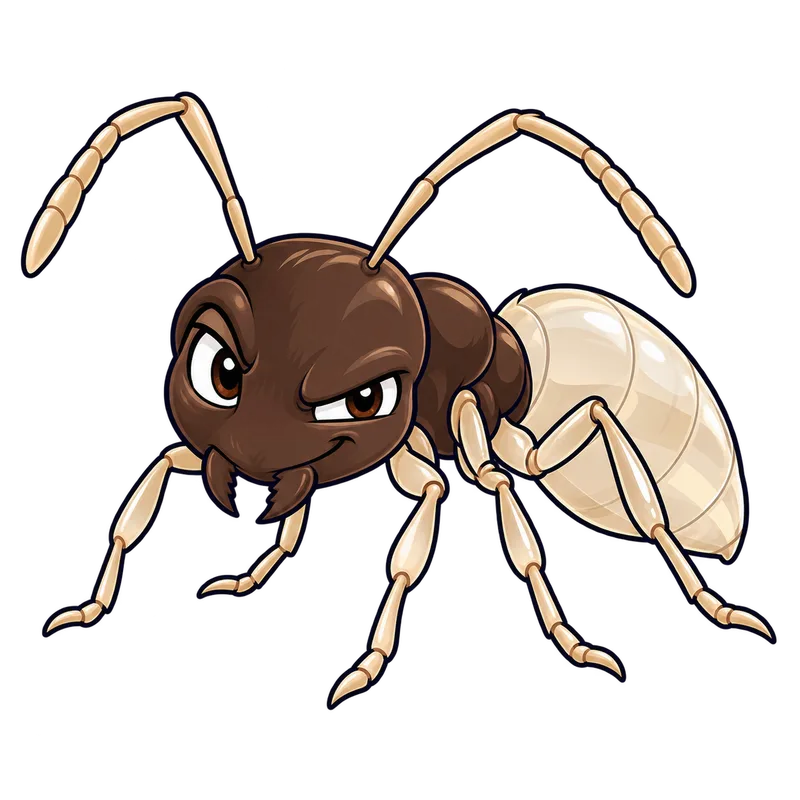
Ghost ant
Tapinoma melanocephalum
- Size
- 1.3 to 1.5 mm long
- Color
- Deep dark brown head, milky white gaster and legs
- Habitat
- Warm outdoor areas, indoor wall voids and potted plants
- Diet
- Sugars, sweets, syrups, and honeydew from plant pests
- Life cycle
- Multiple queens per colony, reproducing through budding
The ghost ant, known scientifically as Tapinoma melanocephalum, earns its common name from a frustrating visual trick. Measuring a mere 1.3 to 1.5 mm in body length, these minute workers feature a deep dark brown to blackish brown head and thorax that stands in sharp contrast to an opaque, milky white gaster, legs, and antennae. When a worker scurries across a pale kitchen countertop or light colored floor tiles, the light sections practically vanish, leaving what looks like a tiny floating head darting about.
Identity
Up close under magnification, workers show a 12-segmented antenna that lacks a terminal club, with scapes that extend past the back of the head. Their waist features a single segment with a flattened, reduced node that hides completely beneath the overhanging gaster. They do not have a stinger at the rear. Instead, their terminalia ends in a transverse, slit-like anal orifice without a circular fringe of hairs. If you suspect you are looking at one, a reliable field test involves trapping a single worker and crushing it. The crushed ant emits a distinct, recognizable odor reminiscent of rotten coconut.
Habitat & behaviour
Ghost ants are tropical and subtropical creatures that thrive in warm, humid conditions. In cooler northern latitudes, they cannot survive freezing winters outdoors, so they set up permanent housekeeping inside heated buildings, apartment complexes, and commercial greenhouses. When they move into a home, they look for small, protected cavities. You will find them nesting inside wall voids, behind baseboards, within gaps between cabinetry, and tucked deep into the damp soil of indoor house plants.
Outside in warmer regions, they choose similarly damp, concealed spots such as tufts of dead grass, organic detritus, beneath loose tree bark, or at the bases of palm fronds. Their daily routine revolves around foraging for fuel. They possess a notorious sweet tooth, marching steadily along established trails to raid sugar bowls, syrup dispensers, and cakes. Outdoors, they tend colonies of sap-sucking insects like aphids and scales, harvesting the sweet honeydew they secrete. When undisturbed, their trail movement is steady and deliberate, often with workers carrying white larvae and pupae between nest sites. But startle them by wiping a counter, and they switch instantly into a rapid, erratic, frantic dash.
Visual variations
Colonies rely on distinct castes to run operations, although you will almost exclusively notice the worker caste out in the open. Workers are monomorphic, meaning every foraging ant you spot shares the exact same tiny size class. They are wingless, sporting the characteristic bicolored dark head and pale white abdomen that makes them so difficult to track.
Queens are substantially larger, featuring a head length of 0.56 mm and a robust mesosoma length of 0.83 mm. Unlike the workers, a queen is less starkly bicolored, showing a brown head, a light to pale brown thorax, and a brown gaster edged with pale stripes along the posterior margins of the segments. Queens possess small ocelli, or simple eyes, and either four wings or distinct wing scars where wings once attached. Multiple functional queens usually share a single colony, a setup known as polygyny, meaning the loss of one queen hardly slows the nest down.
Why it matters
An indoor infestation turns kitchens and bathrooms into daily battlegrounds, as hundreds of tiny foragers trail across sinks and food prep surfaces to spoil sweet pantry items. Beyond mere household annoyance, these ants pose a documented mechanical vector risk in healthcare facilities and commercial kitchens, where their wandering feet can transfer bacteria across sterile surfaces.
In commercial greenhouses and agricultural settings, they cause severe disruptions by protecting honeydew-producing pests from biological control insects, inadvertently fueling plant pest outbreaks. They do not chew through wood, meaning you will never deal with structural timber damage from their presence, and they lack a stinger so they cannot inflict painful venomous bites on people or pets. Because their colonies are polydomous, meaning a single main nest splits into multiple interconnected subcolonies that constantly exchange queens and workers, improper management like spraying liquid contact insecticides usually backfires. The chemical stress causes the colony to fragment and scatter into a dozen new subcolonies, turning a single manageable trail into a widespread indoor invasion.
Similar species
 Yellow crazy antAnoplolepis gracilipes
 Tawny crazy antNylanderia fulva
 Longhorn crazy antParatrechina longicornis
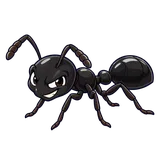 Little black antMonomorium minimum
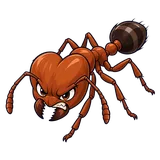 Bigheaded antPheidole megacephala
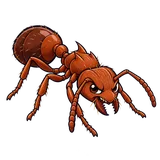 European fire antMyrmica rubra