
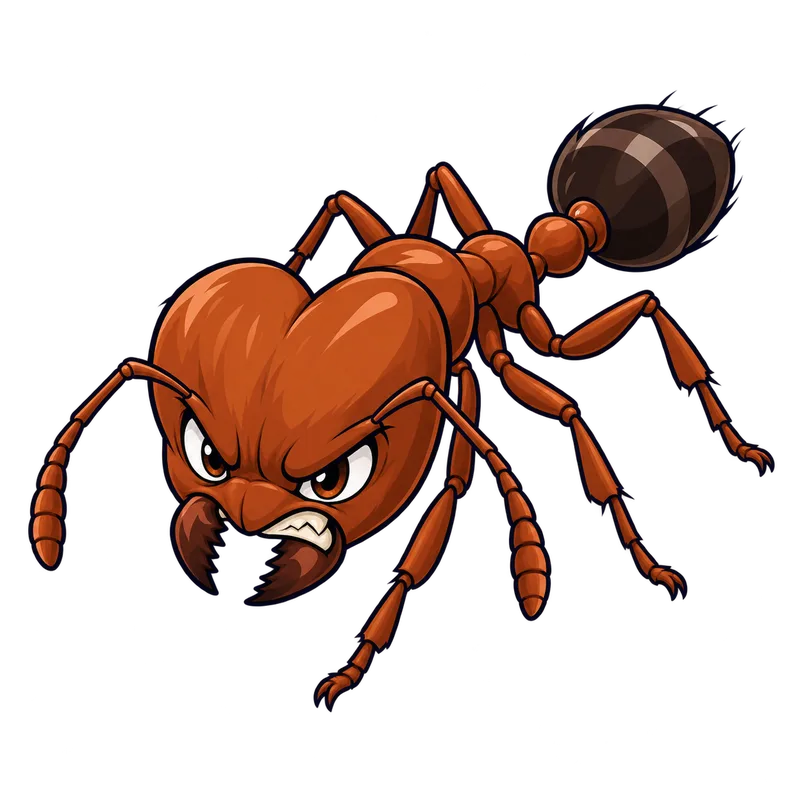
Bigheaded ant
Pheidole megacephala
- Size
- Minor workers 1.5 to 2.0 mm; major workers 3.0 to 4.0 mm
- Color
- Light yellowish-brown to dark brown
- Habitat
- Soil, mulch, wall voids, and potted plants
- Diet
- Omnivorous scavenger and honeydew producer
- Life cycle
- Complete metamorphosis with multi-queen colonies
The bigheaded ant, Pheidole megacephala, is a small soil ant most people meet as a dense brown trail along pavers, mulch, potted plants, foundation edges, or a warm baseboard. The name sounds rude, but it is the field mark: many colonies look like two ants sharing one nest. Minor workers are 1.5 to 2.0 mm and do the routine foraging and brood care. Major workers, often called soldiers, are 3.0 to 4.0 mm and carry a head so oversized it reads like a helmet issued in the wrong size.
Identity
From standing height, be honest: it is just another little brown ant. The useful details need a hand lens, and a microscope at about 20x to 30x makes them plain. The waist has two separate nodes between the middle body and the usually darker, polished gaster. The antennae have 12 segments with a 3-segmented club. The rear of the middle body carries a pair of small propodeal spines. In a major worker, the head can make up roughly a third to half of body length and is deeply notched at the back, giving a heart-shaped outline in face view.
The comparisons matter because the wrong name leads to the wrong expectations. Fire ants also have two waist nodes, but their workers are not split into two clean sizes; they vary continuously from about 1.6 to 5.0 mm, while bigheaded ants are strictly dimorphic with no intermediate worker sizes. Fire ants also have 10-segmented antennae with a 2-segmented club, raised soil mounds, and a real sting. Tawny crazy ants have one waist node, no antennal club, and frantic, fast movement. Ghost ants are tiny and bicolored, with a dark front and milky translucent rear. Odorous house ants are one-size, dark, and smell like rotten coconut when crushed. Native Pheidole species are the hard case: they share the two-node waist and major-minor system, so reliable separation can require high-resolution examination of head sculpture, spine angle, and hair density.
Habitat & behaviour
This species is native to sub-Saharan Africa and has traveled widely through commerce into tropical, subtropical, and warm temperate regions. In the United States, established outdoor populations are associated with Hawaii, Florida, and southern California, including Orange County and San Diego County. It does not tolerate cold winters outdoors in northern temperate areas; there, it persists only in heated structures, greenhouses, or conservatories. In warm regions and heated interiors it can stay active year-round, while outdoor subtropical activity usually peaks in warm, humid summer weather.
Outdoors, nests are shallow soil galleries under rocks, patio pavers, timbers, firewood, leaf litter, mulch beds, and potted plants. Look for loose crumbs of excavated soil or muddy runways up trunks, stems, and foundation walls. Indoors, subcolonies tuck into wall voids, beneath carpet edges, under tile or flooring, in cabinet bases, and around plumbing penetrations. They are drawn to water, sweets, grease, meats, dead insects, seeds, and general kitchen opportunity.
Their garden habit is the part people notice without naming it. Bigheaded ants tend aphids, soft scales, mealybugs, and whiteflies for honeydew, then guard those sap-suckers like tiny bodyguards, chasing off lady beetles and parasitic wasps. If a plant has both scale insects and a permanent ant escort, that protection racket is often the story. Colonies are multiqueened and multinested, and neighboring nests exchange workers, food, and brood without fighting. Think less lone fort, more connected suburb. Local spread often happens by budding, when a queen walks off with workers and brood to start a nearby satellite nest, while winged reproductives from mature colonies can disperse farther during warm periods.
Visual variations
Development follows complete metamorphosis: egg, legless white larva, pupa, then adult. The adults are where the visible drama sits. Minor workers are small, fairly uniform, normally proportioned, and wingless, and they are the ones usually seen on trails. Major workers are also wingless, but the head is massively inflated, notched at the rear, and packed with muscles for thick, blunt mandibles used to crack seeds, tear apart insect prey, and defend nest openings. The effect is top-heavy and faintly comic until one of them starts working.
Queens are larger than workers at 4.0 to 6.0 mm, with a broad middle section built for flight muscles and an enlarged gaster for egg production. Males are slimmer and darker, with prominent compound eyes and reduced mandibles. Before mating, virgin queens and males carry two pairs of functional wings for warm-season flights. After mating, queens shed their wings and keep distinct scars on the middle body, so a wingless queen can still show evidence that she once flew.
Why it matters
In a house, bigheaded ants mostly mean nuisance foragers in kitchens, bathrooms, pet feeding spots, and wall voids, plus indoor subcolonies that are hard to read from one trail. Outside, soil excavation under pavers, sidewalks, and foundation edges can cause localized settling, and they can interfere with plastic drip-irrigation openings. They do not eat or bore sound structural timber, so this is not a carpenter-ant-style wood problem.
There is no fire-ant-style venomous sting. Major workers can nip skin with their mandibles if handled, usually causing minor, short-lived discomfort, but any persistent irritation, suspected bite reaction, or possible allergy belongs with a clinician, urgent care, or poison control rather than guesswork. Precise identification matters before control because these ants form cooperative supercolonies, repellent sprays can make them bud and scatter, and label directions govern any product use. Complex indoor or landscape infestations generally warrant inspection and baiting by a licensed professional, and potted plants, soil, compost, or nursery stock moved from infested areas should be checked so a satellite colony does not travel with them.
Similar species
 European fire antMyrmica rubra
 Yellow meadow antLasius flavus
 Crazy antsNylanderia, Paratrechina and Anoplolepis species
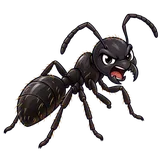 Black carpenter antCamponotus pennsylvanicus
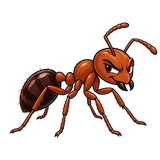 Red imported fire antSolenopsis invicta
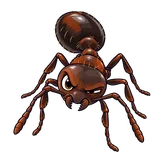 Black imported fire antSolenopsis richteri