
What are flying ants in the house?
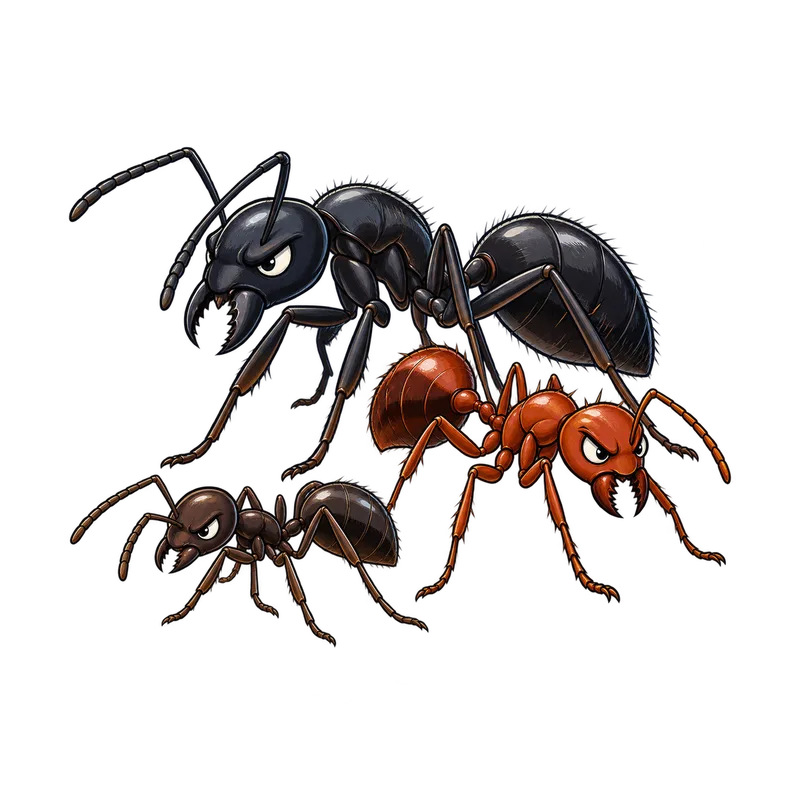
Flying ants are simply the sexually mature, winged reproductives of ordinary ant colonies that take flight to mate and start new nests. Finding them inside your home either means a few outdoor bugs drifted in through an open door, or a well-established colony is emerging directly from your interior walls.
What is actually going on
You walk into the living room on a warm, sticky afternoon, glance over at the sunny window, and find what looks like a frantic, buzzing cloud of bugs crawling over the glass and dropping onto the sill. Your first thought is probably panic: did a mutant strain of bug just invade the drywall, or did the house suddenly develop a catastrophic pest emergency overnight?
Flying ants are not a mysterious, exotic species that just discovered your neighborhood. They are simply the sexually mature, winged reproductives of ordinary ant colonies. Every mature ant colony, once it reaches a few years of age and has enough resources, produces virgin queens and winged males alongside its normal workforce of wingless sterile workers. Their sole job in life is to fly away from the parent nest, find a mate from another colony, and start new colonies of their own.
This synchronized departure is called a nuptial flight or a swarming event. Outside, it usually happens when the weather conditions line up just right, typically a warm, humid day shortly after a good rain. The colony opens the gates, and hundreds of winged ants take to the air at roughly the same time. The males mate with the young queens in midair or on nearby surfaces and die shortly afterward. The newly fertilized queens then land, deliberately break off their wings along a built-in snap line, and begin scouting for a dark, secure cavity to lay their first batch of eggs.
When this event happens inside your house, the scenario falls into one of two categories. The first is pure bad luck: an outdoor swarm happened in your garden or a neighbor's yard, and a few dozen winged insects followed the light through an open sliding door, a loose window screen, or a gap under an entry door. The second scenario is more serious: the swarm is emerging directly from an interior wall void, a baseboard gap, a window casing, or a bathroom vent. When they pour out from inside the walls, it means an established parent colony or satellite nest is already living inside the structure of your home.
How to tell for sure
Before you can decide what to do, you need to answer the question that keeps every homeowner awake: are these flying ants, or are they winged termites? Termite swarmers also grow wings and take flight under similar humid conditions, but the damage they cause and the treatments they require are entirely different.
You do not need a laboratory microscope to tell them apart, though a basic 10x magnifying glass or a clear photo on your phone will make it easier. Look closely at three specific body parts.
First, check the waist. An ant has a pinched, narrow waist that connects its chest to its rear abdomen, giving it an hourglass figure made of distinct body segments. A termite has a thick, uniform waist with no constriction at all, giving its body a continuous, cigar-shaped outline.
Second, look at the antennae. Ant antennae are distinctly elbowed, meaning they stick out, make a sharp right-angle bend, and continue forward like a bent arm. Termite antennae are straight, flexible, and look like a tiny string of miniature round beads.
Third, inspect the wings. Ants have two pairs of wings that are noticeably unequal in size. The front wings are significantly larger, longer, and broader than the rear wings, and they usually do not extend very far past the tip of the ant's rear end when resting. Termites have four wings of equal size and paddle-like shape, and their wings are often nearly twice the length of their body, extending well past their abdomen when folded flat over their back.
The insect species usually dictates what kind of risk you are facing. Common pavement ants or little black garden ants occasionally swarm through foundation cracks, and while annoying, they do not chew up wood. Carpenter ants, on the other hand, are large, dark ants that carve out smooth nesting galleries inside structural timbers.
Keep in mind that carpenter ants do not actually eat wood. They eat honeydew from aphids, dead insects, and kitchen food scraps, but they chew out damp or softened lumber to make clean nesting rooms. When carpenter ants excavate, they shove coarse, fibrous wood shavings mixed with dead insect pieces out through tiny slits, leaving small sawdust piles on the floor below. Drywood termites, by contrast, digest wood and kick out tiny, hard, six-sided pellets, while subterranean termites pack mud and digested cellulose into their tunnels without leaving loose sawdust behind.
Timing also gives you a useful clue. While outdoor swarms usually occur in spring or mid-summer, a swarm of flying ants that appears inside your home during the dead of winter almost always points to a nest inside the building. The artificial heat from your floor furnace or warm interior walls tricks the colony into thinking spring has arrived early.
What usually comes next
The most frequent error people make when they spot a swarm is grabbing a can of general aerosol bug spray and fogging the room. It feels satisfying in the moment, but it solves almost nothing. Those winged ants are on a one-way trip, as the males were going to die in a few days anyway and the queens were planning to leave. Spraying them leaves the hidden egg-laying queen and thousands of sterile worker ants perfectly safe inside your wall framing or beneath the subfloor.
Instead of spraying chemicals in a panic, take a calm, methodical approach.
First, catch three or four intact insects and drop them into a small jar with some rubbing alcohol or seal them in a clean plastic bag. If you need a second opinion later, having undamaged physical specimens makes accurate identification simple.
Second, pull out your vacuum cleaner. Use the hose attachment to suck up the flying and crawling swarmers directly from the windows, walls, and floors. Once you are done, take the vacuum canister or bag outside immediately, empty it into a trash bag, tie it tight, and put it in your outdoor bin. This removes the mess instantly without coating your living room surfaces in chemical residue.
Third, find the launch pad. Look around the room to see where the insects are actually coming from. Are they squeezing out from behind a baseboard, exiting a small hole in the drywall, or simply fluttering against an exterior window screen that has a small tear? If they are emerging from a crack in the trim, that spot marks the exit point for the nest inside the wall.
Fourth, check for moisture issues in the immediate area. Wood-nesting ants and termites are both drawn to soft, damp wood. Look for sweating pipes under nearby sinks, moisture stains around window frames, leaky roof flashing, or clogged gutters that are spilling water against the exterior siding. Correcting the moisture defect is just as important as managing the insects, because ants rarely establish primary or satellite nests in completely dry, sound framing.
If you decide to apply any retail insect baits or treatments yourself, always read and follow the exact instructions on the product label. The label is not a set of rough suggestions; it is the legal and practical guide for safe use. Never spray repellent insecticides near bait placements, as this simply stops the worker ants from picking up the bait and carrying it back to eliminate the queen.
When to get help
A single flying ant crawling on a kitchen counter during July does not warrant calling out a specialist. It almost certainly drifted in through an open door while you were bringing in the groceries.
However, you should bring in a licensed pest control professional if you see dozens or hundreds of winged insects emerging directly from interior walls, ceilings, or baseboards. You should also call for professional help if you find accumulating piles of sawdust containing insect parts, discover hollow-sounding or blistered wood trim, spot earthen mud tubes along your foundation walls, or hear faint rustling sounds inside a wall cavity when you tap on it.
Licensed professionals have access to specialized inspection tools, such as moisture meters and acoustic sensors, as well as treatment options that are not available over the counter. Complex management steps, including sub-slab termiticide injections, precision wall void foam applications in load-bearing studs, and whole-structure fumigation, legally and practically require certified applicators.
If you suspect you have carpenter ants or termites but cannot confidently tell the difference between the specimens you caught, have a pest management professional or your local county extension office inspect the physical samples. Accurate identification must come before any structural treatment plan.
Finally, keep health and safety in perspective. Carpenter ants do not sting, though large workers can deliver a sharp, painful pinch with their jaws and spray formic acid into the break in the skin. Other swarming species, like fire ants in southern regions, can deliver painful stings that produce burning blisters. If anyone in your home experiences an unexpected sting reaction, severe swelling, or signs of an allergic response, seek evaluation from a clinician or urgent care facility right away rather than trying to manage the symptoms at home.