
Do carpenter ants have wings?
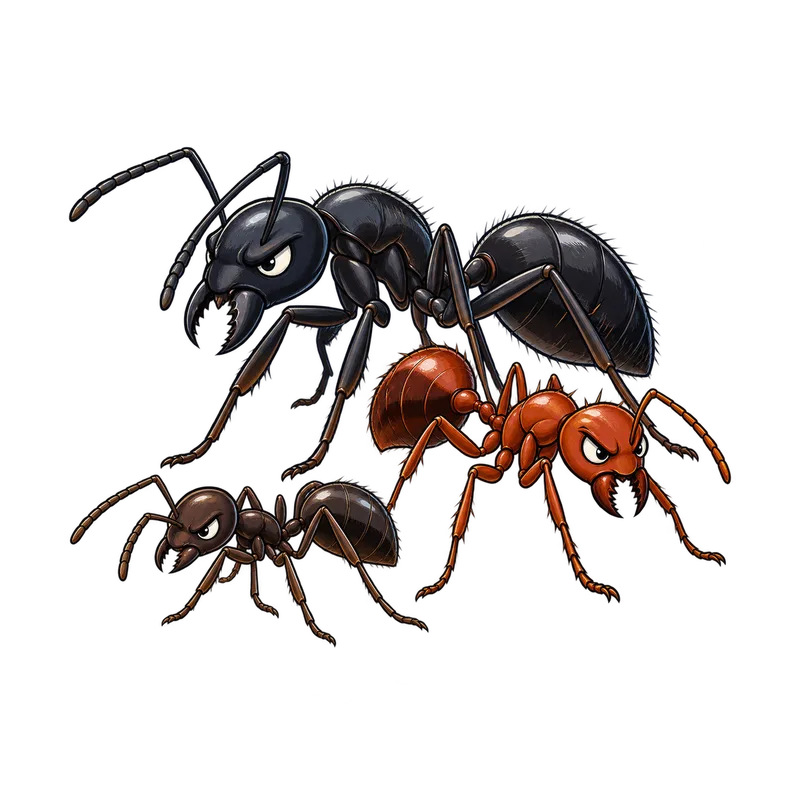
Yes, carpenter ants do have wings, but only the reproductive males and virgin queens in a mature colony ever grow them. The vast majority of the colony consists of wingless sterile workers. After a mating flight, the new queens shed their wings deliberately to start a brand new colony.
What is actually going on
You are walking through the living room on a warm morning in late spring, and you notice a few strange bugs crawling on the windowsill. Some of them even have delicate, shimmering wings folded over their backs. Your first thought is a mild wave of panic, wondering if your home is suddenly under siege by flying pests. If those insects happen to be carpenter ants, you might be wondering whether wings are a normal part of their anatomy or if you are looking at something else entirely.
Yes, carpenter ants do have wings, but only certain members of the colony ever grow them. If you scoop up a dozen random ants crawling across your kitchen counter, every single one of them will be completely wingless. That is because the vast majority of the colony consists of sterile workers whose only job is gathering food, tending to the young, and maintaining the nest. They never sprout wings at any point in their lives.
Wings are reserved exclusively for the reproductives. When a colony reaches maturity, which usually takes a few years of steady growth, it begins to produce winged males and virgin queens. These winged members wait out the colder months inside the parent nest before emerging on a warm, humid day for a synchronized mating flight. Once that flight is over, the biological paths of the males and females split dramatically.
The male carpenter ants finish their mating duties and die shortly after touching down. The newly mated queens, however, shed their wings deliberately by snapping them off at built-in base lines. They land on a patch of damp wood, crawl into a tight crevice, and spend the rest of their lives entirely wingless while laying eggs to start a brand new colony.
Finding winged insects around a home often leads people to assume that every ant in a colony flies. In reality, the winged form is just a temporary stage for a tiny fraction of the population. A young carpenter ant colony produces zero winged individuals during its first few years of existence. Only when the nest matures and reaches a high population threshold does the queen begin producing alates, which are the winged males and future queens destined for the annual dispersal flight.
For the established queen, wings act like a one-way ticket. She uses them once to launch into the air, find a mate across the landscape, and travel to a new nesting site. Once she lands and sheds those wings, she becomes a dealate and spends the rest of her long life hidden away in wood, relying entirely on stored energy to raise her first brood of wingless workers.
How to tell for sure
Finding a winged insect indoors usually sends most homeowners straight into a spiral of trying to tell an ant from a termite. The distinction matters because their habits in your home are entirely different. Fortunately, you do not need a degree in entomology to tell a winged carpenter ant apart from a swarming termite. You just need to check three simple physical features.
Start by looking at the waistline of the insect. Carpenter ants usually have a narrow, pinched waist that clearly separates the thorax from the abdomen. Termites, by comparison, have a thick, blocky body with no waist constriction at all. If the insect looks like it is wearing a tight belt in the middle, you are almost always looking at an ant.
Next, take a close look at the antennae and the wings. Carpenter ants feature elbowed feelers that bend sharply in the middle, while termites sport straight, bead-like ones. Carpenter ants also carry two pairs of unequal wings, with the front set noticeably longer than the back. Termites roll with four wings of identical length and shape that stretch out far past the tail end of the body.
You should also check what is happening around the suspected nest site. Carpenter ants do not actually eat the wood they tunnel through. They use powerful mouthparts to carve out clean galleries simply to create living space, and they kick the resulting debris out through tiny entry holes. If you find small piles of coarse, fibrous sawdust mixed with discarded insect parts rather than neat little pellets, carpenter ants are usually the culprits.
What usually comes next
Once you spot a winged carpenter ant or a pile of discarded wings on your windowsill, your best practical decision is to pause, resist the urge to panic, and collect a physical specimen before you do anything else. Do not grab a can of household spray just yet. Killing a few wandering bugs on the surface rarely solves the underlying issue, and you need to know exactly what you are dealing with before making your next move.
Drop a few of the insects into a small container with a little rubbing alcohol, or seal them in a plastic bag. Having intact specimens allows a local extension agent or a pest control professional to confirm the exact species without guesswork. Once you have your sample, your next step should be a careful inspection of moisture issues around the house. Carpenter ants almost always target wood that has been softened by water leaks, faulty gutters, or roof condensation.
Fixing a leaky pipe under the sink or replacing a rotting window frame removes the primary invitation that brought the colony there in the first place. If the insects are merely foraging workers wandering in from an old tree stump outside, managing outdoor wood piles and trimming tree branches away from your siding will usually cut off their highway. If the swarmers are emerging directly from interior wall voids, however, it is time to move past casual observation.
When to get help
There are moments when trying to handle a pest situation on your own becomes an exercise in frustration and potential structural risk. You should call a licensed pest control professional or a qualified timber pest inspector when winged swarmers begin emerging directly from your interior baseboards, door frames, or ceiling fixtures. An indoor emergence usually means a mature colony or a satellite nest is established somewhere hidden inside the structure of your home.
You should also bring in an expert if you keep finding piles of coarse sawdust reappearing in living areas shortly after you vacuum them up, or if you hear a faint, dry rustling sound coming from inside the walls during quiet evenings. These signs point to a well-established infestation that has likely been active for years and requires a knowledgeable hand to locate.
If hidden water leaks behind tiled bathroom walls or vaulted roof valleys have caused extensive structural decay that you cannot safely access or assess yourself, a professional inspection is necessary to evaluate the load-bearing integrity of your timbers. Leave structural insecticide treatments and localized injections into framing timbers to licensed applicators who understand how to follow product label directions safely and effectively.