
How do you get rid of fire ants in the yard?
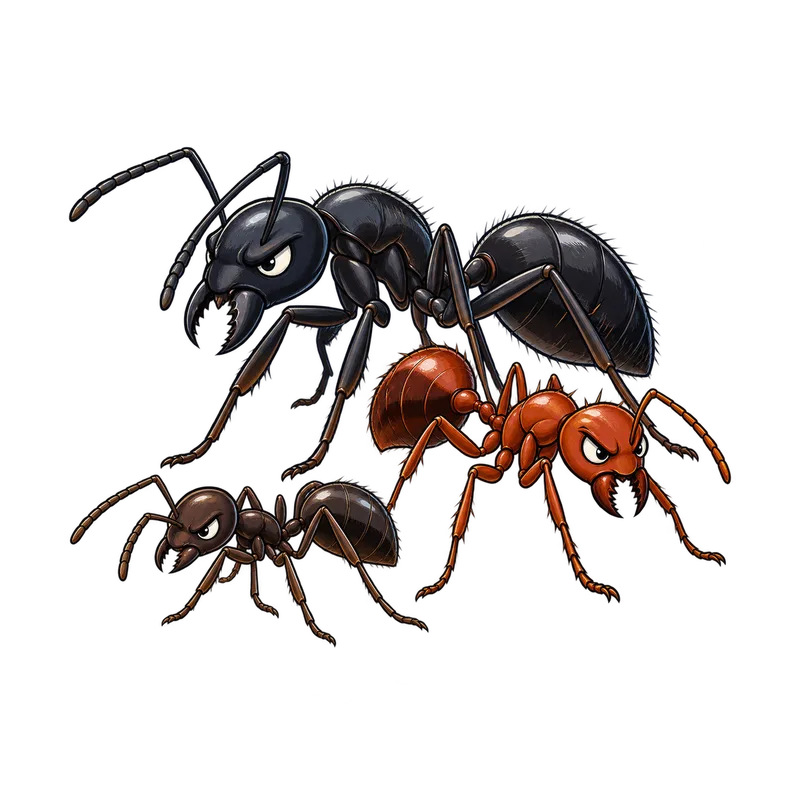
Getting rid of fire ants in the yard requires a two-step approach starting with whole-yard bait broadcasting. Foraging workers carry the slow-acting toxic granules back to the nest to share with the queen and larvae, causing the colony to collapse. Five to seven days later, you treat any stubborn remaining mounds near walkways or doorways with a targeted spot treatment.
What is actually going on
You walk out to the back patio with your morning coffee, step down onto the lawn, and suddenly your bare foot is on fire. By the time you hop back onto the concrete, dozens of tiny, aggressive ants are swarming your ankles, leaving a cluster of burning stings that will turn into itchy white pustules by tomorrow. If you grab a can of bug spray and drench that dome-shaped dirt mound, you might feel a brief sense of justice watching the workers scatter. But give it a week, and you will likely notice the colony has simply split into three new mounds closer to the patio.
Getting rid of fire ants in the yard is not about punishing the workers you can see on the surface. It is about reaching the queen hiding deep underground. When you use fast-acting contact sprays, the surviving ants sense the threat, seal off their tunnels, and move the reproductive core further down or spread out across your lawn in what is called mound budding. That is why treating a yard full of fire ants requires a deliberate, two-step approach rather than a knee-jerk reaction with whatever happens to be under the kitchen sink.
The technical consensus among entomologists relies on a method called whole-yard bait broadcasting, followed a few days later by targeted spot treatments on stubborn mounds. Instead of trying to kill every single worker with a quick-knockdown poison, this strategy enlists the ants themselves to do the heavy lifting. Foraging workers collect slow-acting toxic bait granules from the lawn and carry them back inside the nest, sharing the food through a communal mouth-to-mouth liquid exchange system. Once that poison reaches the queen and the larvae, the entire colony collapses from the inside out.
How to tell for sure
Before you invest in any products, you want to make sure you are actually dealing with fire ants and not native ants that happen to be minding their own business in the flower beds. Fire ant mounds in turf are usually open, dome-shaped structures of loose soil that lack a single visible central entrance hole. Native ants often build mounds with a distinct crater or a single opening right in the middle, while carpenter ants usually nest inside wood rather than open dirt domes.
If you want to be completely certain, you can capture a single worker and take a closer look using a magnifying glass or a ten-power hand lens. Fire ants belong to a family characterized by a narrow waist that features two distinct bumps, known as nodes, connecting the middle segment to the abdomen. Other common yard ants usually possess only a single node on that narrow waist.
You can also test whether they are actively foraging by placing a small potato chip or a dab of greasy food near the edge of the mound during a comfortable morning or late afternoon window. If fire ants are present, they usually swarm the food item rapidly within ten to fifteen minutes. If nothing happens, the ants might be inactive due to extreme midday heat or cold soil temperatures, which means any surface treatment you apply right then will likely go completely ignored.
What usually comes next
Once you confirm the infestation, your main practical choice comes down to committing to the two-step program or letting a professional handle the heavy lifting. The first step involves broadcasting a slow-acting bait across the entire lawn during dry weather when no rain is expected for at least twenty-four to forty-eight hours. You need a rotary spreader calibrated for a low application rate so the bait is distributed evenly. Do not dump piles of bait directly on top of the mounds, because guard ants will treat a large pile as an intrusion and ignore it, whereas scattered granules look like natural forage.
After spreading the bait, you have to resist the urge to mow, water the grass, or kick the mounds for about a week. The active ingredients inside the bait are designed to take a few days to work, ensuring the foragers survive long enough to share the poison with the rest of the colony. Five to seven days after your broadcast, you take care of step two by inspecting the yard for any high-priority mounds near walkways, doorways, or children's play areas, treating those specific survivors with a non-repellent liquid drench or spot treatment.
Common home remedies like pouring boiling water, gasoline, or dry cornmeal onto the dirt usually create more problems than they solve. Boiling water rarely penetrates deep enough to kill the queen, gasoline poisons your soil and groundwater, and ants cannot swallow dry cornmeal particles anyway. Skipping the whole-yard broadcast and just playing whack-a-mole with individual spot sprays will usually leave you chasing new mounds around the yard all season long.
When to get help
Fire ant stings are more than just a nuisance because their venom is made of potent piperidine alkaloids that cause intense burning and distinct, sterile pustules. While most people experience only localized pain and itching, individuals with known insect allergies can experience severe systemic reactions known as anaphylaxis. If a sting leads to generalized hives, swelling of the face or lips, tightness in the throat, wheezing, dizziness, or a sudden drop in blood pressure, call emergency services immediately or transport the person to an emergency facility. Anyone with a known hypersensitivity should carry a physician-prescribed epinephrine auto-injector at all times.
There are also times when handling the yard yourself is simply not practical. If the infestation covers a massive commercial landscape or your property boundaries border heavy agricultural land, a licensed pest control professional has the specialized equipment to manage acreage safely. You should also call in a professional if the fire ants are nesting underneath concrete slabs, inside home foundations, or within wall voids where surface baits cannot reach them. Finally, if your household includes infants, elderly residents, or anyone with severe medical sensitivities to stings, bringing in a professional removes the risk of accidental exposure to lawn treatments while ensuring the colonies are cleared out thoroughly.