
How do you get rid of sugar ants in the kitchen?
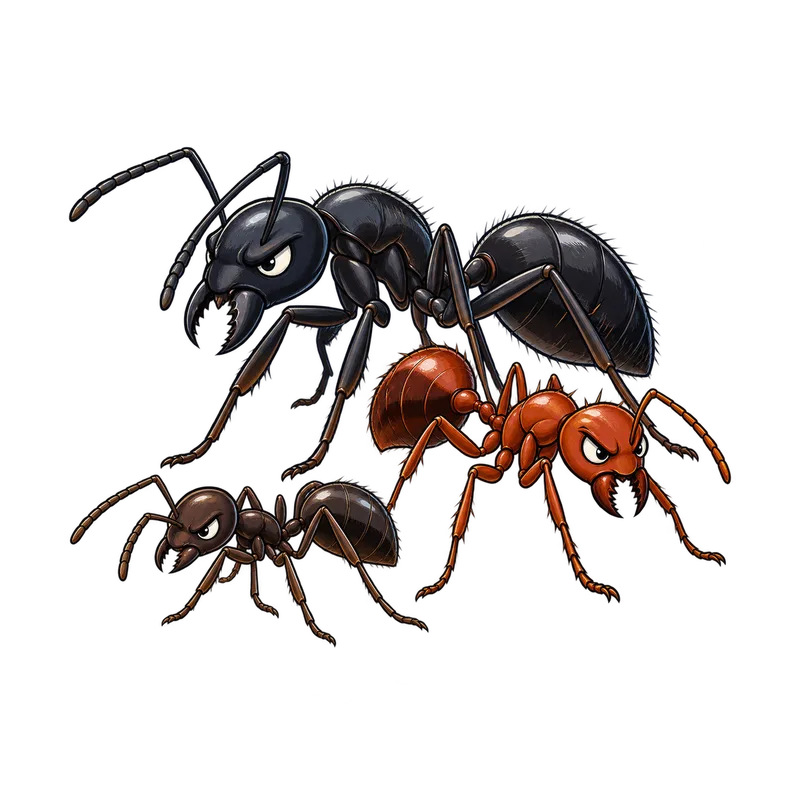
To get rid of kitchen ants, you should deploy slow-acting, non-repellent liquid or gel baits directly along their active foraging trails after cleaning your kitchen from top to bottom. Fast-acting contact sprays only kill visible workers and can cause multi-queen colonies to fragment and multiply. Let the foraging workers eat the bait undisturbed so they can carry it back to the nest to wipe out the entire colony.
What is actually going on
You walk into the kitchen on a quiet Tuesday morning, reach for the sugar canister to stir into your coffee, and notice a frantic, marching highway of tiny dark brown insects treating the counter seam like a busy thoroughfare. It is an instantly irritating sight that makes you wonder how an entire colony managed to move in overnight without paying rent. People usually call every single one of these little kitchen invaders a sugar ant, but that broad label covers several different species that thrive right alongside human settlements. They are not in your home to chew your cabinets or ruin your drywall, because ants do not consume wood. They come inside strictly to scout for water, grease, proteins, and carbohydrates to feed an underground or hidden colony.
Your first instinct might be to grab a can of aerosol bug spray from under the sink and wipe out the marching platoon with a quick blast of chemicals. Unfortunately, that satisfying moment of destruction solves almost nothing. Fast-acting contact sprays kill only the foraging workers you can see, leaving the egg-laying queens and the rest of the brood safe inside the nest. For many common multi-queen species, toxic sprays actually trigger a defensive survival mechanism known as budding. The colony senses the danger and fragments into multiple satellite nests, spreading deeper into your wall voids and subfloor cavities so that tomorrow you have five ant trails instead of one. True eradication requires a change in tactics that feels counterintuitive when you want them gone immediately. Instead of waging war on the workers marching across your backsplash, you have to use them like delivery drivers. The most reliable way to get rid of kitchen ants is to deploy slow-acting, non-repellent liquid or gel baits directly along their foraging trails. These baits combine an attractive food matrix with a delayed-action toxicant. The workers eat the mixture, carry it back to the nest, and share it with the queen and larvae through mutual food exchange, a process scientists call trophallaxis. That shared meal eventually causes total colony collapse from the inside out.
How to tell for sure
Before you buy any products, you usually need to take a close look at the insects invading your kitchen to figure out what you are dealing with. Argentine ants usually show up as uniform, dark brown workers measuring about three millimeters long, and they love both sweet liquids and greasy foods. Pharaoh ants are much smaller, measuring only about one and a half to two millimeters, with a yellowish or light reddish-brown body that makes them look almost translucent against a white countertop. Ghost ants share that tiny size but feature a dark head paired with pale, ghost-like legs and abdomens. If you spot much larger black insects lumbering across your floor or kitchen island, you are usually looking at foraging carpenter ants that have traveled indoors from an outdoor nesting site. Homeowners also frequently mix up winged ants and winged termites when the reproductive members of a colony take flight to start new nests. You can usually tell them apart by looking at three simple physical features without needing a microscope. An ant features a narrow, pinched waist, while a termite sports a thick, uniform waist that looks like it is wearing no belt at all. Ant antennae are visibly bent or elbowed in the middle, whereas termite antennae look like straight, beaded filaments. Finally, an ant has two pairs of wings where the front pair is noticeably larger than the back pair, while a winged termite carries four wings of equal length. Distinguishing between these pests matters because a termite infestation in structural timber requires an entirely different approach than a casual ant raid on your cereal box. It also helps to remember that ants do not digest wood. When carpenter ants carve out galleries in damp wood to raise their young, they push out clean, coarse sawdust shavings that look nothing like the mud tubes or hollowed-out timbers left behind by subterranean termites. Take a moment to collect a single specimen in a small glass vial or transparent container to confirm your target before spending money on the wrong control strategy.
What usually comes next
Once you have figured out what is walking across your counter, your most practical move is to clean your kitchen from top to bottom before you place a single drop of bait. People often assume that tidying up will simply starve the colony out on its own, but the real point of the exercise is much more strategic. If your counters are covered in stray crumbs, sticky syrup rings, and open cereal boxes, your store-bought baits have to compete with an overwhelming buffet of real food. When easier meals are everywhere, foraging ants will just walk right past the bait stations and ignore them completely. You need to wipe down every surface, move your flour, sugar, and pet kibble into airtight glass or heavy plastic containers, and keep the sink entirely free of dirty dishes. Take the kitchen trash out every single night and keep your outdoor bins tightly shut. Only after you have hidden every competing speck of food should you place your commercial gel or liquid baits right next to those active ant trails. Once the ants find the bait, leave them alone. Do not spray them, squash them, or wipe them off the counter, because every worker that gets to eat undisturbed and make it back to the wall is doing the heavy lifting for you.
When to get help
There are moments when store-bought baits and good housekeeping simply will not do the job, and you need to bring in a professional. If you find little piles of coarse sawdust mixed with insect parts, hear faint rustling noises inside your drywall, or notice that your window frames are sagging, you are likely looking at a carpenter ant colony nested deep inside your structural framing. That kind of structural trouble requires a licensed pest control operator to drill, inspect, and apply specialized products you cannot buy in a store. You should also call for backup if your kitchen invasion keeps coming back week after week despite your best efforts with sanitation and baiting. Health worries and accidental exposures mean you should also skip the DIY approach and get expert help. Common kitchen ants do not sting, but certain outdoor species pack a real punch, and fire ants can leave you with burning, painful pustules. Never try to figure out what bit you by looking at a red mark on your skin or matching it to a photograph. If anyone in your house starts swelling up, feels sick, or has a severe reaction after a run-in with insects, talk to a doctor or head to urgent care right away. If a child or a pet manages to get into a concentrated pest control product, skip the internet and call poison control for emergency instructions.