
Why are black ants appearing in the kitchen?
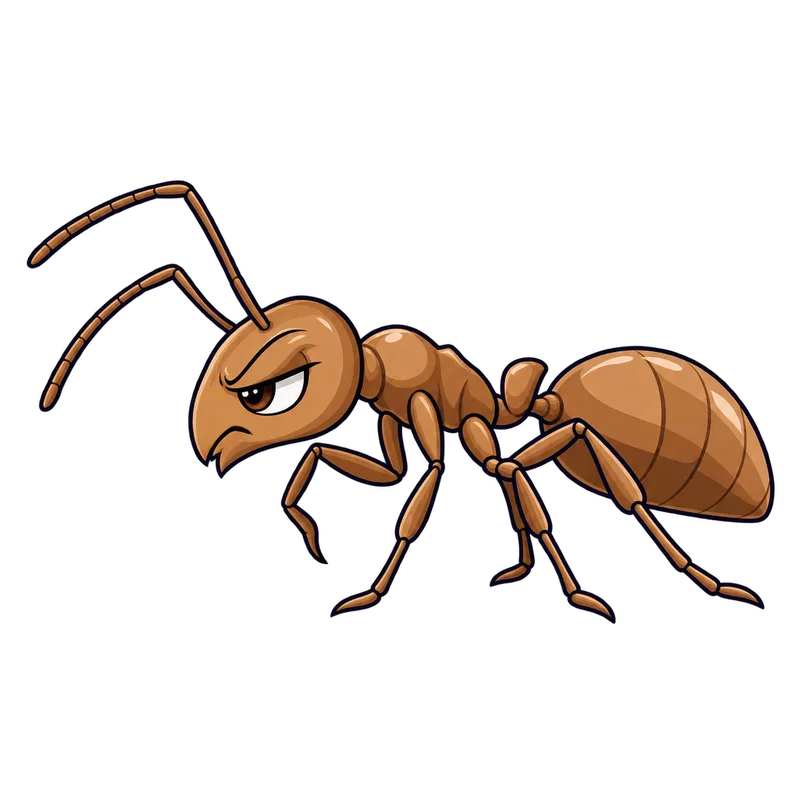
Black ants appear in the kitchen because it is the best-stocked room in the house, offering food, water, and shelter. A scout ant finds a resource and leaves an invisible pheromone trail that guides nestmates straight to the prize, either commuting from an outdoor nest or a satellite colony hidden inside a wall or under the floor.
What is actually going on
You walk in for a glass of water at 10 pm, flip on the light, and there they are: a tidy little parade of black ants marching along the edge of the counter like they pay rent. You wipe them up, go to bed, and by breakfast a fresh shift is on duty. So why your kitchen, of all places?
The short answer is that your kitchen is the best-stocked room in the house from an ant's point of view. It offers the three things every colony needs: food, water, and shelter. A scout ant wanders in, finds a smear of jam near the toaster or a slow drip from the pipe under the sink, and on its way home it lays down an invisible chemical trail, a scent road made of pheromones, that its nestmates can follow straight to the prize. That is why ants show up in such eerily organized lines. You are not looking at random wanderers. You are looking at commuters on a highway one scout built an hour ago.
Those commuters come from one of two places. Either the nest is outdoors, in the soil, under a paver, in a stump or a woodpile, and the workers are simply commuting in through a crack in the foundation or a gap around a window, or the colony has set up a satellite nest inside the house itself, in a wall void, behind a cabinet, or under the floor near a moisture source. Big black carpenter ants are the ones to watch for here, because they like to hollow out wood that a leak has already softened. One thing worth clearing up right away: carpenter ants do not eat wood. They chew it and spit it out to make living space, then go find actual food, like the syrup in your pantry. Your house is not being consumed. It is, at worst, being remodeled without a permit.
At this point most people object: but my kitchen is clean. Probably true, and mostly beside the point. An ant needs a crumb the size of a pinhead and a film of moisture you cannot even see. Spotless counters help, and we will get to that, but a clean kitchen with a sweaty pipe under the sink is still an open invitation.
And here is the part that frustrates everyone: spraying the ants you see accomplishes almost nothing. The workers on your counter are a small fraction of the colony. The queen and the brood are tucked away somewhere you cannot reach, and she will simply replace the losses. Worse, with some species, like the small dark Argentine ants common in California and the South, a repellent spray can stress the colony into splitting into several new nests scattered through your walls. You traded one problem for three. Congratulations.
How to tell for sure
Before you do anything, it helps to know what you are actually looking at, because "black ant in the kitchen" covers some very different situations.
Start with size. If the ants are all roughly the same small size, a few millimeters of uniform dark brown or black, you are usually dealing with something like Argentine ants or ordinary garden ants that nest outdoors and raid kitchens for sweets. If the ants vary noticeably in size, with some big bruisers mixed in among the smaller ones, that points toward carpenter ants, whose colonies produce workers of different sizes. Carpenter ants also tend to forage at night, so a 10 pm sighting of large black ants is a clue, not a coincidence.
Then check the waist. Ants have a narrow, pinched waist, like an hourglass, and bent, elbowed antennae. This matters most in spring, when winged ants swarm and people panic, assuming termites. A flying ant has that pinched waist, elbowed antennae, and two pairs of wings where the front pair is clearly longer. A termite has a thick, straight-sided body, straight beadlike antennae, and four equal wings. Pinched waist, bent antennae: ant. Thick waist, straight antennae: call someone about termites, because that is a different and more urgent conversation.
Finally, look for evidence of where they live. Little piles of coarse sawdust, sometimes mixed with bits of dead insects, appearing below a windowsill, a baseboard, or a door frame are carpenter ant excavating debris, called frass. That usually means a nest inside damp wood nearby. Faint rustling inside a wall at night is another hint. No sawdust, ants only near food, trail leading to a crack that goes outside? That is usually outdoor foragers, which is the easier problem to have.
What usually comes next
Here is the one decision that matters more than any product on the shelf: quit chasing the ants and start removing their reasons for showing up. Ant control that skips this step is not pest control. It is a hobby, and the ants are better at it than you.
Start with the water, because moisture pulls them in harder than anything else. Look under the sink, behind the dishwasher, around the drip pan under the fridge. A slow leak hurts you twice: it draws in foragers and it softens wood into exactly the kind of damp real estate carpenter ants want for a nest. Then deal with the food. Sugar, honey, cereal and pet food go into sealed containers, counters get wiped, and the pet bowl stops moonlighting as an all-night buffet. Outside, trim back the branches and shrubs touching the walls and roof, because those are bridges, and shift firewood and rotting stumps away from the foundation.
None of this is glamorous, and it is fair to wonder whether wiping counters can really beat an entire colony. It can, and here is why: the colony only sends commuters where the commute pays. Take away the payoff and the trail goes cold. The scouts stop reporting back and the highway empties out. It usually takes days, not minutes, which is exactly why people lose patience and grab the spray can instead.
If you do reach for a product, let the label run the show. The label is not a suggestion; it is the legal instructions for that product, and stretching the dose or brewing your own mix from dish soap and pantry odds and ends is both useless and genuinely risky. Pick the least toxic option that fits the job, favor the signal word CAUTION over WARNING or DANGER, treat the trails and entry points instead of fogging the whole kitchen, and wash your hands when you are done. Baits, used as directed, usually beat sprays because the workers carry the bait home and share it with the colony, queen included. That is the outcome you actually wanted all along.
When to get help
Some situations are past the home-remedy stage, and there is no shame in saying so. If fresh frass piles keep appearing, you hear rustling inside the walls, winged ants are emerging from somewhere indoors, or the ants are coming from a spot you physically cannot reach, like behind a tiled backsplash or inside a ceiling void, that is a job for a licensed pest control professional. They can find the nest and treat voids properly, and any structural wood damage deserves a real inspection rather than optimism.
On the health side, kitchen ants are mostly a nuisance, but remember they walked through garbage and decaying matter before strolling across your counters, so contaminated food goes in the trash, not back in the cupboard with a shrug. Bites and stings are usually just painful and local, but if anyone develops hives, swelling of the tongue or throat, dizziness, chest tightness, or trouble breathing, treat it as an emergency and get medical care immediately; someone with a prescribed epinephrine auto-injector should use it as directed while waiting for help. And if a pesticide is ever swallowed or someone is overexposed, call poison control right away instead of waiting to see how it plays out.
The ants are not mysterious and they are not winning. They found food and water and told their friends. Take away the invitation, and the parade usually ends on its own.