
How do you get rid of pavement ants in the house?
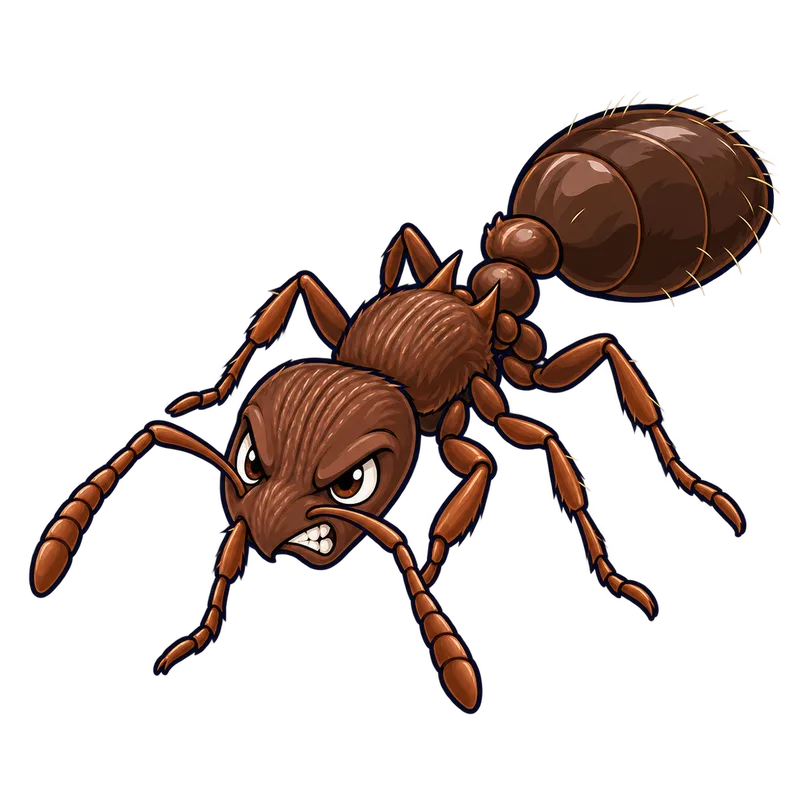
To get rid of pavement ants in the house, you need to use slow-acting, non-repellent baits instead of quick-kill surface sprays. The foraging workers eat this bait and carry it back to eliminate the hidden queen deep beneath the concrete slab. Success also depends on sealing entry points with caulk and storing all pantry sugars in airtight containers.
What is actually going on
You walk into the kitchen on a quiet Tuesday morning, reach for the coffee canister, and notice a brisk little procession of dark ants marching along the baseboard. Before you grab the nearest can of surface spray and wage all-out war, let us talk about what is really happening beneath your floors. Getting rid of these uninvited guests is not just about wiping out the ones you can see on the counter. Those visible foragers are merely the tip of a much larger subterranean iceberg.
When ants make their way indoors, they are usually scouting for water, warmth, or something sweet to bring back to the colony. Pavement ants and other common house-invading species typically nest outside under slabs, patios, or landscaping stones. They slip through microscopic cracks in your foundation or gaps around plumbing lines, following an invisible chemical highway laid down by scout workers. Once they find a crumb or a sticky drop under the toaster, they recruit half the neighborhood.
Spraying the ants on your kitchen floor with a quick-kill aerosol might feel satisfying, but it rarely solves the underlying problem. Contact sprays usually kill only the foragers unfortunate enough to be standing in the crossfire. Worse yet, many fast-acting chemical sprays act as repellents. Instead of eliminating the colony, they signal the surviving ants to seal off those tunnels and branch out into new wall voids, sometimes splitting the colony into multiple smaller nests.
Permanent control means shifting your focus from the visible surface workers to the hidden queen. You have to use methods that exploit the natural social structure of the colony. Because worker ants share food with one another and feed the queen through mouth-to-mouth liquid exchange, you can introduce a slow-acting, non-repellent toxicant. The foragers consume the bait, wander back to the nest completely unharmed, and unwittingly serve the poison to the rest of the colony.
How to tell for sure
Before you buy a single product or mix a bait, you need to know what you are looking at. People frequently mistake winged ants for swarming termites, which is a costly error given how differently those two pests behave. Take a close look at a specimen under bright light, ideally with a magnifying glass.
Ants usually have a distinct, constricted waist that looks pinched like a wasp, elbowed antennae that bend sharply in the middle, and front wings that are noticeably longer than their hind wings. Termites, by contrast, have a broad waist that joins thick to the thorax, straight or beadlike antennae, and two pairs of wings of identical length and shape. If you suspect you are dealing with wood-destroying insects that leave behind piles of coarse, sawdust-like frass or hollow out your timbers, you are usually looking at carpenter ants rather than simple pavement wanderers.
Positive identification saves you from treating the wrong pest with the wrong method. It also keeps you from panicking over nuisance foragers when the real issue might be structural dampness or rotting wood nearby. If you cannot make out the fine details with the naked eye, capturing a single specimen in a small glass jar gives you something clear to check against local university extension guides.
What usually comes next
Once you confirm you are dealing with ants rather than termites, your main practical choice comes down to picking a quick cosmetic fix or a thorough colony-level strategy. If you lean toward the cosmetic route, you can spend your weekends wiping down counters and spraying surface trails every few days. The ants will just keep coming back, though, because the queen is safely tucked away beneath the concrete slab laying hundreds of new eggs each day.
Choosing the colony-level strategy means putting away the contact sprays and committing to integrated pest management. This approach pairs targeted, slow-acting baits with strict non-chemical defenses. You start by sealing off their entry points with caulk, repairing leaky pipes that offer indoor hydration, and storing all pantry sugars, cereals, and pet food in airtight containers. If you leave out competing food crumbs, the ants are far more likely to accept the bait stations you place along their active foraging trails.
The rule of thumb here is patience. Slow-acting baits do not produce an immediate pile of dead bugs on the kitchen floor, which can make them feel ineffective at first glance. Yet that deliberate delay is precisely what allows the foraging workers to carry the active ingredient back through the network of tunnels to the queen. Always read and follow the printed product label directions carefully, as using a pesticide in a manner inconsistent with its labeling is not only ineffective but also illegal.
When to get help
There are moments when a do-it-yourself approach is simply not enough, and bringing in a licensed pest control professional is the wisest course of action. If you notice structural warning signs such as slit-like openings in wooden door frames, hollow-sounding timbers, or piles of coarse wood borings, you may be dealing with carpenter ants excavating structural framing. These situations demand a professional inspection to assess the extent of the wood decay and determine if subfloor treatments are necessary.
You should also call an expert if your ant problem persists despite weeks of rigorous sanitation and proper baiting, or if the nest is buried deep within inaccessible wall voids and crawlspaces. Certain species with multiple queens tend to split and multiply when stressed by improper chemical applications, making professional guidance essential to regain control.
On the health and safety front, take precautions if anyone in the household experiences an unusual allergic reaction to stings from certain ground-nesting ants, or if pests infest sensitive food preparation areas in a way that creates a contamination risk. Never apply pesticides near water wells, cisterns, or drainage ditches where runoff can reach groundwater. If you ever suspect pesticide exposure or accidental ingestion by a child or a pet, contact your local poison control center or medical professional immediately, and keep family members and pets away from treated areas until the application has dried completely according to label instructions.