
What do fire ant bites look like?
Fire ant bites start as small, raised red bumps within ten to fifteen minutes and turn into distinct, cloudy pustules resembling white-headed pimples by the twenty-four-hour mark. The appearance varies depending on your personal immune system, how many times you were stung, and whether you introduced dirt into the wound.
What is actually going on
You are out mowing the back lawn, step a little too close to an inconspicuous patch of disturbed dirt, and suddenly your ankles feel like someone is holding a lit match against your skin. You brush frantically, flicking away half a dozen tiny, angry reddish-brown ants. Within minutes, the burning is almost unbearable, and you are left wondering what on earth is happening to your legs. If you have ever dealt with fire ants, you know the sensation is entirely distinct from a regular bug bite.
So what do those spots actually look like? In the first ten to fifteen minutes, you will see a series of small, raised red bumps called wheals, surrounded by a sharp red flare. It feels like hot oil touched your skin because, chemically speaking, it kind of did. Unlike bees or wasps that inject protein-based venom, fire ants pump in a harsh, oily compound made mostly of potent alkaloids. Those chemicals kill skin cells on contact, which changes how the injury evolves over the next day.
By the twenty-four-hour mark, those angry red welts transform into something much stranger. They turn into distinct, cloudy pustules that look remarkably like tiny white-headed pimples. You might find yourself staring at your ankle wondering why your bug bites suddenly look like a skin breakout. That white fluid is not actually infectious pus from a germ, but rather the body's reaction to dead tissue caused by schistose or fire ant venom.
The hardest part at this stage is the intense, deep-seated itching that lingers for several days. People often assume that because fire ants have jaws, they are chewing through your skin. In reality, the ant uses its mandibles strictly as an anchor, gripping your flesh for leverage while it pivots its body to drive an abdominal stinger into you over and over again. That mechanical pivot is why you usually end up with a tight little cluster of bumps rather than just a single isolated mark.
It is tempting to snap a quick photo with your phone and send it to a group chat asking if these are fire ant stings. Dermatological reactions vary wildly depending on your personal immune system, how many times you were stung, and whether you accidentally introduced dirt into the wound. Because of that variation, no doctor or entomologist can give you a bulletproof identification based solely on a photograph of a red bump. Other insects, contact dermatitis, and bacterial skin issues can mimic that exact pustular look.
How to tell for sure
If you want to be certain about what you are dealing with, you usually have to examine the bugs themselves instead of the marks on your skin. Fire ants construct dome-shaped mounds of loose earth out in the open sun, such as lawns, pastures, and golf courses, and they manage this without leaving a visible opening hole on top. If you happen to disturb one of these nests, the colony reacts instantly and aggressively, with hundreds of workers boiling up to defend their home.
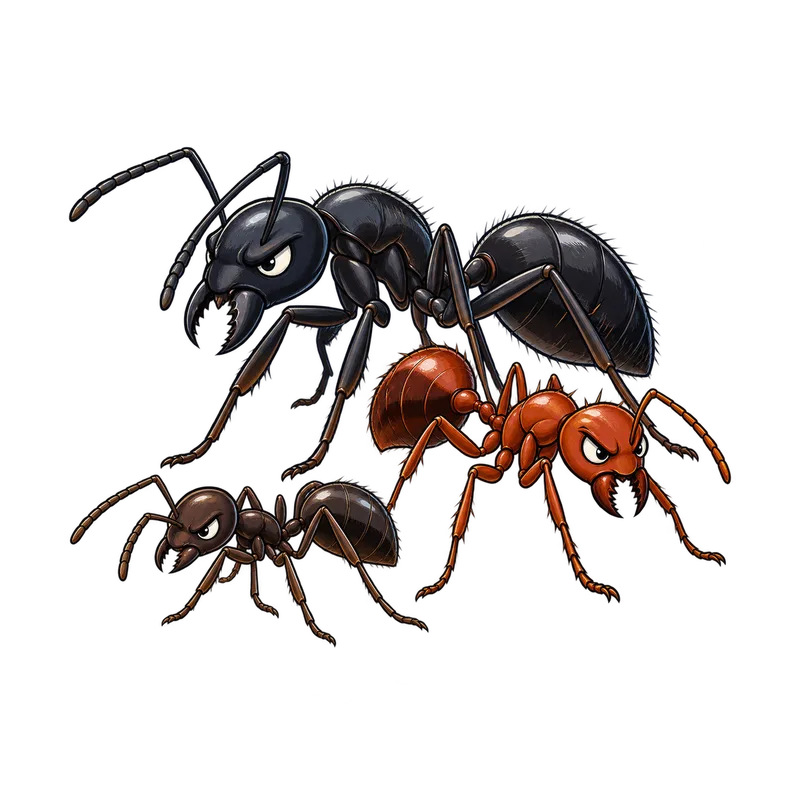
For an absolute confirmation of the species, you need a magnifying glass or a hand lens to check the ant waist. Fire ants have a pedicel, which is the narrow segment between the thorax and abdomen, featuring two distinct nodes or bump-like segments. Most other common ants found around the yard only have one. If you spot two little bead-like bumps on the waist of a reddish-brown ant that just left you with a burning welt, you have your answer.
What usually comes next
When you are standing in the kitchen staring at a growing cluster of burning pustules on your skin, you face one immediate, practical decision: whether to leave the blisters alone or treat them like ordinary pimples. The most important choice you will make right now is to keep your hands off them. It is tempting to scratch or pop those cloudy little bubbles, but doing so breaks the skin barrier and invites bacteria straight into an open wound.
Resist the urge to squeeze them, and instead focus on basic care like washing the area gently with mild soap and water. Holding a clean cloth-wrapped ice pack against the skin can help soothe the sharp burning sensation and bring down the surrounding swelling. If you leave the pustules intact, your body will gradually reabsorb the fluid and heal without leaving behind a secondary skin infection.
The only reason to make a different decision is if your body starts reacting far beyond the sting site. If the redness and swelling begin expanding into a massive, angry area that covers half your leg, or if you start noticing symptoms anywhere else on your body, the situation moves past simple home care.
When to get help
While a dozen fiery pustules on your ankle are mostly an exercise in stubborn patience, an allergic reaction to fire ant venom is an immediate medical emergency. If you or someone else gets stung and starts experiencing trouble breathing, wheezing, or tightness in the throat, do not wait to see if it passes. Swelling of the lips, tongue, or face, severe dizziness, confusion, or a sudden wave of nausea and stomach cramps require calling 911 or heading straight to the nearest emergency room without delay.
Systemic reactions can escalate rapidly, particularly for individuals with known insect allergies. If a doctor has previously prescribed an epinephrine auto-injector for stings, use it immediately according to those medical instructions while waiting for help to arrive. Keep in mind that severe reactions can sometimes present in two distinct waves, meaning emergency evaluation is necessary even if symptoms temporarily subside.
When the issue is less about medical safety and more about a massive mound of fire ants taking over a high-traffic area in your yard where children or pets play, you should bring in a licensed pest control professional. Trying to shovel or flood a large active mound often leads to hundreds of aggressive stings, whereas a professional can evaluate the colony and apply appropriate control measures safely under current product guidelines.