
How do carpenter ant baits work?
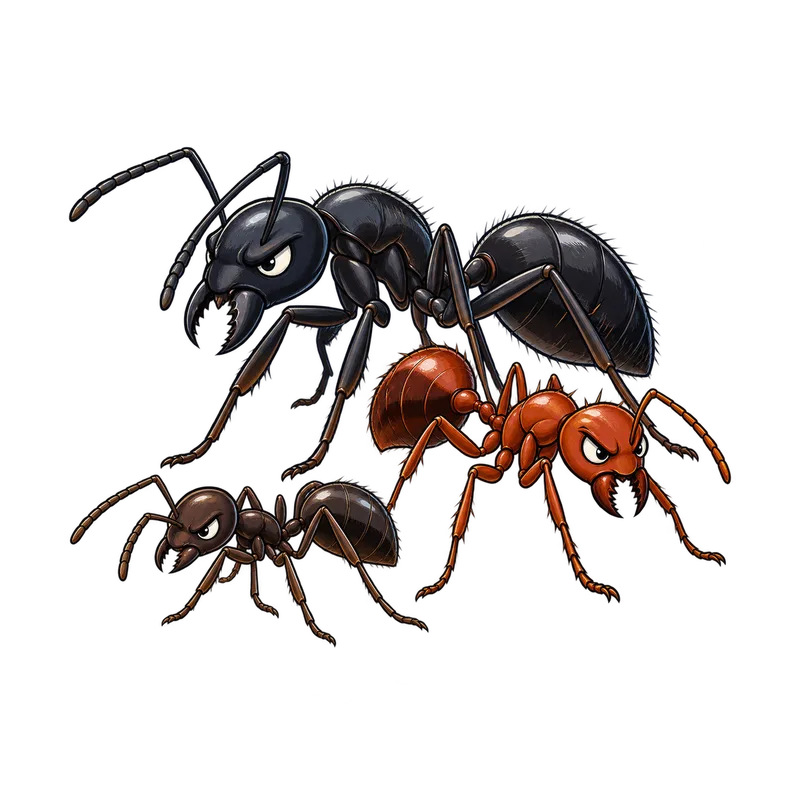
Carpenter ant baits work by using a slow acting poison disguised as food that foraging workers carry back to share with the rest of the colony. The active ingredient takes from one to four weeks to wipe out the nest, keeping the courier alive long enough to reach the queen.
What is actually going on
You are standing in your kitchen on a quiet Saturday morning, pouring coffee, when you spot a large black ant marching purposefully across the counter. You crush it with a paper towel, feeling a brief sense of victory, only to notice another one twenty minutes later emerging from the gap behind the baseboard. If you reach for a standard surface spray and wipe out every ant you see today, you might feel like you solved the problem, but tomorrow morning you will likely find a brand new delegation on patrol. That is because the ants you can see are only a tiny fraction of a massive underground or in-wall workforce, and surface sprays do nothing to reach the hidden source.
Carpenter ant baits work by turning the insects' own foraging habits against them, acting as a slow-acting poison disguised as food. Instead of killing the worker ant on contact, a good bait relies on a specific chemical that allows the forager to eat its fill, walk away without feeling sick, and make the trip back to its hidden nest. Once it gets back, it shares that meal with its nestmates through mouth-to-mouth liquid exchange, a biological process known as trophallaxis, as well as mutual grooming. This shared meal spreads horizontally through the colony, eventually reaching the developing larvae and the egg-laying queen.
The real brilliance of a bait is that it exploits how carpenter ants divide their living space. A mature colony rarely lives in just one spot. They usually maintain a primary parent nest outdoors in damp or decaying wood, where the queen lays eggs, alongside multiple satellite nests tucked safely inside warm structural wall voids, roof eaves, or hollow doors. Because these satellite nests house thousands of workers and pupae without a queen, wiping them out with a contact spray leaves the outdoor parent nest completely unharmed. Baits bypass this structural wall entirely because the foraging workers act like a fleet of delivery trucks, willingly hauling the lethal cargo straight back to the queen.
Foraging worker ants have a specialized crop, sometimes called a social stomach, that lets them carry liquid food back to the nest like a living lunchbox. When you place a slow-acting bait along their travel paths, the ants consume the toxic matrix willingly because it does not trigger an immediate warning response. The active ingredient in these baits is deliberately chosen to take hours or days to work. If a chemical killed the worker right beside the bait station, it would act like a closed security gate, warning other ants away and ensuring the queen never receives a drop of the poison. By keeping the courier alive long enough to make the trip back, the bait functions like a Trojan horse that infiltrates the core of the colony network.
This entire mechanism relies on the fact that carpenter ants do not actually eat wood for nutrition. They hollow out wooden galleries solely to create nesting space, which means they must leave the safety of the nest constantly to search for external food sources. Their appetite changes with the seasons as well. In the spring, when the queen is producing eggs and the colony is rearing new brood, workers search aggressively for proteins and lipids. By summer, their energy demands shift toward carbohydrates and sugary liquids to fuel the heavy workload of the foraging force. Matching the bait formulation to these seasonal cravings determines whether the colony ignores the station or treats it like an open invitation.
How to tell for sure
Before you put out any bait, you need to confirm you are actually dealing with carpenter ants and not something else, because a bait designed for sweet-loving ants will usually fail if you are facing wood-boring beetles or subterranean termites. Take a close look at the insect using a magnifying glass or a clear macro photo on your phone. Carpenter ants usually feature a single pinched node on their waist, elbowed antennae, and a polymorphic worker size, meaning you might see tiny six-millimeter workers alongside massive thirteen-millimeter majors.
You also want to look at the debris they leave behind. Carpenter ants do not actually eat wood for nutrition like termites do, but instead chew through it solely to carve out their nesting galleries. When you clean up the piles of debris they kick out of wall cracks or pinholes, you usually find clean, coarse sawdust mixed with insect body parts like detached ant legs and heads. This texture looks entirely different from the muddy shelter tubes built by termites or the tiny, hard, seed-like fecal pellets left behind by drywood termites.
Keep in mind that carpenter ant dietary preferences shift dramatically across the seasons. In the spring, when the colony is busy rearing new brood and the queen needs massive amounts of protein for egg production, the workers usually ignore sweets and hunt down protein-rich and lipid-rich sources. By mid-summer, their energy changes, and adult workers usually crave energy-rich carbohydrates like aphid honeydew or sugary liquids to sustain their heavy daily foraging runs. Matching your bait formulation to what they are actively craving at that specific time of year is usually the difference between complete colony elimination and total indifference.
What usually comes next
Your main practical decision comes down to choosing between a liquid or gel bait versus a granular bait, and placing it directly along active trails without contaminating the area. If you spot ants moving steadily along a baseboard or near a plumbing penetration, you need to place your bait stations or gel dots right in that path, but you must resist the urge to spray anything else nearby. If you spray a fast-acting contact insecticide or even a household cleaner over or near the bait, you contaminate the food source, and the ants will instantly detect the chemical and refuse to touch the bait.
When setting up your bait, remember that patience is mandatory. A successful bait takes anywhere from one to four weeks to wipe out a colony, because if a product kills the worker ant in ten minutes, it fails. A fast-acting poison kills the courier before it ever reaches the nest, leaving the queen and the hidden satellite nests completely untouched. You want a slow, measured toxicant that allows the ant to complete its commute home and distribute the dose through the colony network before mortality sets in.
When to get help
There are certain situations where DIY baiting simply will not cut it, and you need to call in a licensed pest control professional. If the primary parent nest is buried deep inside a massive decaying tree stump at the edge of your property line, or if the sawdust streams are emerging from high vaulted ceilings and finished hardwood floors where you cannot safely drill or apply dusts, professional intervention is usually required. You also need an expert when an infestation has gone on long enough to compromise the structural integrity of your home, resulting in sagging ceiling beams or floor joists that yield to light finger pressure and require professional timber replacement.
Regarding your health and safety, carpenter ants do not possess a stinger, but major workers can deliver a genuinely painful bite with their powerful mandibles and spray formic acid into the wound. If you or someone in your household experiences a severe insect bite, a localized skin infection, or any unexpected systemic allergic reaction, consult a qualified clinician or urgent care service immediately. Always follow the product label instructions strictly when handling any pesticide, and if an accidental ingestion occurs with children or domestic animals, contact your local poison control center right away.