
What are the signs of carpenter ants in a house?
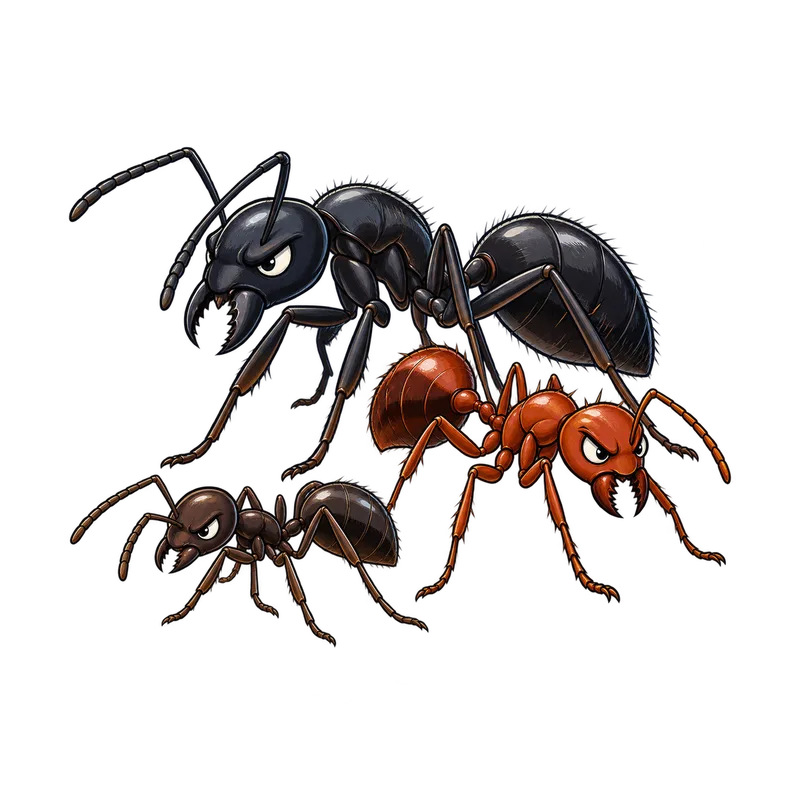
Signs of a carpenter ant infestation include large black or red and black ants indoors, winged ants emerging inside, and coarse sawdust-like frass pushed out of wood. You might also hear a faint rustling or clicking inside walls. The best proof is fresh frass appearing in the same spot within 48 hours after you clean it up.
What is actually going on
You are wiping down the bathroom window sill and notice a little pile of what looks like pencil sharpener shavings. Odd place for sawdust. Then a big black ant strolls along the baseboard as if it pays rent. Put those two things together, and carpenter ants move from "possibility" to "worth checking."
So what are the actual signs? Large ants indoors, especially at night. Coarse, sawdust-like debris pushed out of wood. Faint rustling or clicking inside a wall. And winged ants emerging inside the house in late winter or spring. If you could open up the damaged wood itself, you would usually find clean, smooth tunnels that look as if someone sanded the inside.
Here is the part many people get wrong: carpenter ants do not eat wood. They are not tiny termites wearing black. They chew through wood to make nesting space, then haul the shavings out and dump them. Picture a tidy woodworker who carves a hollow box and sweeps every bit of waste through a narrow slot in the door. That dumped material, called frass, is often the best clue you will get without opening a wall.
Carpenter ants also have a strong preference for damp, softened wood, at least when they are getting started. A leaky window frame, a damp sill plate, a bathroom wall with an old plumbing leak, or a beam in a humid crawl space is much easier for them to excavate than sound, dry lumber. Once a colony is established, though, it can expand into dry, solid framing. So "the wood is not rotten" does not clear the house, and "I keep a dry home" is not the alibi people hope it is.
How to tell for sure
Start with the ants themselves. Carpenter ants are noticeably large for household ants, often around a quarter to half inch long, sometimes larger. Many are black, while some are red and black. They have a narrow pinched waist and bent, elbowed antennae. Seeing one in the kitchen once in midsummer does not prove much, because outdoor workers sometimes wander in while looking for food or water. Seeing several indoors repeatedly, especially at night or near damp areas, is more suggestive.
The frass is more telling. It is usually coarse and fibrous, like fresh wood shavings, and it often contains dark flecks. Look closely with a magnifying glass or a 10x hand lens and those flecks may turn out to be ant legs, heads, or other insect parts. It tends to collect in loose little piles below a slit in a window casing, door frame, baseboard, beam, or piece of siding. The classic version looks as if someone emptied a pencil sharpener onto the sill, then sprinkled in insect leftovers.
That detail matters because not every pile of "sawdust" means carpenter ants. Drywood termites leave hard, pellet-like droppings, often compared to tiny seeds. Powderpost beetles produce a much finer powder, closer to flour. Subterranean termites are messy in a different way: they bring soil into their workings and build muddy tubes or plaster. Carpenter ant galleries, by contrast, are clean and smooth inside, with no mud packed into them. If you find coarse shavings mixed with insect parts, carpenter ants move up the suspect list.
Sound can help too, though it is the easiest clue to overinterpret. In a quiet room, an active nest inside a wall, ceiling, hollow door, or subfloor may produce a faint rustling or clicking. People often describe it as dry leaves stirring or cellophane being crinkled very softly. Houses make plenty of noises on their own, so do not diagnose an infestation from one mysterious tick at midnight. But if the sound repeats in the same area and comes with ants or frass, it deserves attention.
Winged ants indoors are a stronger sign, especially in late winter or early spring. Those are the colony's reproductive members leaving to mate and start new nests. If they are emerging inside a heated house, there is usually a mature nest somewhere in the structure. Do not confuse them with termite swarmers, because the response is different. A winged ant has a narrow "hourglass" waist, elbowed antennae, and front wings that are longer than the back pair. A termite swarmer looks more like a straight-sided little tube, with a thick waist, straight beaded antennae, and two pairs of wings about the same length.
Want a simple confirmation test? Clean up the suspected frass completely. Vacuum it, wipe the surface, and mark the spot mentally or with a small piece of painter's tape nearby. Check again over the next 24 to 48 hours. Fresh shavings in the same place usually mean something is actively excavating above or beside that spot. Old, undisturbed debris might be from a past problem, but it still deserves a moisture check.
One more caveat before you declare a verdict: carpenter ants sometimes nest in spaces that already exist, such as hollow doors, wall voids, foam insulation, or old insect galleries, rather than chewing fresh wood. In that case, you may see more insect parts than shavings. And a few foragers indoors can come from a nest outside in a stump, firewood pile, or dead tree. That is why one clue alone rarely settles it. The pattern is what counts.
What usually comes next
The real fork in the road is simple: are you looking at one lost scout, or at a nest that has moved into the building? One big ant near an open door in July, with nothing else going on, usually earns you a watchful eye rather than a full alarm. Fresh piles of frass, winged ants indoors, repeated nighttime traffic, or a faint rustle in the same wall are a different story. That is when you stop collecting anecdotes and treat it as an active nesting problem.
Either way, go after the moisture. This is the unglamorous part, and it matters more than chasing individual ants across the kitchen like they owe you an apology. Check under sinks, around tubs and showers, near window frames, in the basement or crawl space, and along rooflines or siding where water could sneak in. Fix leaks, clear gutters, improve ventilation where the air stays damp, and replace wood that has softened or decayed. Carpenter ants have a talent for finding the house's weak spot before the homeowner does, which is rude of them, but useful if you take the hint.
Outside, remove the easy bridges. Keep tree branches and shrubs from touching the roof or siding, and store firewood off the ground and away from the house, roughly 20 feet if you have the room. Firewood is not automatically a carpenter ant delivery service, but a damp pile pressed against the siding is not exactly a locked door either.
You may be thinking: why not just spray and be done with it? Because fogging the baseboards mostly kills the few workers unlucky enough to cross your path while the nest keeps renovating behind the wall. If any product is used, the label controls where and how it can be applied, and treatments inside wall voids are usually better left to a licensed applicator with the right equipment. Your best immediate tools are a flashlight, a vacuum, a moisture inspection, and enough patience to clean the spot and check it again.
When to get help
Call a pest management professional when the signs point to an active indoor nest: fresh frass after cleaning, winged ants emerging inside, repeated activity in the same wall or ceiling, or ants turning up in several rooms with no obvious outdoor source. Nests hidden in wall voids, insulation, or structural framing are hard to reach without accidentally auditioning for a demolition show. A professional can inspect, confirm the identification, and decide whether treatment, further opening, or moisture repair makes sense.
Bring in a qualified builder or structural professional if wood looks badly hollowed, sagging, crushed, or weakened, especially in joists, sill plates, rafters, studs, or porch supports. A pest inspector can report insect damage, but judging whether framing is still safe is a different job. That distinction matters: evicting the ants does not put strength back into wood they have already hollowed out.
On the health side, carpenter ants are not known for spreading disease, and they do not sting. Large workers can bite and may spray formic acid into the broken skin, which can make the bite sting more than you expected from an ant with no visible attitude problem. Most reactions are mild, but seek medical care for spreading redness, significant swelling, breathing difficulty, dizziness, or any severe allergic symptoms. If a pesticide gets into eyes, is inhaled, is swallowed, or causes illness, follow the label's first aid directions and contact Poison Control or emergency services as appropriate.
If you keep only one idea, keep this one: carpenter ants announce themselves through patterns, not single clues. Big ants alone are a maybe. Coarse frass with insect parts is stronger. Fresh frass, indoor swarmers, and rustling in one damp wall are the house telling you, in its quiet and irritating way, to stop wondering and start investigating.