
How do you get rid of carpenter ants?
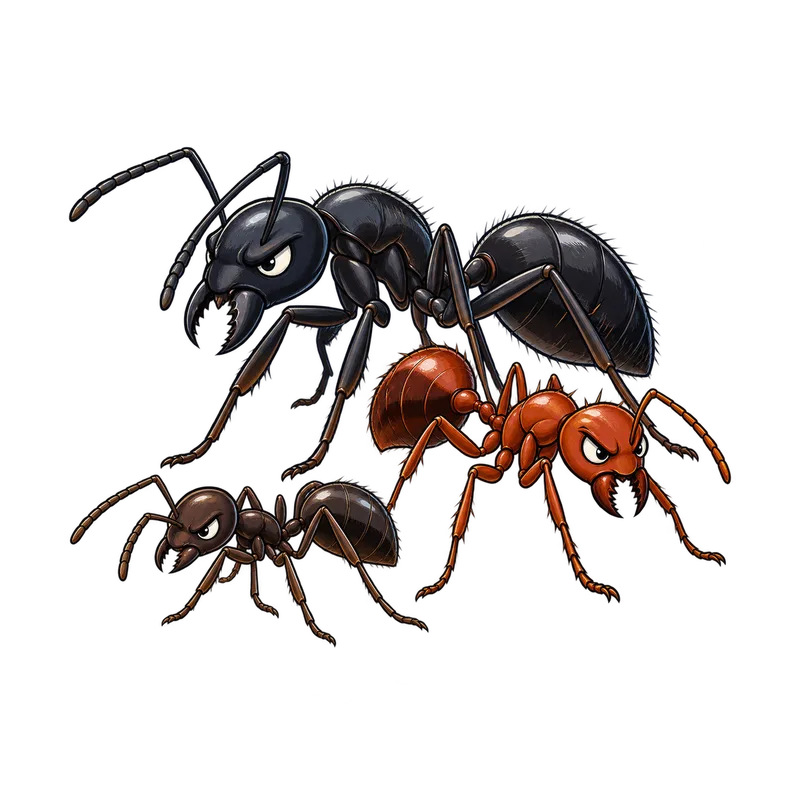
To get rid of carpenter ants, you need to find the nest, treat the nest itself, and fix the moisture problem that made the wood attractive. Treating the job depends on whether you can locate the nest or only see foraging workers.
What is actually going on
You sweep up a neat little pile of sawdust under the spare room window, feel oddly proud of your housekeeping, and the next morning the same pile is back in the same spot, as if a very polite vandal has a key. That is often the first useful clue with carpenter ants. The short answer is blunt: find the nest, treat the nest itself, and fix the moisture problem that made the wood attractive. Spraying the ants strolling across the counter feels productive, but those are commuters. The colony is elsewhere, doing the real work behind a wall, under a porch, or out in a stump.
The part people resist is that carpenter ants do not eat wood. Termites eat wood. Carpenter ants excavate it, chew out galleries, then haul the shavings outside like tiny contractors who insist on a clean job site. That is why the debris keeps reappearing after you sweep. They are not mocking you. They are emptying the trash.
Most indoor trouble is also not the whole colony. A typical setup has a parent nest outdoors in damp, decaying wood, maybe an old stump, a hollow log, a dead limb, or firewood stacked against the house. The queen is usually there, laying eggs while the indoor nest operates as a satellite, a warmer and drier branch office staffed by workers. Kill the satellite and ignore the parent nest, and the colony can send replacements. This is why the baseboard spray routine fails with such impressive consistency: you are thinning the foragers while the queen keeps the production line running.
So the job has three parts, in order: confirm you have carpenter ants, follow workers back to where they actually live, then correct the wet wood condition that invited them. Skip one and you may get a quiet winter followed by the same sawdust pile next spring, which is nature's way of saying you treated the symptom and framed it as a victory.
How to tell for sure
Before treating anything, separate ants from termites, because the response is different and termites are the bigger emergency. The quick check is body shape. A carpenter ant has a narrow, pinched waist, like a tightly belted coat, plus elbowed antennae. A termite looks straighter and thicker through the middle, with antennae like tiny beads. If you catch winged swarmers in spring, compare wings: an ant's front pair is longer than the back pair, while a termite's four wings are roughly equal.
Size helps, but do not make it carry the whole case. Carpenter ants are among the larger ants people see indoors in the United States, often around 6 to 19 mm depending on the caste, and many are black or red and black. They usually show up where food and water are easy, kitchens and bathrooms especially, and they prefer to forage after dark. One big ant on the counter at noon is not a diagnosis. A steady night shift near a damp window is more persuasive.
The sawdust is better evidence, and this is where people get fooled by any old pile of wood dust. Carpenter ant debris is usually coarse, like pencil shavings, and often includes legs, antennae, or bits of dead nestmates tossed out with the shavings. Powderpost beetles leave a finer, flour-like powder without insect parts. Carpenter bees also drop coarse shavings, but theirs tend to come with pollen and dark smears. Termites leave mud tubes or tiny pellets, not fresh curly shavings. If you find a small slit in the wood with fresh debris below it, you may have found the exit door.
There is also a low-tech trick that sounds invented but is not: on a quiet evening, put your ear near the active spot. An occupied nest can make a faint rustling or dry crackling sound, like cellophane being crumpled very slowly. Tap the wood too. Solid framing should sound solid; a papery or hollow note where it should be dense deserves attention. Usually, the combination is enough to act on: large ants, coarse debris with body parts, a damp area nearby, and maybe sound at night. Exact species identification is a hand-lens job and rarely changes the first move.
What usually comes next
The real decision comes down to one question: can you find the nest, or can you only find ants? If it is the second, your job is detective work, not warfare. Start where water and wood have spent too much time together, because carpenter ants usually begin in timber that moisture has already softened, wood kept damp long enough for decay to loosen it up for them. Check window and door sills, roof eaves and soffits, porch columns, the subfloor under any plumbing that has ever leaked, and siding where the gutters overflow. Then walk outside and look at stumps, landscape timbers, dead limbs, and firewood pressed against the foundation. Firewood stacked against the house is basically lodging with a covered walkway straight to your framing.
At dusk, watch the foragers instead of chasing them. Workers carry food home, and a patient person can often follow the line back to the gap, crack, or slit where they vanish. That spot matters more than the ten ants you saw earlier. Once you have located the nest void, the standard approach is to treat that void directly with an insecticidal dust labeled for that use, placed into the gallery space so it reaches the brood and moves through the colony. Fogging the room and hoping for the best is the pest control version of shouting at the thermostat.
Read the product label before you buy and again before you use. The label is a legal document, not a vibe. It tells you which sites and methods are allowed, and using a product somewhere the label does not cover is not a clever workaround, it is simply not permitted. Keep applications away from children, pets, and food preparation surfaces, and store whatever is left over locked up. If the label language feels ambiguous for your situation, take that as a sign to stop and ask a licensed applicator rather than improvise.
Then comes the part people skip because it involves a ladder, a plumber, or an honest look at the gutters: fix the conditions. Repair the leak, clear the downspouts, slope the soil away from the foundation, and keep wood off the ground and off the siding. A fair objection is, if the nest is already in dry wood, why bother? Because established colonies can extend into sound lumber once they are in, but moisture is usually what gets them started and what keeps drawing new colonies to your house specifically. Evicting one colony while leaving the vacancy sign lit is not a strategy.
When to get help
Some of this is reasonable DIY, and some of it is not. The line is mostly access and scale. Call a licensed pest control professional when the nest is somewhere you cannot reach, such as inside an insulated ceiling, between studs in a finished wall, or under a slab. Do the same if ants are turning up in several unrelated parts of the house, which can mean multiple satellite nests, or if you have searched honestly and still cannot find the source. A professional can also hunt down the outdoor parent nest in a tree, stump, or woodpile away from the house, because treating that is often what finally stops the reinvasion cycle.
If the problem has been going on for years, have a qualified contractor or building inspector check any load-bearing wood that sounds hollow, feels soft, or shows long-running debris. Carpenter ants work more slowly than termites, but slow is not the same as harmless, and studs, joists, and rafters are not places to practice optimism.
On the health side, carpenter ants do not sting, but large workers can bite and may dab formic acid into the bite, which stings briefly and then usually settles down on its own. If someone has a reaction beyond a small sore spot, or if pesticide gets on skin, in eyes, or anywhere it should not, contact a clinician or poison control rather than waiting to see whether bravado has medical value. Keep the practical order in mind: confirm, locate, treat the nest, fix the moisture, and hand it off when the nest is out of reach or the wood itself is in question.