
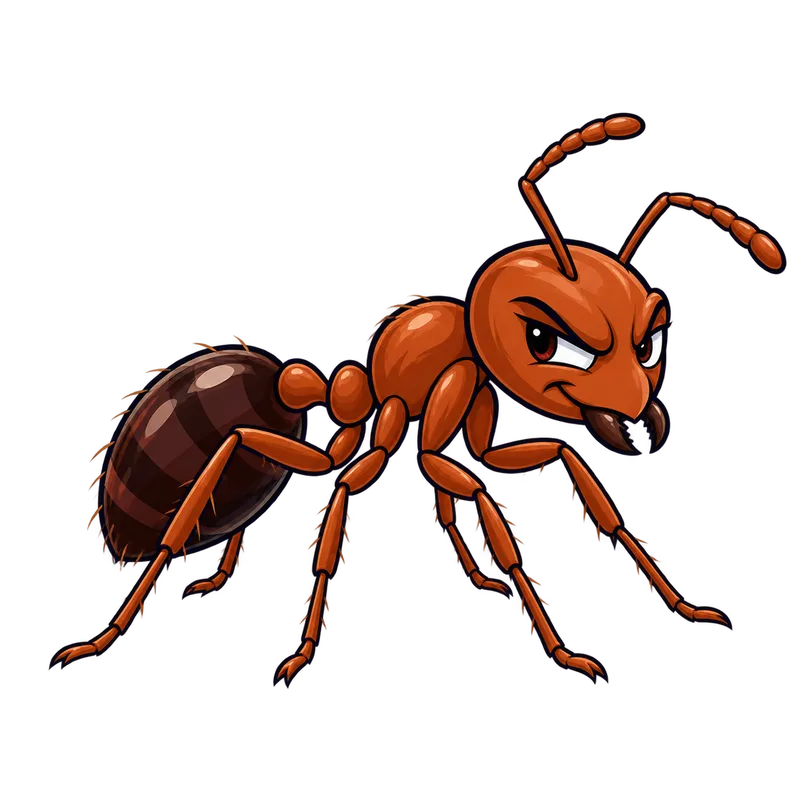
Red imported fire ant
Solenopsis invicta
- Size
- Not established
- Color
- Reddish to reddish-brown
- Habitat
- Open, sunny terrestrial environments
- Diet
- Omnivorous and generalist foragers
- Life cycle
- Complex eusocial colonies
You are probably looking at a reddish to reddish-brown insect crawling out of a freshly tilled patch of lawn, wondering if it is going to ruin your afternoon. The most reliable field mark for Solenopsis invicta sits right in the middle of its anatomy, though you will need decent magnification or a hand lens to appreciate it. Fire ants possess exactly two distinct nodes on the pedicel, which is the narrow waist connection linking the thorax to the abdomen. Most common ants you find wandering around a kitchen or patio only have a single node.
Identity
The body features a reddish head and thorax that shade into a darker gaster, along with elbowed antennae carrying a distinct club at the tip. Reaching a definitive species-level identification in the garden is tricky because native fire ants and co-introduced species look nearly identical to the naked eye, requiring a specialist to check microscopic clypeal teeth and petiole structures. If you are trying to tell them apart from carpenter ants or Argentine ants, check that waist again. Those lookalikes sport a single node and lack a functional stinger entirely, whereas female fire ants pack a modified ovipositor ready to deliver a jab.
Habitat & behaviour
These ants prefer open, sunny terrestrial environments where the sun beats down without obstruction. You will spot their prominent earthen mounds in pastures, residential lawns, public parks, golf courses, and roadsides. Unlike some other mound-building insects, these domes lack a visible central exit hole. Instead, the surface serves as a thermal regulation hub and a cover for subterranean galleries that honeycomb the soil beneath your feet.
Activity peaks during the warm months of spring, summer, and autumn, when workers head out as generalist foragers across turfgrass and garden beds. They are omnivorous scavengers, meaning practically any food source or protein left outdoors can draw them in. When a foraging trail or a mound gets disturbed by a lawnmower wheel or a careless foot, the response is swift and aggressive. Workers swarm upward in unison, latching on with their mandibles for leverage before jabbing with their stingers.
Visual variations
Colony life runs on a strict division of labor, which means the ant you dig up might not look anything like the one marching across your patio. Workers form the sterile female cast that handles the daily grind of survival, from digging tunnels and patching up the mound to nursing the young and scavenging for meals. They do not have wings and are built entirely for manual labor both underground and out in the open.
When reproductive season rolls around, the nest starts cranking out fertile winged alates. These males and females sport two pairs of unequal, membranous wings meant strictly for nuptial flights and starting fresh colonies. Once that mating flight finishes, the successful female sheds her wings to become a queen, ready to dig a new nest and build a dynasty from scratch. While the eggs, larvae, and pupae grow quietly out of sight deep inside the subterranean brood chambers, the adults you actually see above ground are just the working cast or the seasonal flyers getting ready to launch.
Why it matters
A run-in with these insects usually leaves a mark you will remember for a few days, and it all comes down to their chemistry. Unlike many stinging bugs whose venom relies mostly on proteins, fire ant venom consists almost entirely of potent alkaloids with just a tiny fraction of protein. When a bunch of workers sting you at the same time, you get an immediate and intense burning sensation that feels remarkably like actual fire. Within twenty-four hours, those stings typically turn into distinct fluid-filled pustules that can itch fiercely for several days.
If you run into severe or widespread reactions, any signs of an allergy, or systemic hypersensitivity, skip the home remedies and contact a clinician, urgent care clinic, or poison control center right away. Never try to guess an insect species from a skin mark or a rash, because a bump on your arm tells you nothing reliable about the bug that made it. Always confirm the exact pest through a clear physical look at the insect before you consider any control strategy, and make sure to follow the product label instructions precisely if you use a pesticide.
Similar species
 Black imported fire antSolenopsis richteri
 Odorous house antTapinoma sessile
 Pavement antTetramorium immigrans
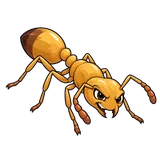 Pharaoh antMonomorium pharaonis
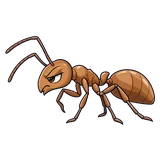 Argentine antLinepithema humile
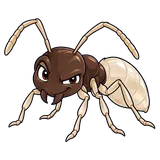 Ghost antTapinoma melanocephalum