
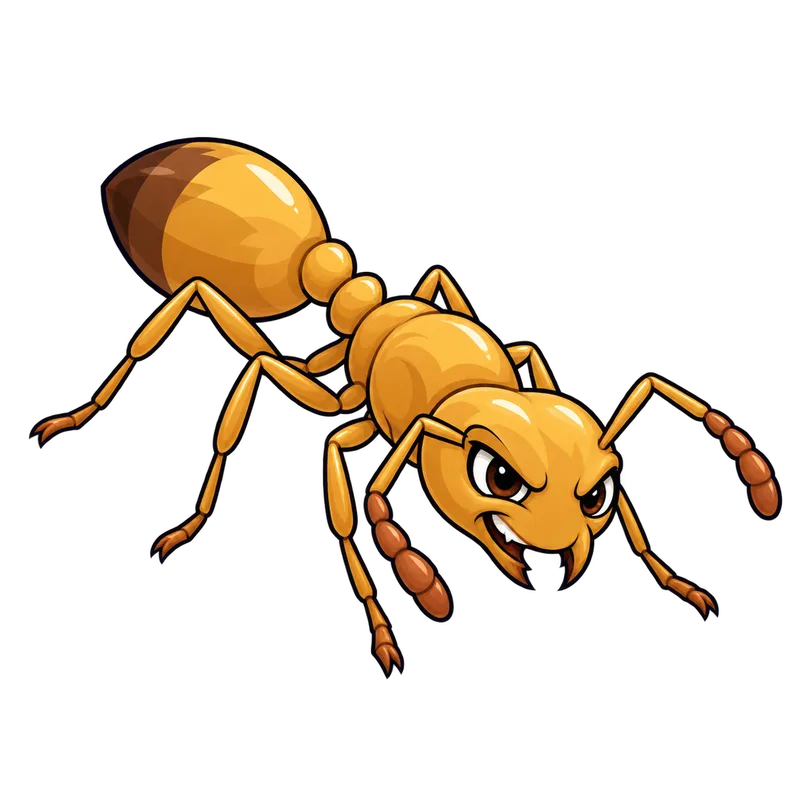
Pharaoh ant
Monomorium pharaonis
- Size
- Not established
- Color
- Not established
- Habitat
- Indoor resident in temperate regions
- Diet
- Omnivorous generalists
- Life cycle
- Egg, larva, pupa, adult
Pharaoh ants are tiny household residents that spend their entire lives tucked away inside structural wall voids, pipe chases, and hospital rooms rather than out in the yard. To confirm you are looking at one of these social insects rather than a termite, look for the classic ant silhouette. You will need a hand lens or macro camera setting to pick out the details, because these workers are among the smallest ants you will ever spot indoors. They feature a distinctly narrow, pinched waist separating the thorax from the abdomen, elbowed antennae that bend sharply at an angle like a human arm, and distinct compound eyes on the sides of the head.
Identity
People often confuse Pharaoh ants with subterranean or drywood termites, mostly because both appear in large numbers inside buildings. Termites give themselves away immediately by their thick, blocky waists, straight beadlike antennae, and milky white bodies. If you spot a winged reproductive form, look at the wing size. Pharaoh ant alates carry two pairs of unequal membranous wings where the front pair is noticeably longer than the hind pair, whereas termites sport two pairs of identical length.
You might also mistake them for Argentine ants or ghost ants. Argentine ants are slightly larger and display a uniform brown color, while ghost ants feature pale, translucent abdomens that make them look ghostly against a white kitchen counter. Pharaoh ants lack those striking pale abdomens and do not match the larger size of carpenter ants, which can easily measure up to half an inch long and leave behind piles of wood shavings.
Habitat & behaviour
In temperate climates across North America and Europe, Pharaoh ants are strictly indoor creatures. They cannot survive freezing winter conditions outdoors and lack the ability to enter seasonal winter rest or diapause. Instead, they take advantage of permanently heated human environments like residential apartment blocks, commercial food preparation areas, and sterile healthcare facilities. You will find them nesting in dark, protected microclimates such as wall cavities, behind baseboards, inside drop ceilings, and around electrical conduit boxes.
Because they stay indoors year-round, they do not experience seasonal summer swarming flights the way native outdoor ants do. You will not see massive clouds of winged Pharaoh ants pouring out of your lawn on a humid July afternoon. Instead, their colonies expand entirely through a process called budding. When a colony grows large or feels threatened by temperature shifts or chemical interference, a subset of workers, brood, and one or multiple queens simply pack up and walk through structural gaps to establish a new satellite nest in another room or down the hall.
They are generalist scavengers driven by an ongoing need for moisture, carbohydrates, and proteins. Foragers lay down persistent chemical trails along baseboards and plumbing pipes to guide nestmates straight to pet food bowls, sugary spills on kitchen counters, grease splatters behind the stove, and moisture pooling beneath bathroom sinks.
Visual variations
Pharaoh ant colonies run on a strict division of labor where each member looks and behaves according to its assigned job. Workers make up almost every single ant you will spot marching along your kitchen counter. These sterile female members cannot reproduce and spend their entire lives foraging for supplies, nursing the young, and building out the nest tunnels. They look nearly identical to one another, acting as the nimble scouts that funnel resources back to the hidden center.
Queens hold the royal power in the colony, and while plenty of insects rely on just one solitary founder, Pharaoh ant groups are thoroughly polygynous. This means dozens or even hundreds of egg-laying queens live and rule together within the same interconnected web of nests. A queen is quite a bit larger than the common workers, featuring a swollen abdomen designed entirely for heavy-duty egg production.
Males are winged members born only when the colony matures and gets ready to breed indoors. Just like the queens, they carry two unequal pairs of wings, though you will rarely spot them hiding among the vastly larger workforce of sterile females running the daily operations.
Every single one of these adults grows through complete metamorphosis, beginning as tiny microscopic eggs, moving through legless larvae, resting in a quiet pupal phase, and finally stepping out as grown ants. Since this whole cycle happens inside temperature-controlled buildings, you can easily dig into a nest in January and find every single life stage hanging out together.
Why it matters
Unlike termites or carpenter ants, Pharaoh ants do not care about your structural framing and cannot chew through wood. They will never hollow out your floor joists or reduce your back porch to a pile of sawdust. Finding them inside your living room or office building means you are sharing space with uninvited scavengers that can foul up pantry supplies and carry filth from dark, hidden corners.
Inside hospitals and restaurant kitchens, their habit of wandering everywhere turns them into a serious mechanical carrier of germs. Foraging workers crawl over sterile surgical trays and food prep counters, potentially spreading harmful bacteria picked up during their journeys through dirty plumbing lines and wall voids. Aside from the genuine health risks in clinical settings, a runaway infestation causes heavy stress and endless frustration for anyone trying to maintain a clean home.
If you find these ants, knowing exactly what they are changes everything because standard pest control tactics will completely backfire. Grabbing a normal repellent spray or mixing up a home remedy is the quickest route to a much larger headache. Disturbing a multi-queen colony with harsh chemicals forces the nest to fracture instantly, causing the various queens to scatter and spawn dozens of new satellite nests all over your walls. Getting rid of them calls for slow, deliberate baiting methods that let the workers carry food-based poisons back to the queens, wiping out the entire reproductive engine from the inside.
Similar species
 Argentine antLinepithema humile
 Ghost antTapinoma melanocephalum
 Yellow crazy antAnoplolepis gracilipes
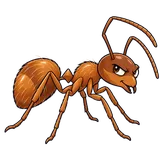 Tawny crazy antNylanderia fulva
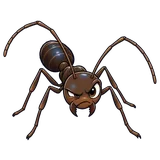 Longhorn crazy antParatrechina longicornis
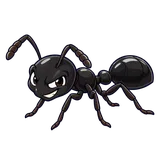 Little black antMonomorium minimum