
Why can pharaoh ant colonies be difficult to manage in an apartment building?
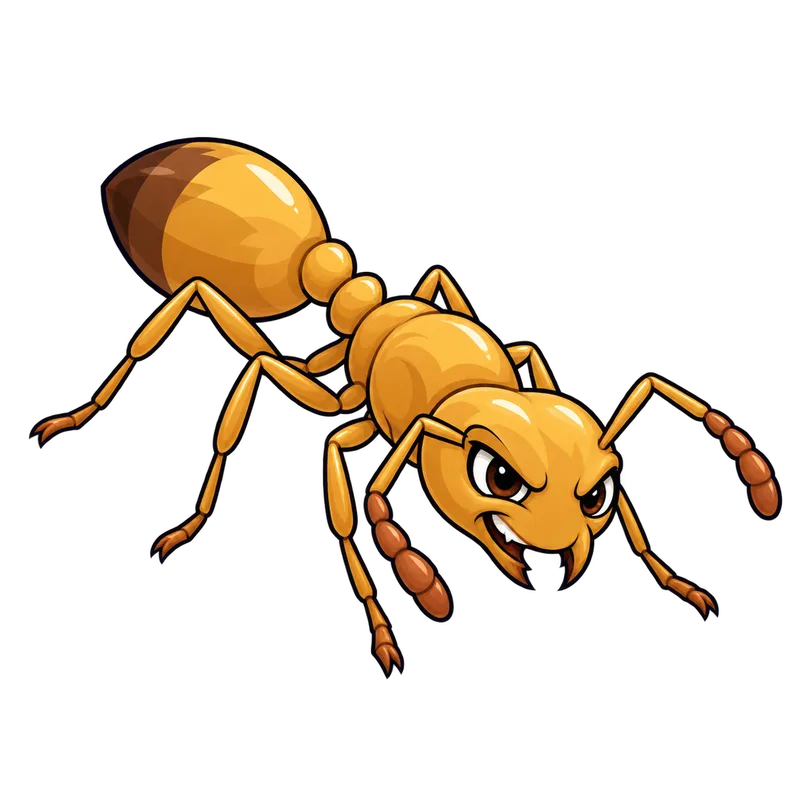
Pharaoh ant colonies are difficult to manage in an apartment building because they live in hidden wall voids and use a process called budding to scatter when sprayed. Contact insecticides cause the multiple queens to split the colony and flee into neighboring units. Successful control requires coordinated, building-wide treatment using slow-acting baits.
What is actually going on
Picture walking into your apartment kitchen on a Tuesday evening and spotting a faint amber line of tiny ants marching straight out from the edge of the baseboard toward the sink. Your first instinct is usually to grab whatever aerosol bug spray is sitting under the sink, shake the can, and blast the trail until it disappears. It feels satisfying in the moment, but with Pharaoh ants, that exact reflex is what turns a mild annoyance into a building-wide headache.
Pharaoh ants do not behave like the garden ants that occasionally wander indoors through a patio door. In an apartment building, they live in continuous, climate-controlled comfort inside wall voids, electrical conduits, drop ceilings, and plumbing chases. These hidden cavities act as a private subway system running behind the plaster, allowing colonies to spread from floor to floor without ever showing their faces in the open.
The real trouble starts when you spray them with a standard contact insecticide. Pharaoh ant colonies are polygynous, meaning they do not rely on a single queen. They keep multiple egg-laying queens scattered across a sprawling network of sub-colonies. When you hit a foraging trail with a repellent chemical spray, you kill a few dozen workers on the surface, but the chemical alarm alerts the rest of the nest.
Instead of dying out, the colony responds through a process called budding. The queens and remaining workers scoop up their brood and split into multiple fragments, fleeing deeper into the wall voids or sliding along utility lines straight into your neighbors' kitchens. You did not wipe out the pest; you just handed them plane tickets to scatter across the building.
How to tell for sure
Before you even think about picking a control method, you have to know what you are looking at. Misidentifying Pharaoh ants as Argentine ants or ghost ants usually leads to the wrong treatments, which usually makes the infestation worse.
You can usually spot a Pharaoh ant worker by its tiny size, usually falling between 1.5 and 2 mm long. They are monomorphic, meaning every worker looks pretty much the same size rather than showing a mix of tiny and giant body types. Their coloration is usually pale yellow or light reddish-brown, but the back part of their body, the gaster, has a distinctly darker or blackish tip that stands out.
If you grab a magnifying glass, you can usually check for a few structural details that confirm the diagnosis. A close look at the waist usually reveals two distinct nodes connecting the thorax to the gaster. Their long antennae usually have twelve segments and end in a noticeable three-segmented club. If the ants match this description, you are usually dealing with Pharaoh ants.
When specimens are crushed, damaged, or hard to distinguish under standard household lighting, identification stops right there. If you cannot clearly see the antennal segments or the two-noded waist, collect a sample in seventy percent isopropyl alcohol and drop it off at a local university extension service or certified lab for confirmation.
What usually comes next
Once you have a confirmed identification, the natural urge is to march down to the hardware store and buy the strongest professional spray on the shelf. Stop right there. Because these colonies fragment so easily, a single tenant trying to solve the problem with an over-the-counter fogger or perimeter spray is essentially playing a game of pest whack-a-mole.
Your main practical decision comes down to choosing between isolation and coordination. If you live in a multi-family building, you cannot treat your apartment as an island. You have to work with property management to arrange a synchronized, building-wide treatment plan.
Eradication requires slow-acting, non-repellent baits or insect growth regulators, which are chemical agents that disrupt the life cycle. Instead of killing the foragers on contact, these baits allow the workers to haul the toxic food back to the hidden nest and feed the queens through mouth-to-mouth sharing, which is the natural way colony members distribute nourishment among themselves.
For this baiting strategy to work, you also have to lock down your kitchen. If an apartment building smells like an all-you-can-eat buffet of unsealed cereal boxes, grease spills, and open garbage bins, the ants will simply ignore the bait stations. You need to store all food and pet supplies in airtight glass or rigid plastic containers, wipe down grease daily, and fix any plumbing leaks. When alternative food sources disappear, the ants are forced to take the bait, which finally breaks the reproductive cycle at the queen level.
When to get help
There are moments when a do-it-yourself approach is entirely out of the question and professional intervention is legally or practically mandatory. If you live in an apartment complex, property management must bring in a licensed pest control professional at the very first sign of Pharaoh ants. Commercial operators have access to specialized bait types and the legal authority to inspect and treat multiple adjacent units simultaneously, which is the only way to clear out interconnected structural voids.
In settings like hospitals, nursing homes, and commercial food facilities, the stakes are even higher. Pharaoh ants are notorious for wandering into sterile packaging, intravenous tubing, and wound dressings, which means they can mechanically transfer dangerous bacterial pathogens. In those environments, chemical spraying is strictly prohibited, and trained specialists must rely on non-disruptive baiting protocols.
If residents experience unexplained skin irritations or allergic reactions, never assume it is the ants doing the biting. Pharaoh ants do not cause specific diagnostic skin lesions or deliver painful stings. If skin marks or rashes appear, consult a qualified medical clinician, urgent care facility, or poison control center right away to determine the actual cause.