
Tawny crazy ant vs yellow crazy ant: what is different?
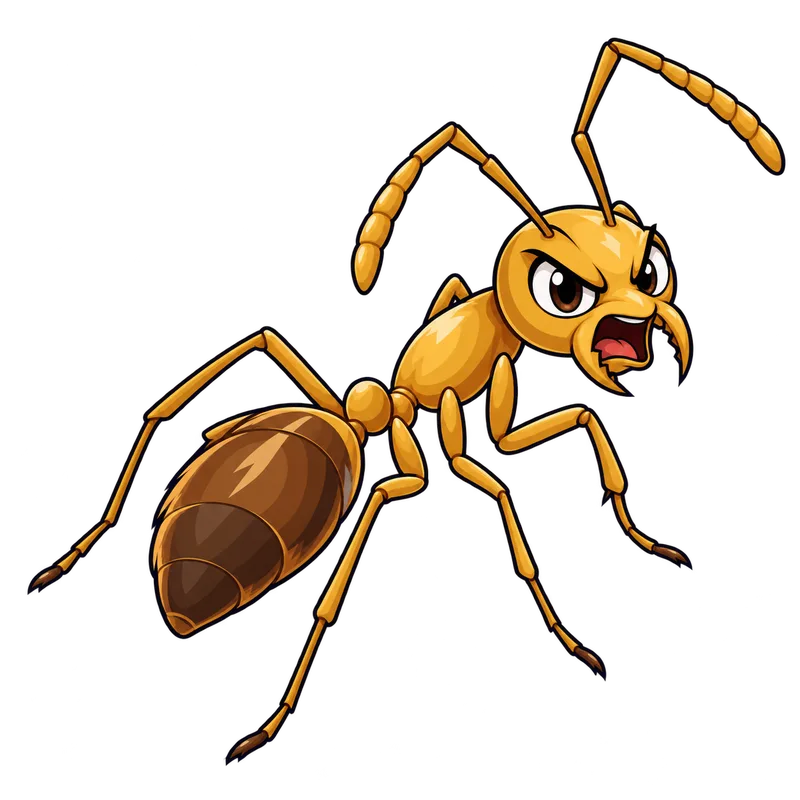
The tawny crazy ant and the yellow crazy ant differ in geographic origin, size, and survival strategy, even though both share a frantic running style. Tawny crazy ants are small South American natives measuring two to three millimeters, while yellow crazy ants are larger, paler Old World species measuring four to five millimeters with exceptionally long legs.
What is actually going on
Picture stepping out onto your back patio on a humid July afternoon, looking down at the lawn, and realizing the ground itself appears to be crawling. You are not watching a single neat column of foragers marching toward a sweet spill. Instead, you are looking at a chaotic carpet of small insects darting in jagged, unpredictable zig-zags across the flagstones. That erratic movement is why people call them crazy ants, but it actually hides a deeper biological divide. When you compare the tawny crazy ant and the yellow crazy ant, you are looking at two different ecological heavyweights that share a nervous-looking sprint.
The tawny crazy ant is a South American native that has quietly taken over huge swaths of the southeastern United States. They are small, roughly two to three millimeters long, and covered in a reddish-brown fuzz. They do not build the tidy soil mounds you get with fire ants. Instead, they form sprawling supercolonies under piles of mulch, rotting logs, and concrete slabs, spilling out across neighborhoods by the millions.
The yellow crazy ant is a different animal altogether. Originating in the Old World and famous for its exploits in tropical regions, this species is larger, paler, and sports exceptionally long legs. While tawny crazy ants love to pack themselves into electrical boxes until they short out the unit, yellow crazy ants wage chemical warfare on a massive scale, spraying formic acid that blinds and kills large native vertebrates on tropical islands.
So, are they the same pest with different geographic preferences? Not quite. They belong to different genera, come from different parts of the world, and rely on distinct survival strategies. Both lack a functional stinger, relying on an acidopore at the tip of the abdomen to spray chemical defenses rather than stinging your skin, but how they use those defenses separates them completely.
How to tell for sure
If you want to know what kind of pest you are dealing with, you usually have to look past the frantic running style. Both species are monomorphic, meaning every worker ant in the colony is roughly the same size, but their dimensions and colors differ. Tawny crazy ants usually measure about two to three millimeters and sport a uniform reddish-brown hue. Yellow crazy ants usually run larger, around four to five millimeters, with a pale yellow to amber-brown body and those impossibly long legs and antennae.
Another common mix-up in North America is the longhorn crazy ant, which looks quite similar to the tawny relative but tends to be jet black or dark brown with an elongated thorax. Meanwhile, folks often confuse native odorous house ants with crazy ants because they move quickly, but crushing a house ant usually releases a distinct smell like rotten coconut, which crazy ants never do.
If you are trying to confirm a tawny crazy ant in the United States, a casual backyard glance is rarely enough. Positive identification usually requires a specialist using high-resolution microscopy to check for specific tiny, standing hairs on the middle section of the ant's body. If you collect specimens for confirmation, a professional usually asks you to drop them into a small vial filled with rubbing alcohol rather than trying to diagnose an infestation from a blurry smartphone photograph or an itchy red mark on your skin.
What usually comes next
When a homeowner discovers millions of erratic ants swarming the patio, the first instinct is usually to grab a can of standard contact spray from the hardware store and soak every ant in sight. That approach almost always backfires. Because these supercolonies are massive and feature dozens of egg-laying queens scattered across multiple nesting sites, spraying a perimeter usually only kills the surface foragers for a couple of days. The rest of the colony simply shifts underground or bypasses the dead zone, and within a week, you are right back where you started.
Effective management usually requires stepping back and looking at an integrated strategy rather than a quick fix. Because tawny crazy ants are drawn to moisture and harborage, clearing away leaf litter, raising firewood off the ground, and moving mulch beds away from your home's foundation can remove the damp hiding spots they love. If you use chemical controls, a professional application typically relies on non-repellent liquid insecticides that ants carry back to share with the colony, or specialized bait stations deployed during warmer months.
One practical rule worth keeping in mind involves the aftermath of a treatment. When thousands of ants die, they tend to pile up in deep drifts along baseboards or patio corners. Never hose those dead ant piles away with a high-pressure stream of water. Doing so washes away your residual chemical barrier and drains active ingredients into storm runoff. Instead, grab a broom or a leaf blower to sweep the dry bodies away before refreshing your perimeter.
When to get help
There are moments when a DIY approach is not enough, and bringing in outside help is the safest choice. If an infestation spans multiple properties, or if the ants have moved past the lawn and started packing themselves into electrical meters, HVAC units, and circuit breakers, you should contact a licensed pest control professional. These situations carry real risks of structural short circuits and expensive equipment failure that require specialized, non-repellent barrier treatments or regulated products that belong in professional hands.
If you or anyone in your household suffers a severe allergic reaction, persistent skin lesions, or secondary infections from insect exposure, stop guessing at the cause and seek immediate guidance from a qualified clinician, urgent care center, or your regional poison control center. Pest control information is for managing the property, not for diagnosing medical symptoms.
Finally, remember that local ecosystems and wildlife are heavily protected. If you suspect an invasive ant population is displacing native species or interfering with protected birds and wildlife in your region, report the sighting to your local state agricultural extension office or wildlife department. Keeping our homes comfortable should never come at the expense of breaking local conservation laws or risking the safety of non-target animals.