
Why do ants keep returning after you clean the kitchen?
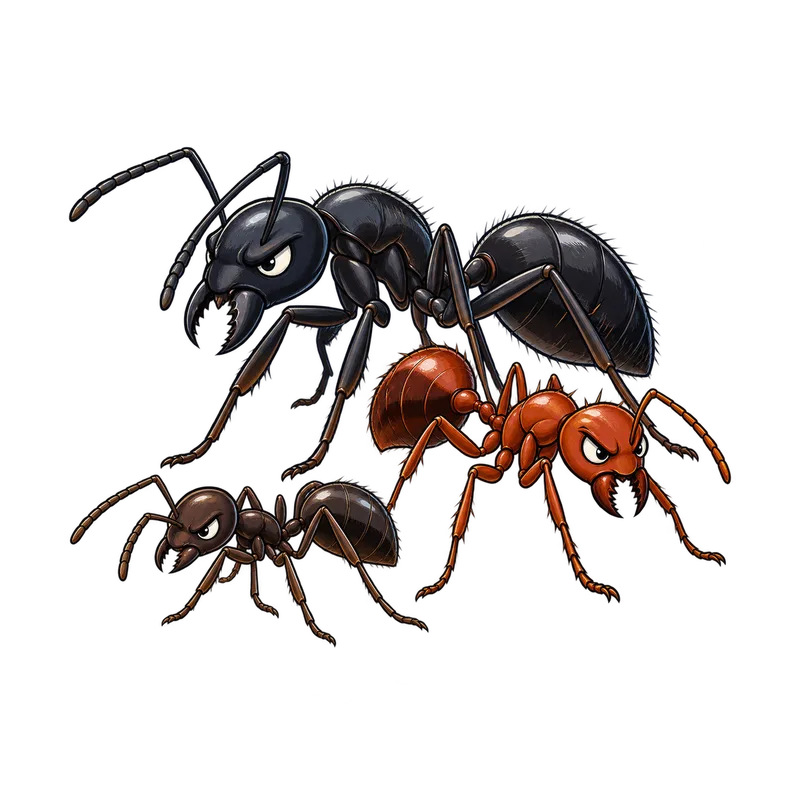
Kitchen ants keep returning after you clean because the bugs you see are only scouts sent out by a massive underground or in wall operation. Wiping down counters removes visible workers and scent trails, but it does not touch the queen or the thousands of insects resting safely inside your walls.
What is actually going on
You spend twenty minutes wiping down the counters with citrus spray, put every crumb into a sealed bin, and feel pretty good about your kitchen. Then you walk in for a glass of water an hour later and find a fresh column marching across the exact same stretch of laminate. It feels personal, like the ants are mocking your cleaning supplies.
The frustration usually comes from a misunderstanding of what those countertop bugs actually represent. Think of the ants you see as the tip of an iceberg. They are simply foragers, sent out by a massive underground or in-wall operation to scout for supplies. Wiping down the counter removes the visible scouts and washes away their invisible scent trails, but it does nothing to touch the queen, the developing larvae, or the thousands of workers resting safely inside your walls or under the subfloor.
When you use a standard household contact spray along the baseboards, you often achieve little more than a temporary detour. The spray kills the workers currently standing in the chemical, but it acts like a makeshift roadblock. The colony simply redirects its traffic through an adjacent wall void or floor joist. Unless you find the nest or cut off their water supply, they will keep sending out new waves as long as the kitchen offers anything worth eating or drinking.
How to tell for sure
Before you try to fix the problem, you need to know what you are looking at. Not all wood-chewing insects or kitchen pests are the same, and misidentifying them usually leads to wasted afternoons. If you are seeing larger ants near window frames or wooden cabinets, take a close look at them with a magnifying glass if you have one.
Carpenter ants are common culprits in many regions, especially near damp timber. People often assume they eat wood like termites do, but that is usually a misconception. Carpenter ants do not digest cellulose. They excavate wood strictly to carve out smooth nesting galleries, while doing their actual feeding out in the open on household food scraps and sweet liquids.
You can usually tell ants apart from termites by looking at three simple physical traits. Ants have a narrow, pinched waist, elbowed antennae, and transparent wings of unequal size where the front pair is longer than the back. Termites, by contrast, have a thick, straight waist, straight bead-like antennae, and four wings of identical length. If you find small piles of coarse sawdust beneath window casings or door frames, you are usually looking at carpenter ant excavation debris rather than termite mud tunnels.
What usually comes next
Once you accept that surface cleaning only solves half the problem, you have to decide where to direct your energy. Usually, the most practical step is tracking down the moisture sources that keep these colonies comfortable. A spotless kitchen counter will not stop an ant invasion if a slow plumbing leak under the sink or heavy condensation around a drain line keeps the surrounding timber damp.
Fixing those hidden water leaks matters just as much as sealing up food. Carpenter ants and other moisture-loving species actively seek out damp wood because it is easier to tunnel through and provides the humidity their brood requires. Check your sink supply lines, drain traps, and window flashing for any sign of rot or seepage.
Regarding chemical control, avoid relying solely on aerosol contact sprays across your kitchen baseboards. Instead, look for registered bait products that use slow-acting active ingredients. Foraging workers take these baits back to the nest and share the compound with the queen and the rest of the colony through grooming and food sharing. Always read and follow the product label directions carefully, as the label is the law for safe pesticide use.
When to get help
There comes a point when a do-it-yourself kitchen cleanup is simply not enough to turn the tide. If you hear faint rustling sounds inside your wall voids, or if you consistently find winged ants crawling around your kitchen windows in the spring, you are likely dealing with a mature, well-established structural colony.
You should involve a licensed professional or timber pest inspector when visual checks fail to reveal where the nest is hidden. Inspectors use specialized tools like moisture meters, thermal cameras, and acoustic equipment to find colonies tucked behind finished walls or under subfloors without tearing your house apart.
Keep in mind that while common household ants are primarily nuisance pests, certain species can bite when handled or disturbed, and foraging insects can contaminate uncovered food surfaces. If you or someone in your household experiences a severe skin reaction, localized swelling, or any sign of a systemic allergic response from an insect encounter, skip the home remedies and contact a qualified clinician, urgent care facility, or regional poison control center immediately.