
Are sugar ants one species or a nickname?
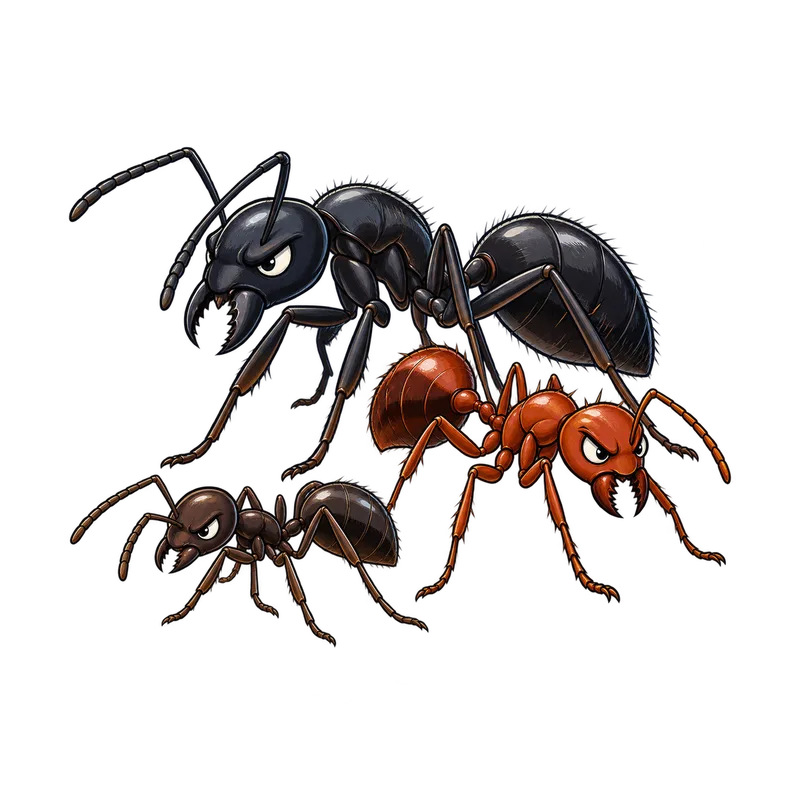
Sugar ants are a casual nickname rather than a formal scientific label for a single kind of bug in North America and Europe. In those regions, the term is an umbrella phrase for any small household-invading ant that goes after sweet foods. However, in Australia, the name officially belongs to a single native species of large carpenter ant.
What is actually going on
Picture walking into the kitchen on a quiet Saturday morning, reaching for the honey jar, and finding a busy column of tiny brown insects marching in a straight line across the counter. Your first thought might be that a specific breed of pest has moved in, and you call them sugar ants. But if you live in North America or Europe, that name is actually just a casual nickname rather than a formal scientific label for a single kind of bug.
In the United States, Canada, the United Kingdom, and South Africa, people use the term sugar ant as an umbrella phrase for any small, household-invading ant that goes after sweet foods. Whether it is an Argentine ant, a tiny Pharaoh ant, an odorous house ant, or a small carpenter ant, they all get lumped together under that one cozy heading. Think of it like calling every carbonated soft drink a coke regardless of the brand. It describes what the insect wants to eat rather than what it is called in a textbook.
Geography changes the rules entirely once you cross the globe. In Australia, the name sugar ant or banded sugar ant officially belongs to a single native species of large carpenter ant known formally as Camponotus consobrinus. So while an Australian gardener talking about a sugar ant means a very specific, sizable native insect, a homeowner in Chicago or London using the phrase is simply describing a kitchen pest with a sweet tooth.
How to tell for sure
Figuring out what is actually crawling across your floor usually starts with looking at the body shape and comparing it to other wood-chewing pests. If you suspect you have an ant problem, look closely at the waist and the antennae. True ants usually have a pinched, narrow waist that looks like a cinched belt, and their antennae are distinctly elbowed, bending sharply in the middle.
People often confuse ants with termites, especially when insects start showing up near wooden windowsills or baseboards. Termites have a broad, straight body with no narrow waist at all, and their antennae look like tiny, beaded strings rather than bent elbows. If you happen to find winged versions indoors, check the wings. Ants have front wings that are noticeably larger than their hind wings, while termites have four wings of identical length and size.
Another common mix-up involves wood damage. Carpenter ants do not actually eat wood the way termites do. Instead, they carve out smooth galleries inside damp or decaying timber just to make room for their growing colony, pushing clean, coarse sawdust out through tiny exit holes like a messy construction crew. If you sweep up material that looks like fine wood shavings rather than muddy termite tubes, you usually are dealing with carpenter ants.
What usually comes next
Deciding how to handle a kitchen invasion usually starts with a simple choice between grabbing a surface spray or focusing on the source of the problem. Reaching for a standard aerosol can of pesticide and spraying the workers marching along your baseboards might feel satisfying, but it usually backfires. Fast-acting sprays kill only the foragers you can see, and they often cause multi-queen colonies to panic and split into multiple new nests through a process called budding, making the overall infestation worse.
Instead, a more reliable approach usually begins with strict sanitation and moisture control. Wipe away sticky spills, store your sugar, honey, and cereal in airtight glass or heavy plastic containers with rubber gaskets, and fix any leaky pipes under the sink that provide the moisture these insects need. When chemical management is necessary, the product label acts as the legally binding guide. Many pest control professionals prefer using slow-acting liquid or gel baits. Foraging workers take the bait back to share with the rest of the colony through mouth-to-mouth food sharing, which targets the queen and the brood hidden away in the walls rather than just knocking off the scouts.
When to get help
Most minor kitchen invasions resolve with good cleaning habits and properly placed baits, but certain situations call for professional support. If you notice large carpenter ants pushing out sawdust consistently from structural wall studs, roof joists, or main support beams, an established nest may be compromising the timber in your home. Extensive structural damage requires a licensed structural pest control operator to locate and treat hidden nests safely.
Medical attention is necessary if you encounter stinging insects that trigger severe reactions. While most common household sugar-seeking ants do not possess dangerous stings, encounters with fire ants or defensive ground-nesting species can deliver painful stings that lead to intense burning, swelling, or systemic allergic reactions. Anyone experiencing trouble breathing, dizziness, or widespread hives after an insect encounter needs to seek help from a medical clinician or emergency services right away.