
What should you do when ants return after an indoor bait treatment?
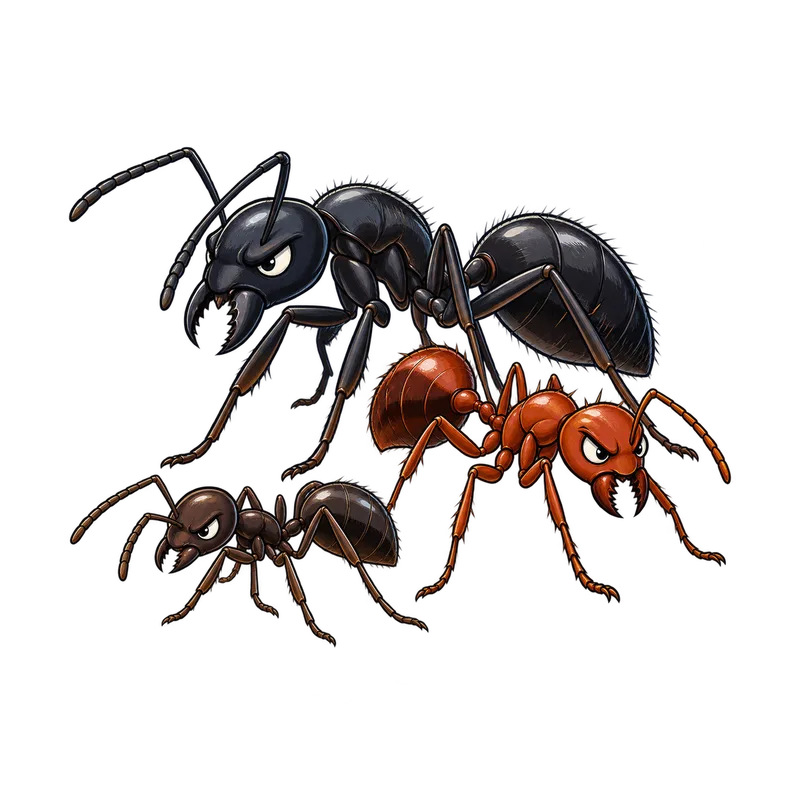
When ants return after an indoor bait treatment, it usually means the bait never reached the main source of the infestation. This happens because the bait may have missed the primary nest located outdoors, or the colony was searching for a different food type like protein instead of sugar.
What is actually going on
Imagine walking into the kitchen for your morning coffee and noticing a familiar black trail marching across the counter, right over the spot where you laid down bait traps a week ago. It feels personal, like the pests are mocking your efforts. You followed the instructions on the box, yet here they are again, treating your cupboards like an open-air café.
The frustrating truth is that indoor ant baits are designed to tackle the foragers you can see, but those workers are usually just messengers running errands for a much larger operation hidden elsewhere. When ants return after a bait treatment, it usually means the bait never reached the main source of the infestation. In many cases, the insects you see inside are part of a satellite nest, which is essentially a branch office connected to a primary parent nest tucked away outdoors in a decaying tree stump, under a pile of landscape timbers, or deep within damp soil.
Another common culprit is a mismatch in what the colony actually wants to eat. Ant dietary preferences shift depending on the season and whether they are currently feeding hungry larvae or adult workers. If you put out a sweet carbohydrate gel when the colony happens to be hunting for protein, the workers will simply ignore the stations and keep looking for food elsewhere in your home. If you accidentally sprayed a regular aerosol bug killer near the bait traps, that chemical acts like a warning sign, scattering the foragers and stopping them from sharing the slow-acting poison with the rest of the colony.
How to tell for sure
Before you change your strategy, you need to make sure you are actually dealing with ants, and specifically which kind. Sometimes what look like ants turning up indoors are actually swarming insects that have decided to take flight. Take a close look at a specimen using a magnifying glass if you have one. Ants usually have elbowed antennae that bend at an angle, a narrow pinched waist, and two pairs of wings where the front ones are noticeably longer than the back ones. Other lookalikes, by contrast, have straight bead-like antennae, thick boxy waists, and four wings of identical length.
If you confirm they are definitely ants, carpenter ants are usually behind those larger wooden structural concerns. Carpenter ants do not actually eat wood for nourishment. Instead, they chew through damp or decaying lumber to carve out smooth galleries for their nesting sites, leaving behind small piles of coarse, fibrous sawdust mixed with insect parts. If you find those sawdust piles near baseboards or window sills, you are usually looking at the work of a carpenter ant satellite colony. On the other hand, tiny light-colored ants that stream out in massive numbers or small brown ants wandering near your pantry often belong to species that spread rapidly through budding and can be remarkably stubborn to clear out with simple retail traps.
What usually comes next
The most practical choice you can make right now is to stop treating your kitchen like a battlefield with fast-acting aerosol sprays and instead focus on connecting what happens indoors with the outdoors. Put away the contact bug killer completely, because spraying it over your bait stations destroys your best chance at colony elimination. Take a careful walk around the exterior of your house. Look for decaying tree branches touching your siding, firewood stacked directly against the foundation, or old stumps retaining moisture.
If your current bait is being ignored, check whether the colony might be looking for protein rather than sugar, and swap your bait matrix accordingly. Make sure to track down and repair any hidden plumbing leaks under sinks or around windows, because ongoing moisture provides the exact oasis that attracts these pests in the first place. Sealing up entry points and cutting off their water supply changes the environment from a welcoming home into a place they cannot survive.
When to get help
There are moments when do-it-yourself pest control reaches its natural limit and handing the problem over to a professional is the smartest move. If you have adjusted your bait types, cleaned up moisture, and cleared outdoor debris, yet ants keep appearing from mysterious cracks in the drywall, you likely have a hidden parent nest tucked deep inside a structural wall void or roof rafter where you cannot reach it.
You should also bring in a licensed pest management professional if your ant problem is tied to co-existing structural issues like water-damaged framing, mold, or active subterranean termite galleries. Professionals have access to specialized non-repellent dusts and application tools that can treat inaccessible wall voids safely. Always remember that pesticide product labels are legal documents, and using commercial-grade chemicals off-label or mixing unapproved home remedies creates unnecessary safety hazards. If you ever face severe pest pressures in multi-family housing or suspect a complex supercolony, a certified local expert will give you the targeted strategy you need to finally reclaim your space.