
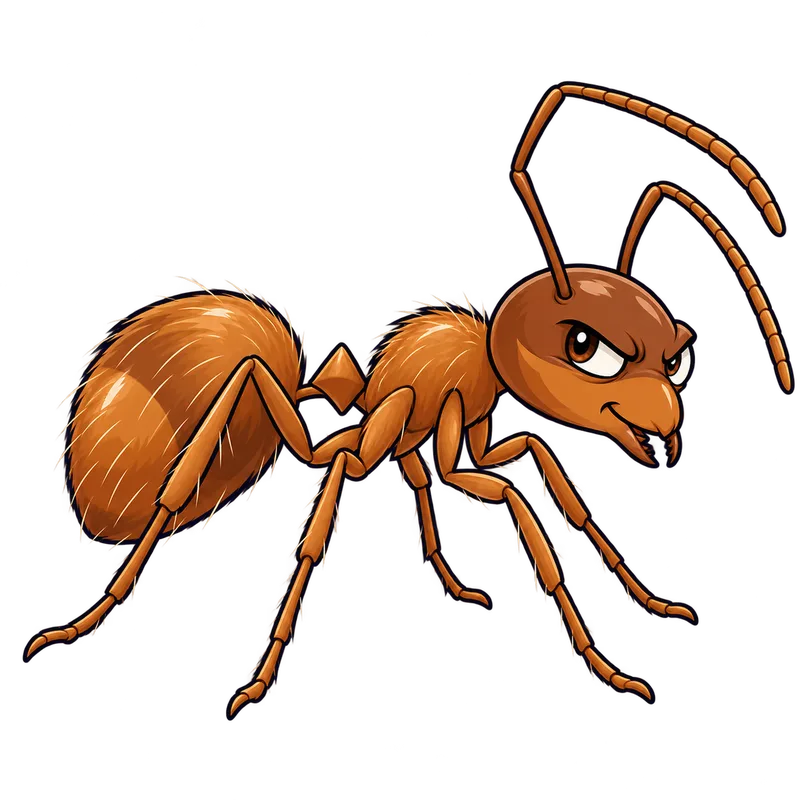
Tawny crazy ant
Nylanderia fulva
- Size
- 1/8 inch or approximately 2 mm
- Color
- Uniform reddish-brown to tawny orange-brown
- Habitat
- Moist shaded cavities beneath leaf litter, mulch, and soil
- Diet
- Honeydew, sugary foods, insects, and small vertebrates
- Life cycle
- Complete metamorphosis from egg to larva, pupa, and adult
The tawny crazy ant is a small, brownish invader that earns its common name from a frantic, jagged running style that looks nothing like the orderly single-file marches of other household pests. Instead of moving in a straight line, workers zip back and forth with erratic, jerky turns as though they are late for an impossible appointment. To confirm the species under a microscope, an observer looks for worker bodies measuring 1/8 inch or approximately 2 mm in length with a uniform reddish-brown to tawny orange-brown color.
Identity
The antennae feature 12 segments without a terminal club, and the waist consists of a single triangular petiole node. Workers lack a stinger entirely, ending instead in a circular acidopore surrounded by fine hairs. The most definitive marker is found on the middle section of the body, where exactly two pairs of erect standing bristles project through the fine background hairs. You will not spot these fine details with the naked eye, so a hand lens or microscope is essential for a positive ID.
Habitat & behaviour
Homeowners typically notice these ants when millions of them pour out from beneath landscape timbers, mulch beds, potted plants, and yard debris, covering yards and patios so thickly that the ground appears to be moving. They do not build structured dirt mounds or central nest entrances in lawns. Instead, colonies rely on a social structure with multiple queens sharing interconnected nests without fighting.
They prefer moist, shaded microclimates and show a bizarre attraction to electrical equipment. Workers squeeze into air conditioning units, circuit breakers, electrical transformers, and utility housings in such massive numbers that their bodies bridge contacts, short-circuiting appliances and triggering costly equipment failures. Foraging workers build broad, heavy trails measuring 4 inches or 10 cm and greater in width along foundations and fences. Their diet is omnivorous, driven heavily by a need for the sugary liquid produced by sap-sucking insects like aphids and scale insects on garden plants.
Visual variations
Workers are all the same size, meaning every foraging ant in the yard shares the exact same uniform body length of 1/8 inch or approximately 2 mm while sporting long legs and elongated antennae. Queens are much larger, with multiple egg-laying females coexisting inside the same nest, and grow to roughly twice the length of workers at approximately 4 mm or under 1/4 inch, featuring an enlarged, darkened rear abdomen.
Mature colonies also periodically produce reproductive winged forms that leave the nest during breeding cycles. Immature stages undergo complete metamorphosis through egg, larva, and pupa stages, with naked pupae that develop without spun silk cocoons. Each caste plays a strict role, though you will mostly only see the frantic workers out on patrol.
Why it matters
An established infestation turns outdoor spaces into unusable zones and frequently drives domestic pets out of yards. While workers do not possess a stinger, they can defend themselves by nipping with their mouthparts and spraying acid from their rear, causing minor and transient pain. In heavy infestations, dead ants accumulate in deep piles along building edges, and the constant defense of honeydew-producing plant pests damages garden health.
Because these ants do not respond to single-tactic sprays or standard baits, managing major supercolonies typically requires a licensed pest management professional to implement a multi-tactic integrated program. Getting the identification right from the start prevents wasted time and money on treatments meant for other ant species.
Similar species
 Longhorn crazy antParatrechina longicornis
 Little black antMonomorium minimum
 Bigheaded antPheidole megacephala
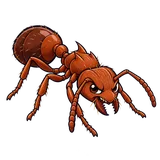 European fire antMyrmica rubra
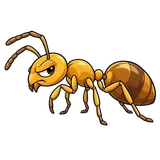 Yellow meadow antLasius flavus
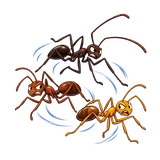 Crazy antsNylanderia, Paratrechina and Anoplolepis species