
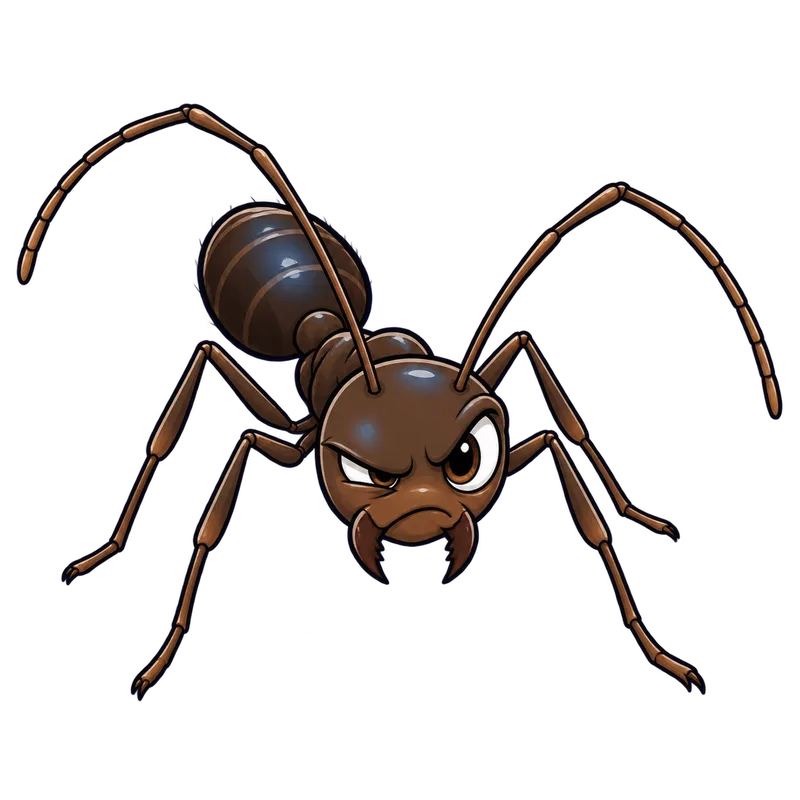
Longhorn crazy ant
Paratrechina longicornis
- Size
- 1/8 inch to 1/4 inch
- Color
- Dark brown, grayish black, or jet black
- Habitat
- Warm southern regions and heated buildings
- Diet
- Honeydew, nectar, fruit, and protein scraps
- Life cycle
- Egg, larva, pupa, adult
If you spot a tiny ant sprinting across your kitchen counter in a frantic, zig-zag dash instead of marching in a neat straight line, you are likely looking at the longhorn crazy ant. Spotting one usually leaves you wondering how something so small can move with such erratic urgency.
Identity
To tell it apart from other household invaders, you need to look past its speed and check the details under magnification. Workers measure about one-eighth of an inch long and sport a dark brown, grayish black, or jet black color with a matte finish. Their most striking features are their legs and antennae, which are remarkably long and slender. The antennae feature twelve segments without any terminal club at the tip.
Looking closer at the thorax reveals four distinct pairs of erect standing hairs arranged along the top surface. The waist consists of a single node. At the rear, the tip of the abdomen terminates in a small circular opening surrounded by a ringlet of fine hairs, and this species completely lacks a functional stinger.
Habitat & behaviour
This species is an introduced tramp ant found in the warmer southern regions of the United States, stretching from South Carolina through Florida, west to Texas, and throughout California. In colder northern and inland regions, it cannot survive outdoor winters and remains strictly confined to heated buildings.
Outdoors, these ants nest in warm, shaded, and moderately protected microhabitats. You can find them under rocks, bricks, paving stones, stacked lumber, and rotting logs, or hidden within leaf litter and mulched landscape beds. They also frequently inhabit the soil of potted plants. When they move indoors, they seek out dark, warm voids near heating elements, beneath flooring boards, and immediately adjacent to hot water pipes.
Foraging workers ignore orderly single-file trails. They run rapidly across open ground in loose, broad search patterns. They are omnivores with a strong sweet tooth, actively tending aphids, scales, and mealybugs on plants to collect their sugary honeydew secretions. They also feed on plant nectaries, ripe fruit, and household protein scraps.
Visual variations
Colonies house multiple functional queens, often reaching up to forty within a single unit. Queens measure roughly double the size of workers at about a quarter of an inch long. Mature nests occasionally produce winged males and virgin females, though scientists have never actually recorded a mating flight out in the open.
Workers all stay the same size, so you will not see tiny minors or heavy majors sharing the same trail. The brood grows through a complete physical transformation, starting as tiny eggs before turning into whitish, legless larvae, and finally resting as naked pupae that never spin silken cocoons.
Why it matters
Spotting these ants inside usually points to a persistent nuisance rather than any threat to your home framing. They leave your wooden beams and drywall alone, but their habit of nesting inside warm wall voids and around plumbing makes for deeply frustrating indoor problems.
Their frantic, high-speed sprints across kitchen counters can test anyone's patience. Outside the kitchen, they cause trouble by protecting sap-sucking garden pests on your trees to hoard their sugary secretions.
Mistaking them for similar ants happens all the time. The tawny crazy ant wears a reddish brown coat and shorter legs instead of a dark black finish. The Argentine ant keeps a smooth, hairless back without those distinct rear hairs, and the odorous house ant gives off a pungent smell of rotten coconut when you crush it.
Similar species
 Little black antMonomorium minimum
 Bigheaded antPheidole megacephala
 European fire antMyrmica rubra
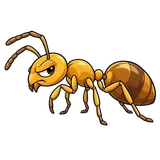 Yellow meadow antLasius flavus
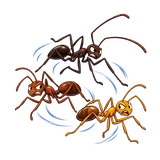 Crazy antsNylanderia, Paratrechina and Anoplolepis species
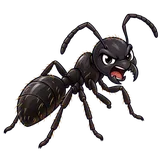 Black carpenter antCamponotus pennsylvanicus