
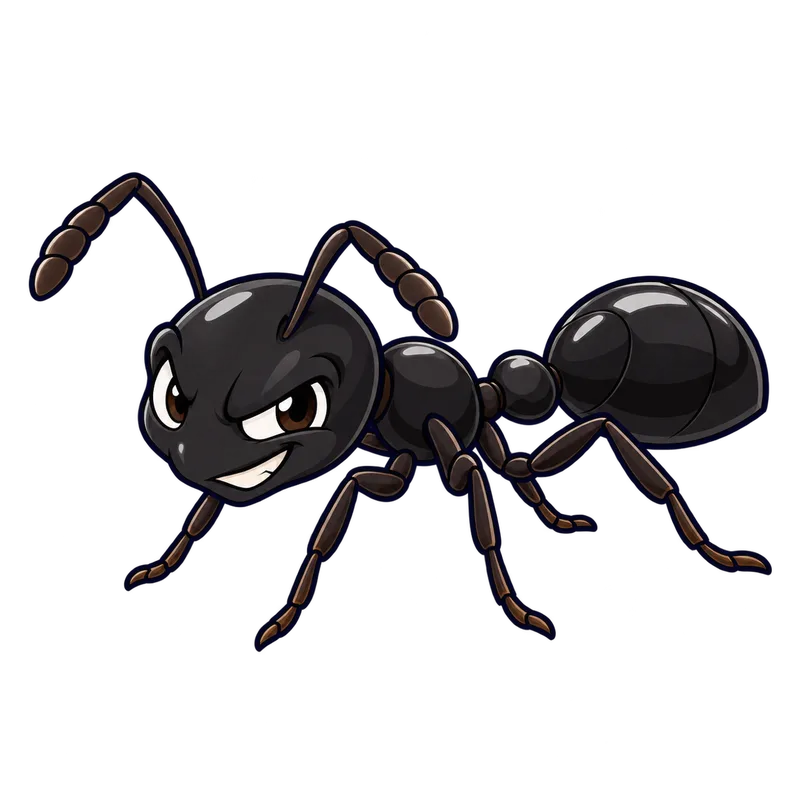
Little black ant
Monomorium minimum
- Size
- Not established
- Color
- Shiny black to dark brown
- Habitat
- Soil, wood cavities, and structural voids
- Diet
- Omnivorous: sweets, proteins, and grease
- Life cycle
- Complete metamorphosis through egg, larva, pupa, and adult
You find them marching in disciplined, single-file lines across a kitchen counter or weaving between patio pavers, small enough that you might mistake them for stray coffee grounds until one of them decides to move. To tell them apart from other tiny visitors, you need a hand lens or 10x magnification. Under that glass, look for a pinched, narrow waist carrying two distinct nodes, which puts them in the Myrmicinae subfamily. Their antennae bend sharply at an elbow, and their bodies wear a shiny black to dark brown coat. People confuse them most often with Pharaoh ants, which share a similar tiny stature but sport a yellowish or light reddish brown shade instead of a stark black. They also get mistaken for Argentine ants, though Argentine ants only show a single node on the waist and a lighter brown color. If you are comparing them to black carpenter ants, the size difference alone gives it away. Carpenter ants are giants by comparison, often stretching past a quarter inch, while little black ants and their common look-alikes stay much smaller. Perhaps the most alarming mix-up happens when a homeowner spots a winged ant indoors and immediately suspects termites. You can breathe easier by checking three simple body parts. Ants have elbowed antennae, a deeply pinched waist, and front wings that are noticeably longer than their hind wings. Termites carry straight, beadlike antennae, thick unconstricted waists that look like tubes, and four wings of identical length.
Habitat & behaviour
These ants care about two things above all else: moisture and easy calories. Outdoors, they tuck their nests beneath rotting logs, flat stones, bark, or directly into the soil. Indoors, they exploit hidden structural voids, wall gaps, door casings, and window frames. They do not care about dry, sound wood. If you find them tunneling through timber, that wood is already softened by moisture or decay fungus, and the ants are merely carving out gallery space for shelter rather than eating the cellulose. They run a flexible, omnivorous operation. Their sweet tooth draws them toward plant nectar, honeydew left behind by aphids on your garden roses, fruit juices, and household syrups. At the same time, they forage aggressively for animal proteins, grease, bits of meat, and stray pieces of pet kibble. Workers patrol day and night, laying down invisible chemical trails that turn a single scout into a frantic highway of hundreds of foragers heading straight for your pantry.
Visual variations
Colonies run as complex societies divided into distinct working classes, and each job looks completely different. Those tiny runners on your floor are sterile, wingless females. Depending on the exact type of small black ant, these workers might all measure the same length, or they might span a range from tiny minors to larger majors. Workers defend the group with mild bites or chemical sprays, but they do not pack the painful sting of fire ants. Reproduction is left entirely to the winged alates, which include both males and future queens. These winged adults feature large eyes and delicate, clear wings. Queens grow much larger than any worker. Once a queen mates on a warm flight day, she drops her wings for good and starts building a new empire under a damp rock or in moist soil. The young grow up through four distinct phases, beginning as tiny oval eggs, turning into legless grubs that need workers to feed them, and passing through a resting pupal stage before walking out as adults.
Why it matters
Spotting a line of these insects across your counter means you have a simple kitchen nuisance on your hands instead of a structural emergency. They love to spoil open dry goods and raid pet bowls, but they will never chew through sound wood or cause your walls to cave in. Their presence inside hollow walls can point to hidden trouble, though, such as a leaking pipe or rotting wood that demands a closer look. They rarely pose any medical threat, yet indoor pests can sometimes carry bacteria across sensitive surfaces. If you see winged swarmers indoors or if endless trails keep coming back after a deep clean and some fresh caulk, you need a positive identification of the exact species. When nests hide deep inside wall insulation or when you need outdoor chemical barriers set up safely, bring in a licensed pest control professional to handle the job.
Similar species
 Bigheaded antPheidole megacephala
 European fire antMyrmica rubra
 Yellow meadow antLasius flavus
 Crazy antsNylanderia, Paratrechina and Anoplolepis species
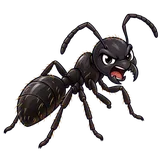 Black carpenter antCamponotus pennsylvanicus
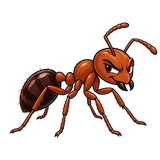 Red imported fire antSolenopsis invicta