
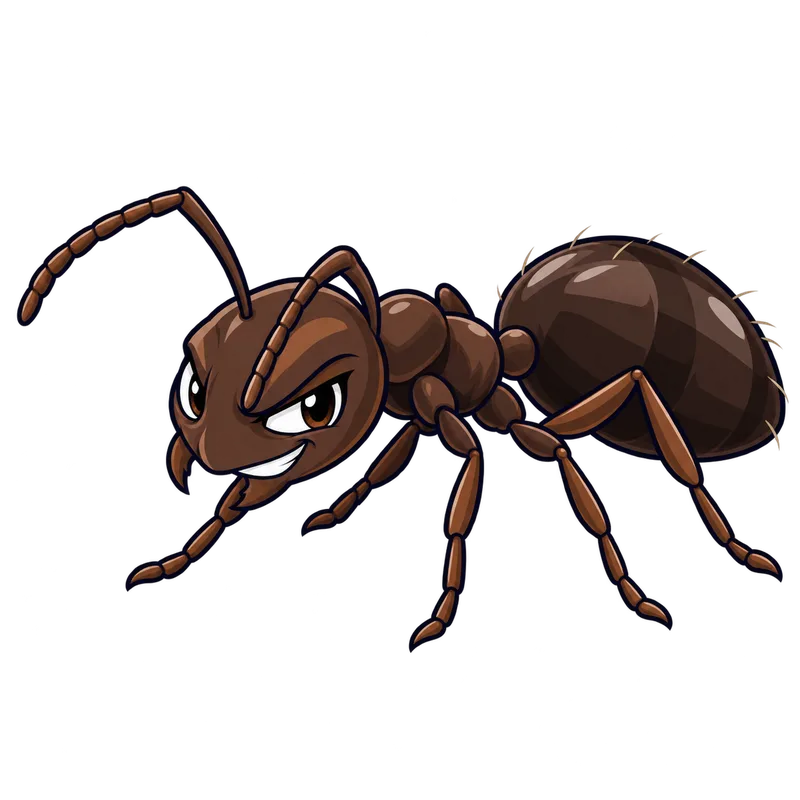
Odorous house ant
Tapinoma sessile
- Size
- 1/16 to 1/8 inch (2.4 to 3.3 mm)
- Color
- Uniform dark brown to black
- Habitat
- Shallow soil depressions, rotten wood, and indoor wall voids
- Diet
- Honeydew, sweet household foods, and occasional insects
- Life cycle
- 4 to 5 generations per year, egg to worker in 5 to 11 weeks
The odorous house ant is a common native pest across the United States that often startles homeowners by appearing in large numbers near sinks, baseboards, and pet bowls. The most reliable way to confirm you are dealing with this specific species is to crush a worker and take a whiff. The scent is often described as rotten coconut, rancid butter, or blue cheese. Visually, workers are tiny, uniform in size, and dark brown to black. If you grab a magnifying glass, look at the waist and the tip of the abdomen. The single waist node is flattened and tucked completely underneath the forward overhang of the large rear section, making it practically invisible from a top-down view. At the rear tip of the abdomen, you will find a slit-like opening without a circle of fringe hairs. The antennae have 12 segments and lack an enlarged club at the tip, which separates them from larger field ants and smaller grease ants that might wander across the same kitchen counter.
Identity
The odorous house ant, known scientifically as Tapinoma sessile, is an everyday nuisance across the United States that leaves a lasting impression when accidentally squished. The easiest way to confirm you are dealing with one is to crush a worker and take a whiff. The scent is often described as rotten coconut, rancid butter, blue cheese, or licorice. Visually, workers measure 1/16 to 1/8 inch long and are monomorphic, meaning every worker in the colony shares roughly the same size and uniform dark brown to black coloring. If you grab a magnifying glass, look at the waist and the tip of the abdomen. The single waist node is flattened and tucked completely underneath the forward overhang of the large rear section, making it look hidden from a top-down view. At the rear tip of the abdomen, you will find a slit-like opening without a circle of fringe hairs. The antennae have 12 segments and lack an enlarged club at the tip.
Habitat & behaviour
These ants lead a nomadic lifestyle. Outdoors, you will find them nesting in shallow depressions beneath rocks, flagstones, pavers, landscape timbers, firewood, and mulch beds. Indoors, they gravitate toward warm, high-moisture cavities such as wall voids, spaces under bathtubs or sinks, and near appliances. They do not stay put for long, often relocating their entire operation every 21 days or so in response to weather shifts, moisture changes, or disturbances. Their foraging habits revolve around a sweet tooth. Outdoors, they tend colonies of sap-sucking garden pests like aphids and soft scales to harvest sugary honeydew. Indoors, they track along structural edges such as baseboards and cabinet lines in tight, single-file trails that can stretch from 33 to 157 feet. When they discover a new food source, they skip the usual long-distance transport and simply move their entire brood right to the food.
Visual variations
Colonies contain distinct forms depending on the caste and life stage. Workers are all wingless females that maintain a uniform size of about 3 mm, featuring a smooth, hairless upper thorax and a hidden waist node. Queens are much larger, measuring two to three times the size of a worker, and possess an enlarged abdomen designed for heavy egg production. Before mating flights, queens and the slim, winged males have functional wings. Once the mating flight concludes, queens shed their wings to start new colonies. Immature stages, including eggs, larvae, and pupae, are white to cream-colored. Workers constantly tend these naked pupae, which lack silken cocoons.
Why it matters
Odorous house ants do not consume or destroy sound structural wood, so you will not find them chewing through your timber the way termites do. Instead, they occupy pre-existing voids, damp rotting timber, or abandoned galleries left by other insects. Their primary offense is the sheer scale of their indoor invasions and the foul odor they release when crushed. Because urban colonies often form massive supercolonies with hundreds of egg-laying queens that multiply through budding rather than simple swarming, reaching for a standard repellent spray usually backfires by panicking the colony and splitting it into multiple new indoor nesting sites.
Similar species
 Pavement antTetramorium immigrans
 Pharaoh antMonomorium pharaonis
 Argentine antLinepithema humile
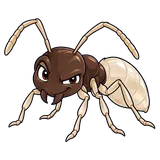 Ghost antTapinoma melanocephalum
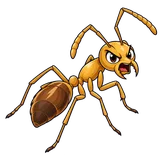 Yellow crazy antAnoplolepis gracilipes
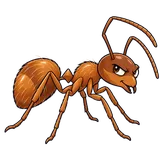 Tawny crazy antNylanderia fulva