
How do you get rid of Argentine ants?
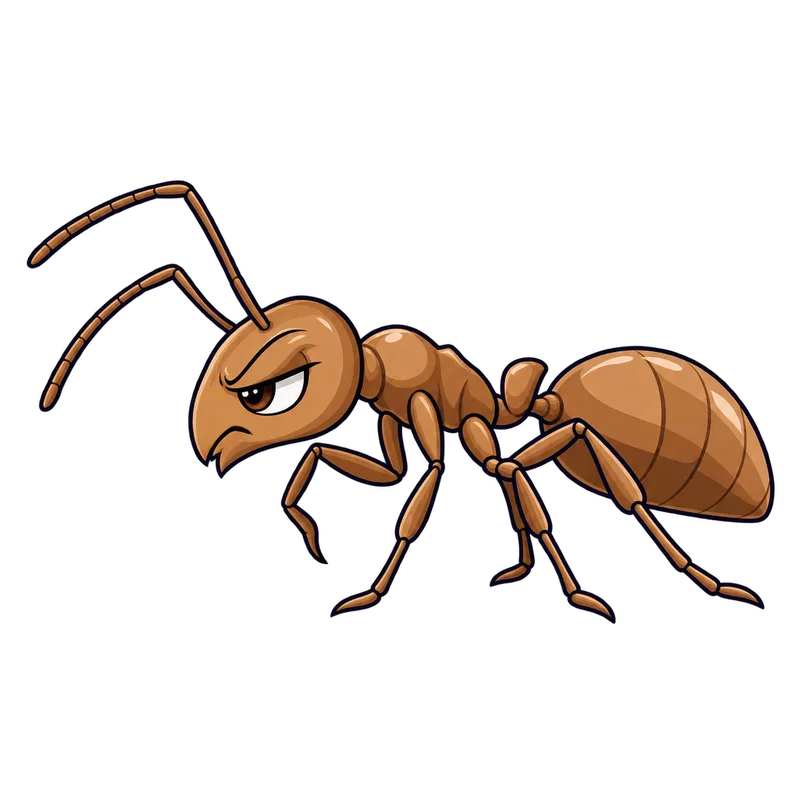
To get rid of Argentine ants, use slow-acting, non-repellent baits instead of fast-acting contact sprays that cause nests to split apart. Argentine ant success depends on cleaning up kitchen crumbs and eliminating natural outdoor sugar sources like aphid honeydew so the insects will actually eat the poison.
What is actually going on
You walk into the kitchen on a quiet Sunday morning, reach for the coffee canister, and notice a thin, unbroken brown ribbon of tiny insects marching across the counter toward a stray drop of maple syrup. Your first instinct is usually to grab a can of bug spray from under the sink and wipe them out in one satisfying sweep. But if those visitors are Argentine ants, spraying them directly is the exact opposite of what you should do. Instead of solving the problem, you will likely find that tomorrow morning the trail is twice as thick, or has simply relocated to the baseboards by the pantry.
Getting rid of Argentine ants is entirely different from dealing with ordinary pests because you are not fighting a single family in a tidy mound. You are dealing with an invading supercolony. Unlike traditional ant species that rely on a single queen, Argentine colonies are polygynous, meaning they host dozens of reproductive queens hidden away in shallow nests under mulch, inside potted plants, or behind drywall. When you blast a foraging trail with a fast-acting contact spray, you kill a few visible workers, but the disturbance shocks the colony. The nests fracture and split apart through a process called budding, packing up and scattering into multiple satellite locations throughout your home and yard.
The secret to actually getting rid of them lies in letting them do the dirty work for you, using slow-acting, non-repellent baits. These specialized baits use active ingredients that do not kill the forager on contact. Instead, the worker ant eats the bait and wanders back to the hidden nest, sharing the toxic dose with the queens and larvae through food-sharing behavior. But there is a stubborn catch. Argentine ants have an endless appetite for natural sweetness, especially the sugary honeydew produced by aphids on your garden plants. If your yard features a thriving population of sap-sucking insects or your kitchen counters are covered in crumbs and sticky spills, the ants will completely ignore your commercial bait stations.
How to tell for sure
Before you buy any products, you need to make sure you are actually looking at Argentine ants and not another nuisance crawler like odorous house ants or tiny pavement ants. Workers are usually monomorphic, meaning they are all roughly the same size, coming in around 3 millimeters long, with a light brown to dark brown coloration. They have teardrop-shaped heads and move with a steady, determined pace along narrow trails. If you look closely with a low-power hand lens, you will see a smooth, hairless body and an exceptionally long first segment on their antennae.
Queens are rarely seen out in the open unless a nest is severely disrupted, but they are noticeably larger than the workers, sometimes growing up to three times their length. It is also worth noting that Argentine ants do not possess a functional stinger, though they can deliver a minor pinch or bite if you trap them against your skin. This lack of a stinger usually helps separate them from stinging fire ants, which feature a distinct double-node waist.
Homeowners also frequently confuse crawling ants with swarming termites during seasonal weather shifts. If you spot insects with wings, take a moment to look at their anatomy before panicking. Ants feature a pinched waist, elbowed antennae, and wings of unequal length where the front pair is larger than the back pair. Termites, by contrast, possess a thick, straight waist, beaded antennae, and four wings of identical length and shape. Positive identification keeps you from wasting time and money treating the wrong pest with the wrong method.
What usually comes next
Once you have pinned down the exact identity of those tiny marauders, you face a clear fork in the road before buying a single product. You can roll up your sleeves for a comprehensive do-it-yourself routine involving deep cleaning, sealing entry points, and strategic bait placement, or you can hand the job over to an exterminator. Going the independent route means you have to get ruthless about sanitation. Every open box of cereal needs to go into plastic storage bins, and counters require daily scrubbing to eliminate crumbs. Outside, walk your garden beds to check for sap-sucking insects on your prize roses, since those outdoor sugar sources will completely derail your indoor baiting efforts.
Only after you have starved them out should you place pre-loaded bait traps containing slow-working poisons along their established highways. Make sure you keep all aerosol sprays and harsh surface cleaners far away from those bait stations. A stray squirt of window cleaner will ruin the bait and turn the ants right around. Patience is the hardest part here because these baits take time. You will likely notice a frustrating spike in traffic around the traps at first, but that just means the foragers have found the buffet before the poison starts clearing out the underground queens.
When to get help
There are moments when a weekend project hits a wall and you simply need an expert on the property. If you spot ants pouring out of electrical outlets, ceiling panels, or interior walls in different rooms despite weeks of baiting and scrubbing, the colony has likely settled deep inside your framing where over-the-counter traps cannot reach. Sprawling properties where a massive supercolony stretches across several neighboring lawns also demand professional coordination, because treating your own yard in isolation usually means your neighbors' ants will just move right back in.
Safety calls for a professional eye or medical advice when things go sideways. Treat every pesticide label as the final word. Using these products in ways the manufacturer did not write down, or brewing stronger mixtures than directed, breaks the rules and puts your household at risk. If children or pets get into unsecured bait, or if you run into skin rashes, strange allergic reactions, or feel sick from a chemical spill, leave the guesswork alone. Reach out right away to a doctor, your nearest clinic, or poison control to get the right help.