
Do fire ants have venom?
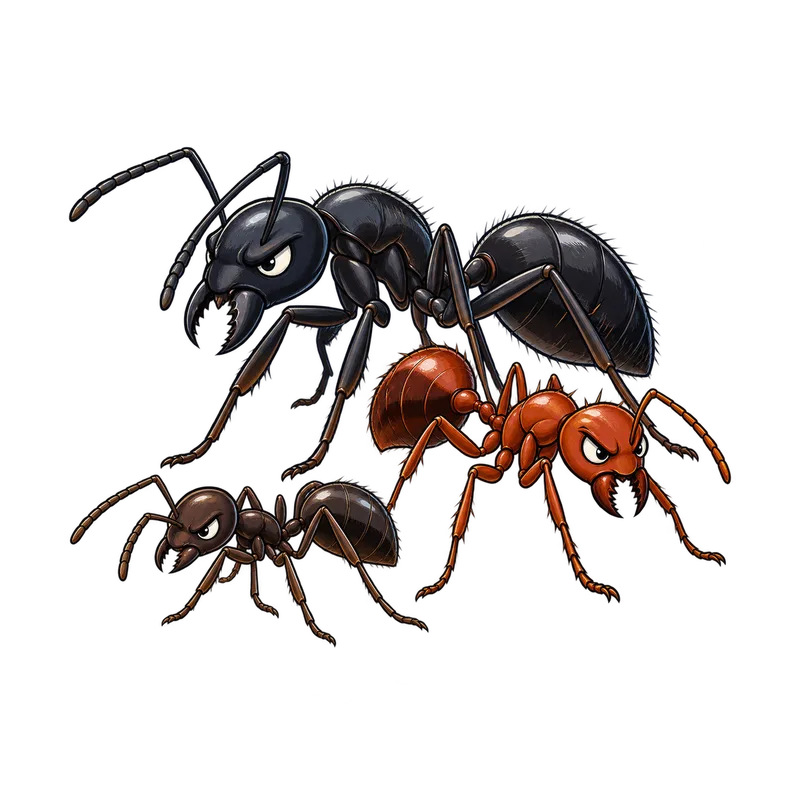
Yes, fire ants do have venom, which they deliver using a stinger possessed only by females. This venom consists mostly of toxic, water-insoluble alkaloids that burn skin cells on contact and cause intense localized pain followed by a characteristic sterile pustule.
What is actually going on
You are out in the yard on a sunny Saturday, maybe pulling weeds near the patio or pushing the lawnmower across an unbothered patch of turf. Suddenly, your ankle starts to burn with an intensity that makes you drop your trowel. You look down to find a cluster of small, reddish-brown ants swarming your shoe and climbing your socks. Are they biting you, or is something else happening?
To answer the central question plainly, yes, fire ants do have venom, and they deliver it with an instrument built specifically for the job. Only female fire ants, which include both the reproductive queens and the sterile workers you encounter scurrying across the grass, possess a stinger. Males lack this apparatus entirely, meaning they can neither sting nor inject venom.
When a worker fire ant attacks, it uses its jaws like a pair of tiny locking pliers to clamp onto human skin. This grip gives the ant the leverage it needs to pivot its abdomen and drive its stinger into the dermis. Unlike honey bees, which have barbed stingers that tear away from their bodies, fire ants have smooth stingers. This anatomy allows a single ant to anchor itself and drive its stinger into your skin repeatedly in a neat little circle.
The chemistry of this venom is where fire ants truly differ from other stinging insects like yellowjackets or hornets. While wasps and bees rely on venoms rich in aqueous proteins and enzymes that trigger classic immune responses, fire ant venom consists almost entirely of toxic, water-insoluble alkaloids with only a trace of protein. Think of it less as an allergic trigger and more as a tiny injection of chemical acid that literally burns the skin cells it touches on contact.
Spotting the insect is usually the first step, especially when you are trying to figure out whether you are dealing with fire ants or something entirely harmless like an Argentine ant. Argentine ants are monomorphic, meaning they are all the same small size, and they lack a stinger altogether. Carpenter ants are much larger, and while their major workers can bite forcefully with their mandibles, they do not have a stinger, though they can spray formic acid into a wound.
If you want to be sure you are looking at a fire ant, you usually have to look closely at its body structure. Fire ants belong to the genus Solenopsis, and they are typically identified by having two distinct constricted segments, known as nodes, on the pedicel between their thorax and their gaster, which is the bulbous rear section of the body. Most common nuisance ants have only one node in this spot.
Behavior also offers a reliable clue. Invasive fire ants, such as the red imported fire ant and the southern fire ant, usually build conspicuous earthen dome mounds in sunny, open areas like lawns, pastures, and roadsides. If you accidentally step on or disturb one of these mounds, thousands of aggressive workers usually pour out of the soil within seconds to defend their home, rushing up any vertical surface they encounter.
The aftermath of the sting itself provides the most definitive confirmation. Within a few minutes of the sting, you will feel an intense burning sensation accompanied by localized pain and a raised, reddened welt. Within twenty-four hours, the direct necrotizing effect of those alkaloid compounds kills the local skin cells, forming a clear vesicle that cloudy-fills into a characteristic sterile pustule. This bump usually stays intact and itches intensely for several days.
How to tell for sure
When you find yourself staring at a cluster of burning stings and waiting for those whitey-topped pustules to form, your immediate practical decision involves choosing between leaving the skin alone and interfering with it. The most important choice you can make right now is to resist the temptation to scratch, pop, or squeeze those sterile blisters.
Popping a fire ant pustule is a bit like unlocking the door to a clean room and inviting outside dirt to step inside. The fluid inside that blister is a sterile reaction created by tissue necrosis, not ordinary bacterial pus. Breaking that delicate dermal barrier opens the skin to secondary bacterial infections and potential scarring. Leaving the pustules completely intact allows the skin underneath to heal naturally over the course of a week to ten days, while the intense itching gradually fades.
While cold compresses, washing the area with soap and water, and applying over-the-counter anti-itch creams can help soothe the burning pain, they will not speed up the lifecycle of the pustule. Your best course of action is to clean the site immediately after the incident, elevate the affected limb if swelling is an issue, and simply wait out the healing process without introducing fingernails or foreign objects to the damaged skin.
What usually comes next
Most fire ant stings resolve at home with mild localized discomfort, but certain physical reactions demand immediate medical attention. If you or someone else experiences systemic symptoms spreading beyond the local sting site, this is a medical emergency. Watch for red flag signs such as diffuse hives, general body rashes, swelling of the lips, tongue, or throat, difficulty breathing, a feeling of suffocation, wheezing, dizziness, a sudden drop in blood pressure, or loss of consciousness.
Anyone exhibiting these systemic allergic signs must use a prescribed epinephrine auto-injector immediately and seek emergency medical transport without delay, as a secondary phase of anaphylaxis can develop hours after the initial exposure. For guidance regarding toxic exposures or severe sting complications, you can call the National Poison Control Center at 800-222-1222 at any time of day or night. Individuals who experience severe localized reactions or systemic sensitivities should also consult an allergist to discuss venom immunotherapy, which is a specialized desensitization program administered by a physician.
When to get help
When the problem is outdoor property management rather than personal medical care, professional help is often the most sensible route. Active fire ant mounds located in residential lawns, commercial properties, school grounds, or public parks require professional pest control management to reduce populations safely. Because chemical control measures must strictly follow product label directions and regulatory standards, pesticide application decisions in public or commercial settings belong exclusively to licensed applicators.