
Are pharaoh ants dangerous?
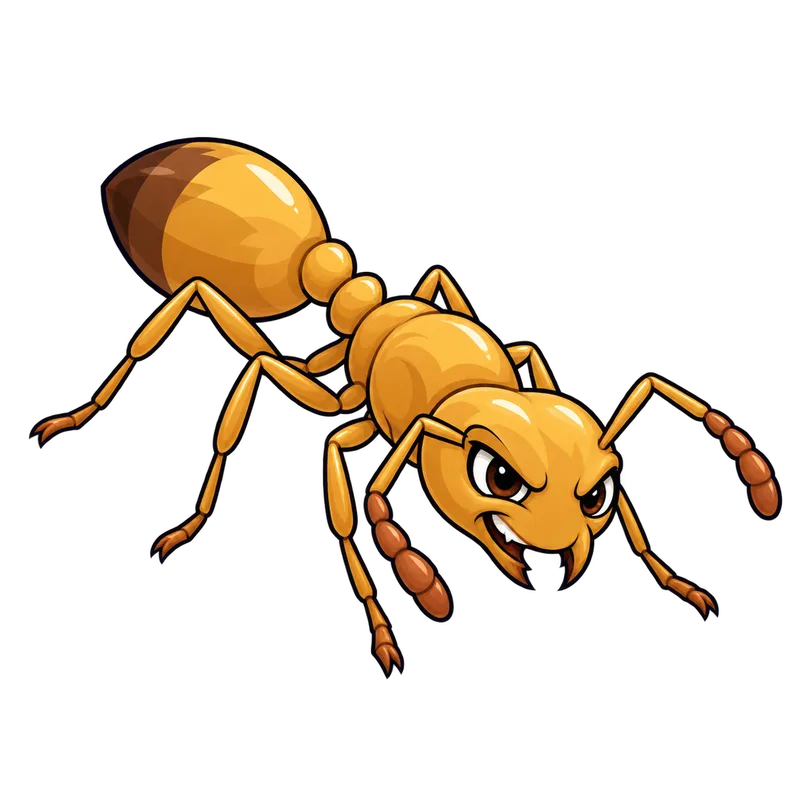
Pharaoh ants are not dangerous because they lack venomous stingers and do not cause structural damage. However, these pale yellow to reddish brown insects act as carriers for microscopic pathogens, making them a public health concern when they crawl across sterile medical supplies and food preparation areas.
What is actually going on
You walk into the kitchen on a quiet Tuesday morning, reach for the sugar canister, and find a bustling highway of microscopic golden-yellow insects marching across the counter. Your first instinct is usually a mild shudder, followed closely by whatever bug spray happens to be hiding under the sink. But before you start blanketing your kitchen in harsh liquids, it helps to know what you are actually dealing with. Are pharaoh ants dangerous, or are they just an intensely irritating houseguest?
The short answer is no, they do not possess venomous stingers capable of hurting you, and they certainly will not chew through your home framing like termites. Unlike red imported fire ants, pharaoh ants lack the biological hardware to inject toxic venom. Unlike carpenter ants, they have no interest in boring into your structural timber. They are peaceful little creatures in the most literal sense, meaning you do not have to worry about painful stings or a collapsing roof over your head.
So why do people treat them like public enemy number one? Their true hazard lies in where they walk and what they track along the way. Pharaoh ants act like tiny, six-legged dust mops for germs. Because they forage opportunistically through waste bins, damp drain lines, and kitchen pantries, microscopic pathogens cling to their outer bodies. When they wander across your kitchen counters, cutting boards, or open food packages, they deposit those uninvited hitchhikers directly onto your daily supplies.
This invisible contamination becomes a serious public health concern in sensitive settings like hospitals, nursing homes, and food processing plants, where they wander into sterile medical supplies and patient care areas. In a standard residential home, however, they are primarily a persistent hygiene nuisance and a masterclass in psychological warfare. That warfare usually begins the moment someone makes the mistake of reaching for a standard aerosol bug spray.
Trying to figure out which ant has moved into your pantry can feel like trying to identical twins apart from across a crowded room. Pharaoh ants are exceptionally small, usually measuring about 1.5 to 2 mm in length, which makes them look like tiny moving specks of dust. Their coloration usually ranges from a pale yellow to a light reddish-brown, often featuring a slightly darker tip at the tail end of their abdomen. When you spot them, they usually move in slow, deliberate, steady foraging trails along baseboards, countertops, and plumbing lines rather than darting around erratically.
You cannot rely on a quick glance or a smartphone photo to confirm the species, because several other small ants look remarkably similar to the untrained eye. Ghost ants look somewhat alike, but they usually sport a pale abdomen and a single waist node. Argentine ants are uniformly dark brown and also feature a single node. Thief ants are tiny and yellowish like pharaoh ants, but they possess a different antennal structure.
If you really need to verify what is marching across your counter, you usually have to resort to a ten-power hand lens. Under magnification, pharaoh ants reveal two distinct nodes on their narrow waist and antennae that end in a noticeable three-segmented club. When in doubt, guessing usually leads to the wrong treatment method. If you cannot confirm the species with certainty, collecting a physical specimen in a small vial of 70% isopropyl alcohol and showing it to a local extension entomologist or a licensed pest management professional is usually the smartest path forward.
How to tell for sure
The single most consequential choice you will make when you discover these ants is whether you are going to spray them or bait them. If you take away only one lesson from our chat, let it be this: never spray repellent liquid or aerosol insecticides directly onto a pharaoh ant trail. It feels satisfying to watch a cloud of spray wipe out 20 foraging workers in seconds, but that action triggers an immediate and disastrous defense mechanism known as budding or colony fragmentation.
Instead of wiping out the nest, a chemical spray sends a stress signal through the trail. The main colony instantly shatters into multiple smaller groups. The queens and remaining workers pack up their brood and scatter in opposite directions through your wall voids, electrical conduits, and plumbing penetrations. What started as a single, manageable ant trail in your kitchen suddenly multiplies into 5 or 10 distinct satellite nests hidden deep behind your drywall. You end up accidentally turning a localized annoyance into a whole-house invasion.
Your practical decision comes down to choosing patience over instant gratification. Real control requires relying exclusively on slow-acting, non-repellent commercial baits or insect growth regulators. Because these formulations do not trigger an alarm, foraging workers eagerly consume the sweet or protein-rich poison and carry it back to share with the queens and larvae through mutual feeding. It takes time for the active ingredients to work their way through the hidden network, but letting the ants do the heavy lifting is the only way to collapse the entire colony from the inside out.
What usually comes next
There is a distinct line between a weekend do-it-yourself project and a situation that demands professional backup. If you live in a multi-family building, an apartment complex, or a commercial facility, trying to treat pharaoh ants on your own is usually an exercise in frustration. Because these ants travel freely through shared utility lines, wall voids, and apartment boundaries, treating just your unit will only push them next door, whence they will happily return once the coast is clear. Coordinated building-wide treatment by a licensed pest management professional is necessary to break the cycle.
You should also hand the reins over to an expert if the infestation persists despite weeks of careful bait placement, or if activity spreads rapidly across multiple rooms. Colonies with multiple egg-laying queens require specialized inspection tools, precise bait rotations, and long-term monitoring strategies that go far beyond standard household measures.
When to get help
On the medical front, it is worth drawing a firm boundary around skin reactions and bites. Pharaoh ants do not bite or sting, so if you wake up with painful red bumps, blistering skin, or a mysterious rash, do not try to diagnose the insect yourself from a photograph or a description on the internet. Skin lesions cannot be reliably identified by looking at a mark on the human body. If you experience an unusual skin reaction, severe swelling, or signs of an allergic response, consult a licensed clinician or an urgent care provider immediately. If you suspect accidental chemical exposure or pesticide poisoning, reach out directly to your national poison control service for immediate guidance.