
Are black ants in the house necessarily carpenter ants?
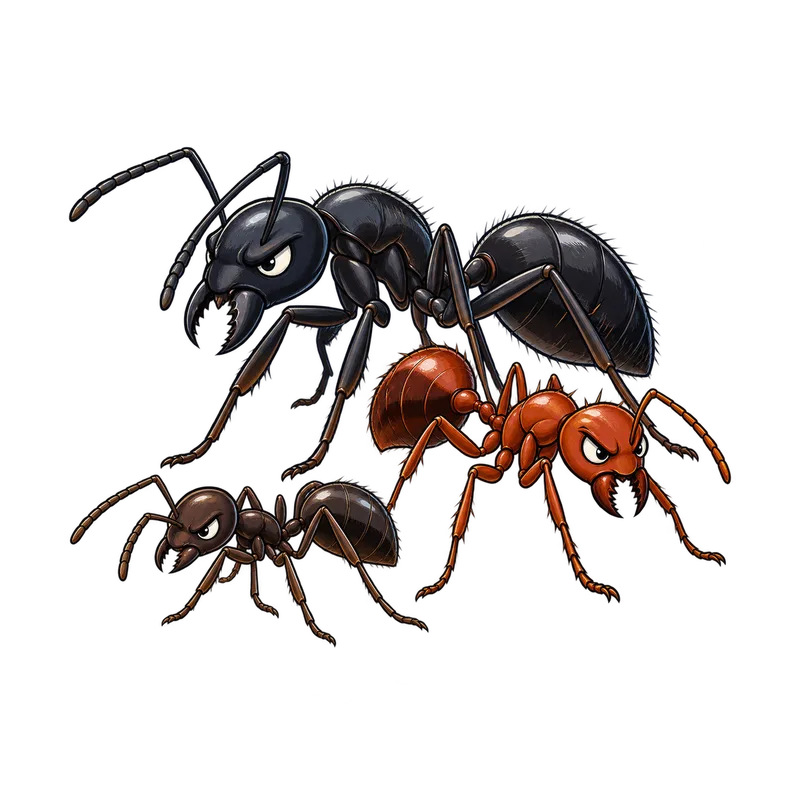
Finding black ants in the house does not necessarily mean you have carpenter ants, because several common nuisance species also have dark colors and wander indoors for food. You can usually tell them apart by size since carpenter ants measure a quarter inch to half an inch long, while everyday nuisance ants hover around an eighth of an inch.
What is actually going on
You walk into the kitchen on a warm Tuesday morning, reach for the coffee mug, and spot a steady line of half a dozen black ants marching across the laminate counter. Naturally, your mind immediately goes to the worst-case scenario. You picture your house being hollowed out from the inside, thousands of large insects quietly chewing through the wall studs until the roof sags.
The short answer is no, finding black ants in the house does not automatically mean you have carpenter ants. While it is true that many carpenter ants are solid jet-black, color is a notoriously lazy way to identify insects. Several common nuisance species are also dark brown or black, and they wander indoors purely to raid your pantry for sugar and moisture without ever touching the structural timber.
The real confusion usually starts because people assume any ant indoors behaves like a termite or a wood-boring beetle. But most of the small black ants you see on a kitchen floor are simply foragers from a nest out in the yard, or perhaps a small colony tucked into a dry wall void, looking for crumbs and water drops. They are pests, certainly, but they are not structural demolition crews.
How to tell for sure
If you want to know what you are actually dealing with, you have to look past the color and pay attention to size, anatomy, and what they leave behind. Carpenter ants tend to be much larger than everyday nuisance ants. Workers usually measure anywhere from a quarter-inch to half an inch long, and they are polymorphic, meaning if you look closely at a group of them, you will usually notice distinct differences in size between individuals.
Meanwhile, common non-damaging black ants are usually monomorphic, meaning every single worker looks like an exact carbon copy of the next, usually hovering around an eighth of an inch long. If you happen to catch one under a magnifying glass, check the waist. Carpenter ants have a single, prominent, upright node connecting the thorax to the abdomen, and their antennae are sharply elbowed. If you are comparing them to winged termites, which often get confused with swarming ants, the differences are stark. Termites have straight, bead-like antennae, a thick waist that looks like a cylinder rather than an hourglass, and four wings of equal length. Ants have unequal wing sizes where the front pair is noticeably larger than the back pair.
Another major clue is what happens to the wood. Carpenter ants chew through wood to carve out nesting galleries, but they do not eat it. They lack the digestive enzymes to break down cellulose, unlike termites. If you have carpenter ants, you will usually find frass, which looks like coarse, fibrous wood shavings resembling pencil sharpenings, often mixed with the discarded body parts of dead insects. If you see tiny, hard, six-sided pellets instead, you are likely looking at drywood termite droppings, which is an entirely different conversation.
What usually comes next
Once you have a reasonable idea that you are dealing with foragers rather than a major structural crisis, you have to make a choice about how to respond. The most common mistake people make is grabbing a can of household aerosol spray and blasting the ants walking across the baseboard. That usually kills a handful of foragers, maybe one percent of the actual colony, while leaving the queen and the brood safely tucked away behind the wall or out in a rotting tree stump.
Instead of chasing individual ants with surface sprays, focus on what invited them in the first place. Moisture is usually the main driver. Carpenter ants love wood that has been softened by plumbing leaks, roof drips, or window condensation. Fixing those leaks and replacing rotted timber usually takes away their preferred real estate. You should also walk the perimeter of the house and trim back any tree branches or heavy shrubbery touching the siding or roof, since overhanging branches act like an overhead highway straight into your living space.
If you do decide to use baits, they need to be slow-acting products that foragers can carry back to share with the rest of the colony, including the queen. Spraying repellent chemicals across every doorway usually just scatters the colony or causes them to shift their routes deeper into the wall voids, making the problem harder to pin down.
When to get help
There are moments when do-it-yourself measures stop making sense and you need to hand the problem over to someone who does this for a living. If you keep cleaning up piles of coarse, fibrous sawdust that reappear day after day in the exact same spot, or if you tap on a wooden window sill and hear a hollow, papery sound, you are usually dealing with an established nest inside the structure.
You should also call a professional if you spot winged ants emerging directly from indoor wall slits or light fixtures during the cooler months, as that usually points to a mature colony living inside the heated envelope of the house. Licensed pest control operators have the tools to locate hidden satellite nests and apply specialized dusts or baits directly into wall voids where you cannot reach.
Never try to diagnose skin marks or bites as ant attacks, and if anyone in the house experiences severe allergic reactions or stings from outdoor ground-nesting species, reach out to a medical clinician immediately. For structural issues, a certified timber pest inspection can confirm whether the damage requires repairs alongside pest control.