
Do pharaoh ants bite?
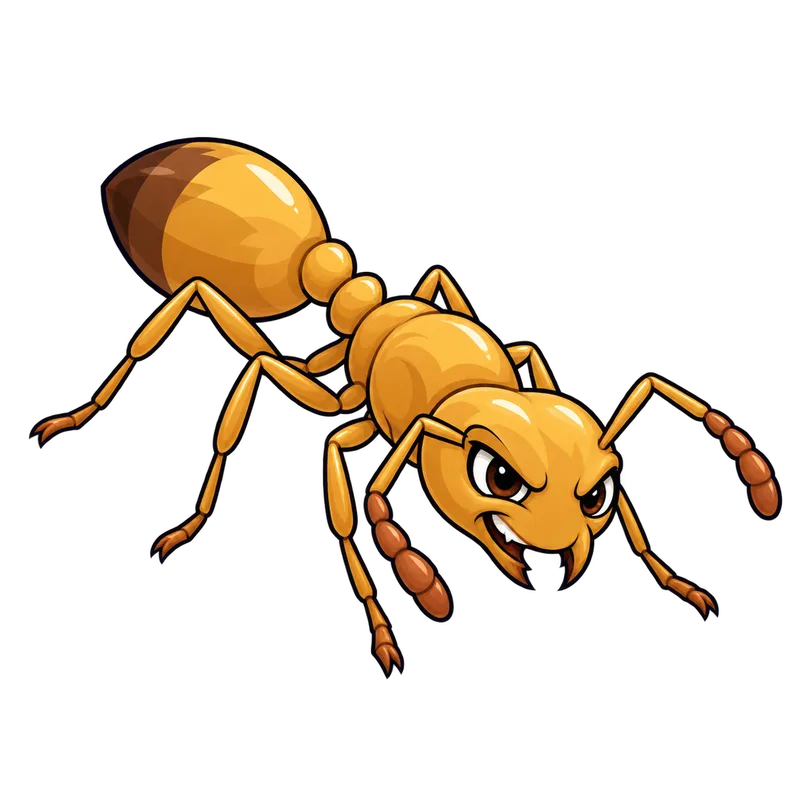
No, pharaoh ants do not bite or sting people in any meaningful way. They possess basic chewing mouthparts and lack a functional stinger, meaning you will not wake up with welts or feel a sudden pinch on your arm from them.
What is actually going on
You are standing in the kitchen pouring morning coffee when you notice a thin, frantic line of tiny pale insects marching across the counter toward the sugar canister. Your immediate reaction is to swipe at them with a paper towel and wonder if they are going to start biting or stinging you while you make breakfast. It is a completely natural worry because plenty of household bugs view human skin as a primary target.
The short answer is no, pharaoh ants do not bite or sting people in any meaningful way. While they possess the basic chewing mouthparts that all insects have, they are not aggressive biters, and they lack a functional stinger entirely. You are not going to wake up with welts or feel a sudden pinch on your arm because these ants simply have no interest in humans as a food source.
That lack of biting behavior often gives people a false sense of security, leading them to think these tiny insects are harmless nuisances you can just ignore. In reality, their threat comes from an entirely different direction. Because they establish colonies inside heated walls, utility chases, and hidden structural voids, they travel freely between unsanitary spots like drains and garbage containers, and clean surfaces like your kitchen prep counters or a hospital patient room.
Through this constant wandering, they act as mechanical disease vectors, meaning they physically track microscopic bacteria on their bodies from dirty areas onto clean ones. They do not need to bite you to cause a problem. They just need to walk across your cutting board after exploring a damp crawlspace or a trash bin.
How to tell for sure
Before you do anything about an insect problem, you usually need to confirm what kind of pest you are actually dealing with. Pharaoh ants are minute creatures, measuring usually about 1.5 to 2 millimeters long, which makes them noticeably smaller than many common yard ants. Their bodies are typically yellow to light reddish-brown, ending in a darker abdomen at the rear.
If you grab a magnifying glass and look closely at one, you usually see elbowed antennae and a narrow waist with two distinct bumps or nodes. That waist structure is a helpful clue to separate ants from other small bugs, as termites have a broad, straight waist without that pinched appearance.
At the same time, you have to keep in mind that other small indoor ants look remarkably similar to the naked eye. Ghost ants and thief ants share a tiny yellow-to-brown profile, and telling them apart usually requires a preserved specimen and a microscope.
If you are dealing with sharp, painful nicks or swelling, you can usually rule out pharaoh ants right away. Argentine ants lack a sting but bite readily when disturbed, carpenter ants deliver painful pinches with powerful jaws, and fire ants inflict burning stings that turn into pustules. If you feel actual pain from an insect encounter in your home, it is usually an entirely different species at work.
What usually comes next
When you spot a trail of tiny ants marching across the pantry shelf, the natural urge is to grab the nearest can of household bug spray and douse the area. That happens to be about the worst move you can make when dealing with this particular pest.
Imagine a pharaoh ant colony acting like a drop of liquid mercury resting on a smooth table. If you hit that drop with a heavy object, it does not simply vanish. Instead, it shatters into dozens of independent droplets that scatter in every direction. Spraying a repellent aerosol onto an ant trail creates that exact reaction, which professionals refer to as colony budding.
The queens and worker groups sense the chemical threat and immediately disperse through your wall voids, turning one localized nest into a dozen satellite colonies spread across multiple rooms. Your quick squirt with the aerosol transforms a minor kitchen annoyance into an entire house infestation.
Your most practical decision at this crossroads is to pause, put the bug spray back under the sink, and focus on slow-acting baits instead. Because these colonies rely on multiple queens hidden deep inside structures, getting rid of them usually requires non-repellent baits that foraging workers carry back to share through food-sharing behavior, wiping out the nest from the inside out without alarming the colony into scattering.
When to get help
Certain situations mean do-it-yourself methods will not cut it, and you need to bring in outside help. If you live in an apartment building, a multi-unit complex, or manage a commercial or healthcare facility, pharaoh ant problems demand a licensed pest control operator right away. Their ability to nest in tiny, inaccessible structural voids makes institutional and shared-building infestations nearly impossible to resolve with standard consumer products alone.
On the medical side, you need to remember that skin lesions, red bumps, and bite reactions cannot be diagnosed from a photograph or a casual description. If you or someone in your home develops unexplained skin marks, consult a healthcare professional for an accurate assessment rather than guessing which bug caused them.
Most importantly, if anyone in your household exhibits systemic allergic symptoms after an insect encounter, such as difficulty breathing, swelling of the throat or tongue, dizziness, or hives, seek emergency medical evaluation immediately. While pharaoh ants do not deliver venom, encounters with other stinging insects like fire ants or wasps can trigger severe anaphylaxis, requiring urgent medical care and potentially prescription epinephrine devices.