
Are all red ants fire ants?
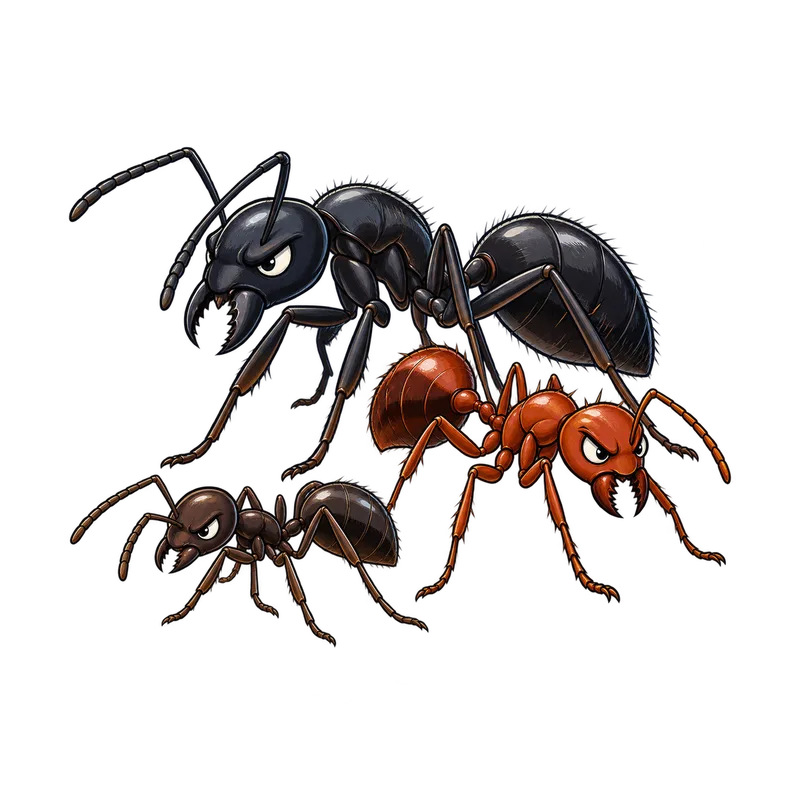
No, not all red ants are fire ants. Body coloration alone is never enough to identify the species because many harmless insects share a rusty hue. True fire ants have two distinct nodes on the waist, a ten-segmented antenna ending in a two-segmented club, and a functional stinger.
What is actually going on
You are walking across the lawn in bare feet, step right into a soft patch of disturbed dirt, and suddenly your ankle is on fire. You look down, see a swarm of tiny reddish insects boiling out of the earth, and your brain immediately jumps to the worst conclusion. Every red ant you have ever heard about must be a fire ant, and your entire backyard is now a hostile territory.
Take a deep breath, because color is remarkably unhelpful when identifying ants. No, not all red ants are fire ants. Body coloration alone is never enough to diagnose a pest, because plenty of harmless or entirely different creatures wear shades of red and rust.
In everyday speech, people use the term red ant as a catch-all for any insect with a reddish tint that wanders across a sidewalk or bites a toe. In reality, true fire ants belong to a specific group with distinct anatomical features, while many other insects share that exact same rusty hue without being fire ants at all.
How to tell for sure
If you want to know what you are looking at without dragging out a laboratory microscope, behavior and general size usually give you the first major clues. True red imported fire ants build prominent dome-shaped mounds in open, sunny locations like lawns, pastures, and park turf, and they usually swarm out aggressively by the hundreds the moment their dirt home is disturbed.
If you find a much larger insect, measuring anywhere from 5 to 15 mm long with a bright red midsection and a black rear end, crawling slowly along a wooden deck or near a pile of clean sawdust, you are usually looking at a red-and-black carpenter ant rather than a fire ant. Carpenter ants prefer nesting inside moist or decaying wood and wall voids, and they never build earthen mounds in the middle of a yard.
For a definitive check when you have a specimen in hand, you have to look at the waist under a 10x magnification lens. True fire ants have two distinct nodes, which are small bumps or beads on the narrow waist connecting the middle body to the abdomen. Carpenter ants, Argentine ants, and most other common garden ants usually have just one node on their waist. Fire ants also sport a 10-segmented antenna ending in a two-segmented club and possess a functional stinger that delivers a painful, alkaloid-based venom. Carpenter ants completely lack a stinger and instead defend themselves by biting with heavy mandibles and spraying formic acid into the wound.
You also have to watch out for impostors that are not ants at all. Velvet ants, such as the famous cow killer, are actually solitary wingless female wasps covered in bright red-and-black fuzzy hair that pack an intensely painful sting. Microscopic chiggers, which people often call redbugs, are tiny arachnid mites in the soil rather than insects, and they cause severe itching by attaching to skin around tight clothing.
What usually comes next
Once you have identified the critter, your next practical decision is figuring out whether you are dealing with a localized outdoor nuisance or a structural threat. If you confirm you have fire ants nesting in an open yard, your approach will focus on managing soil mounds in the lawn. But if you find large reddish ants marching out of a structural wall void or dropping wood shavings near a door frame, you need to shift your focus away from the dirt and look for moisture issues, leaks, or decaying timber inside the building framing.
When you get stung by a fire ant, basic first aid usually involves washing the area immediately with soap and water and applying a cold compress to keep the swelling down. You might be tempted to pop or scratch the fluid-filled pustules that pop up a day later, but you should leave them alone. Breaking that skin creates an open invitation for secondary bacterial infections.
When to get help
Some situations demand outside help immediately. If you or someone else suffers a sting and experiences systemic symptoms like hives, facial swelling, dizziness, or difficulty breathing, you must seek emergency medical care or contact poison control without delay. The same goes for multiple stings on a child, an elderly person, or a household pet.
If you are dealing with carpenter ants that are actively excavating structural wall studs, window headers, or floor joists, you are facing a potential threat to the structural integrity of your building. Persistent sawdust piles and rustling sounds inside walls call for a professional timber pest inspection. Handling concentrated structural termiticides or commercial insecticides requires specialized training, safety equipment, and state-certified licensing, so those treatments belong strictly in the hands of a licensed pest control professional.