
Red ants vs fire ants: how can you tell?
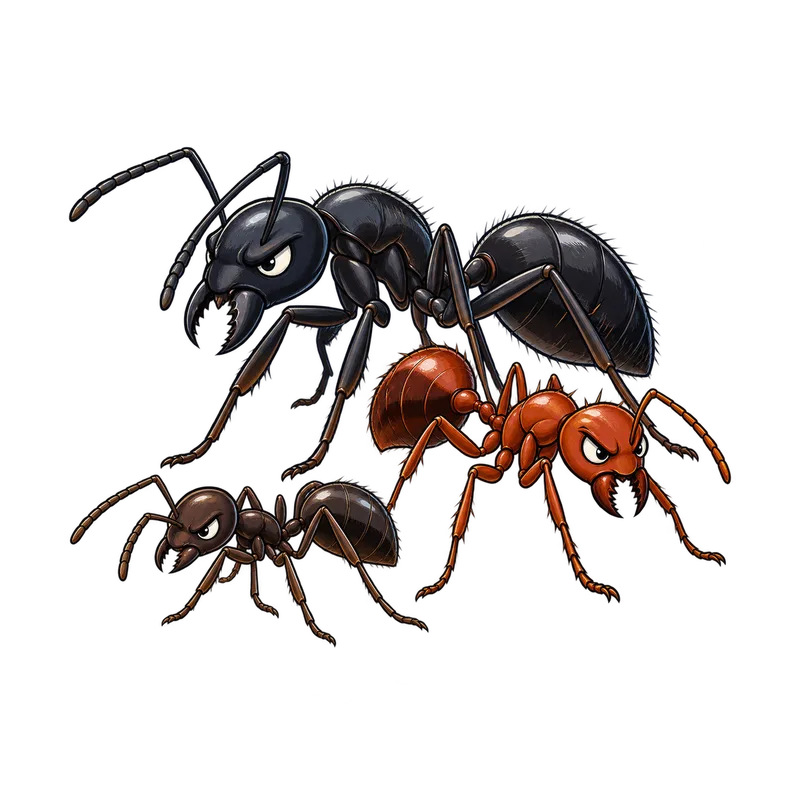
You can tell fire ants apart from other reddish bugs by examining their physical build, their nesting site, and their defense habits. Fire ant workers have two distinct nodes on their waist and vary in size within the same nest, while carpenter ants have only a single waist node. Also, fire ants anchor themselves with their jaws and drive a stinger into your flesh, which soon develops into a sterile white pustule.
What is actually going on
You are out barefoot in the yard with a cup of coffee, enjoying a quiet Saturday morning, when you step near a patch of bare soil and suddenly feel a sharp, searing pain on your ankle. Within seconds, you are brushing half a dozen reddish bugs off your skin, wondering if you just kicked an ordinary anthill or stumbled into something much worse. People throw around the term red ant like it covers every copper-colored insect in the dirt, but that loose grouping creates plenty of confusion when you are trying to figure out what is crawling across your patio or chewing through your fence line.
The short answer is that true fire ants belong to a very specific genus with distinct anatomical weapons and nesting habits, whereas most other red-colored insects you encounter in the garden are entirely different creatures. A lot of folks assume that any ant with a reddish-brown body is automatically a fire ant, but color is notoriously deceptive in the insect world. Many harmless field ants and wood-destroying carpenter ants sport striking red thoraxes paired with black abdomens. To make matters more confusing, you might also spot solitary, wingless wasps scurrying across sandy patches that look like oversized, velvety red ants. Telling them apart does not require a degree in entomology, but it does mean looking past the color palette and examining the physical build, the nesting site, and the way the insect defends itself when disturbed.
How to tell for sure
If you really want to know what you are looking at, you usually need to get close with a ten-power hand lens or a magnifying glass, assuming the specimens are safely dead in a collection vial rather than crawling up your shin. Fire ants usually give away their identity by the structure of their waist, which features two distinct nodes, or bumps, sitting between the middle body segment and the abdomen. Carpenter ants and most common nuisance ants only possess a single node in that same spot. You can also look at the workers themselves. Fire ant colonies are polymorphic, meaning individual workers inside the exact same nest vary considerably in size, ranging from tiny foragers to much larger majors. If you are looking at a woodpile or a rotting tree stump where large red and black ants are carving out clean galleries and pushing out little piles of coarse sawdust, you are usually dealing with red carpenter ants rather than fire ants. Those carpenter ants can give you a solid pinch with their powerful jaws, but they do not have a functional stinger at the tail end. Fire ants operate entirely differently when they attack. A fire ant grips your skin with its mandibles like a pair of pliers to anchor itself, arches its back, and drives a stinger into your flesh to inject an alkaloid-based venom. That venom is what sets them apart from almost every other stinging insect, which typically relies on protein-based venoms. The immediate sensation is a fierce burning feeling, and within twenty-four hours, that sting usually develops into a sterile, fluid-filled white pustule that looks remarkably like a miniature pimple. Do not overlook the possibility of velvet ants either. Those solitary, fuzzy insects scurry across dry soil looking like oversized, brightly colored red ants, but they are actually wingless female wasps. They lack ant waist nodes entirely and possess a notoriously severe sting, earning them the old country nickname of cow killers. Finally, keep in mind that winged reproductive ants can appear during humid summer swarms, and their folded wings often hide those crucial waist nodes from plain view, making them look deceptively similar to swarming termites or other wood-boring pests.
What usually comes next
Once you have figured out what kind of bug you are dealing with through careful observation instead of guessing, you have to decide whether to leave the nest alone or deal with it directly around your house. If your check turns up carpenter ants tunneling through damp wood near a window frame or a door casing, you are facing a structural issue that calls for a professional pest inspection rather than a quick spray on the lawn. When you notice ordinary dirt mounds sitting out in sunny patches of grass, however, treating those specific spots or putting down perimeter barriers usually makes sense if you want to keep your yard usable for kids and pets. Whenever you decide to treat fire ant mounds on your own, keep in mind that the product label is the law. You should never change bait strengths, mix unapproved chemicals, or rely on home remedies that fall outside official guidance. For heavy infestations, pests getting inside your walls, or hard to reach nests, your best move is to call a licensed pest control professional who has the gear and training to do the job safely.
When to get help
Most routine fire ant stings just leave you with a bit of pain and an itchy bump that you can handle at home by washing the skin with soap and water, slapping on a cold pack, and using standard anti-itch creams. You should resist the urge to break, squeeze, or pop those fluid filled bumps, because opening them up just invites a secondary bacterial infection. More seriously, some people can suffer a dangerous full body allergic reaction known as anaphylaxis after getting stung. If someone who got stung starts showing signs like fast spreading hives, swelling around the face and throat, dizziness, nausea, wheezing, or trouble breathing within minutes, you are looking at a medical emergency. You need to use an emergency epinephrine auto-injector right away and dial for help without delay. Anyone with a known severe allergy to insect stings ought to carry their emergency medication and wear a medical ID bracelet wherever they go.