
What are yellow crazy ants?
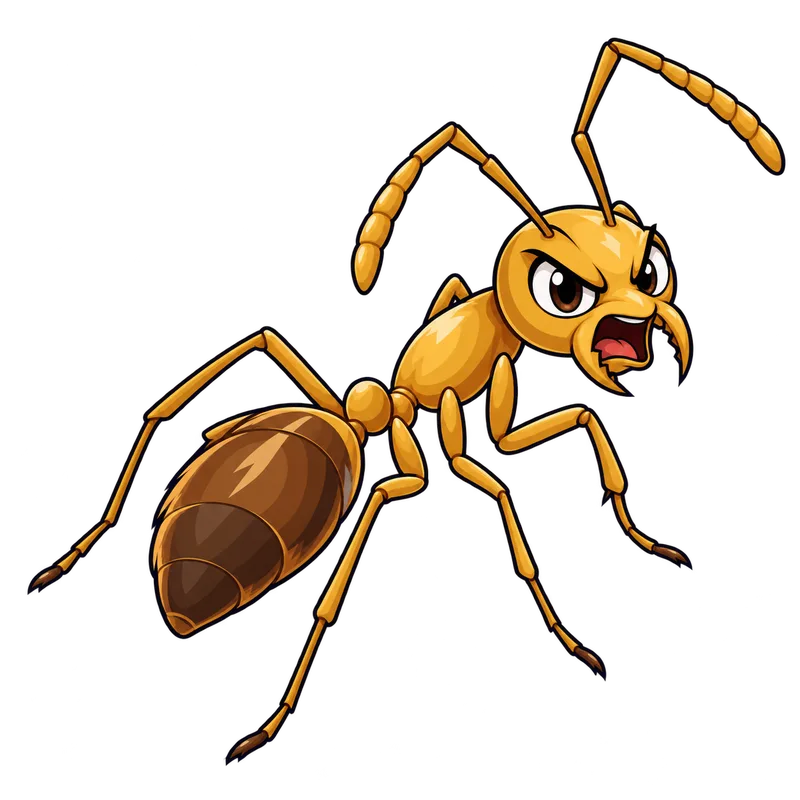
Yellow crazy ants are golden-yellow to tawny-brown insects with remarkably long legs and antennae that move in frantic, erratic zigzags. These pests form vast supercolonies with millions of workers and do not sting, instead spraying a fine mist of formic acid from a tiny circular opening at the tip of the abdomen.
What is actually going on
Picture stepping out onto your patio on a warm morning to grab the garden hose, only to notice the concrete near the flower bed looks like it is shivering. Look closer, and you realize the ground is covered in a restless sea of tiny brown ants bouncing around in jagged, erratic zigzags like hyperactive pinballs. You might be dealing with yellow crazy ants. These pests do not behave like the orderly little trails of pavement ants you usually see marching toward a dropped crumb. They form vast, sprawling supercolonies where millions of workers share territory and thousands of egg-laying queens rule together without fighting. Unlike ordinary ants that defend strict turf boundaries, yellow crazy ants operate more like a single open-plan metropolis spanning entire yards or neighborhoods, allowing populations to reach staggering densities of up to 20 million workers per hectare.
They thrive by teaming up with plant-sucking pests like aphids and scale insects, acting essentially like livestock farmers. The ants protect these sap-sucking bugs from ladybugs and other predators just like a shepherd guards a flock, and in return, the aphids pump out a sugary liquid called honeydew for the ants to harvest. This intense mutualism causes massive scale outbreaks, leading to sooty mold, plant stress, and vegetation dieback across garden beds and agricultural crops.
The real trouble starts when their numbers swell into the millions, crowding out native wildlife and damaging the local ecosystem. Famous ecological disasters trace back to this species, such as the devastation on Christmas Island where massive swarms killed up to 20 million endemic red land crabs. They do not have a traditional stinger to jab you with. Instead, they carry a microscopic chemical cannon at the tip of the abdomen, spraying a fine mist of formic acid to blind prey, burn potential predators, and clear their territory of rival insects.
How to tell for sure
Field cues can give you a strong suspicion, but they usually require careful verification before you make any control decisions. Yellow crazy ants are typically golden-yellow to tawny-brown, with remarkably long legs and antennae that make them look stretched out. When they scurry across a patio or up a tree trunk, their movement is notoriously frantic and non-linear, which is how they earned their descriptive common name.
Do not rely on speed or color alone, because several other look-alike species share that same jerky running style and general body shape. Confirming the exact species usually requires a closer look under a microscope. A true yellow crazy ant belongs to the subfamily Formicinae, meaning it lacks a stinger entirely. Instead, it has a tiny circular opening at the end of the rear body segment surrounded by a neat ringlet of hairs, which is the specialized acidopore used to spray formic acid. Workers feature a single connecting node between the middle and rear body segments, and their antennae have 12 segments with no distinct club at the tip. For absolute certainty, a professional entomologist must examine the precise arrangement of stiff bristles on the thorax using ten times to forty times magnification.
What usually comes next
When you spot a massive, erratic swarm spilling across your property, your first instinct will likely be to grab a can of surface spray from the hardware store and go to town. Resist that urge. Spraying contact insecticide on foraging trails usually backfires. It only kills the workers out in the open, providing a brief couple of days of suppression before the population bounces right back. Worse, the chemical shock can cause a supercolony to panic, split up, and scatter into multiple new satellite nests inside your walls or under your foundation through a process known as budding.
Managing these ants requires a strategic approach centered on integrated pest management and targeted control. Start by cutting off their access to water and food. Clear away heavy leaf litter, rotten logs, and woodpiles where they love to nest, and seal up cracks around your home foundation. If you want to use baits, you have to choose specialized sweet or protein formulations that foraging workers will carry back to feed the queens hidden deep underground. Always check the product label carefully before applying anything outdoors. Using outdoor-rated chemicals inside your living space is not only ineffective, it is against the law, as pesticide labels govern legal usage under federal and state regulations.
When to get help
There are moments when a standard DIY approach simply will not cut through a massive supercolony. You should call in a licensed pest control professional if the ants are swarming across multiple properties, pouring out of electrical panels, or nesting inside major HVAC units where accumulated dead ants can trigger dangerous short circuits and costly equipment failure.
Professionals should also step in if over-the-counter baits and sanitation efforts fail to make a noticeable dent in the population after a couple of weeks, or if the infestation requires specialized non-repellent barrier treatments that demand professional equipment and licensing. Long-distance spread often happens by accident when people transport infested soil, potted plants, timber, or debris, so professional assessment is vital if an infestation keeps returning.
If someone in your household experiences a severe allergic reaction, persistent skin inflammation, or accidental eye exposure to the formic acid spray, reach out to a clinician or your regional poison control center right away. For large-scale infestations near protected conservation areas or public lands, local agricultural agencies and specialized land managers handle the heavy lifting to safeguard wildlife and native species.