Dog flea
Ctenocephalides canis
- Size
- Less than 4 mm
- Color
- Brownish to dark reddish brown
- Habitat
- Pet bedding, carpets, floor crevices, and host fur
- Diet
- Warm-blooded mammalian blood
- Life cycle
- 4 weeks to over 1 year
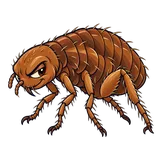
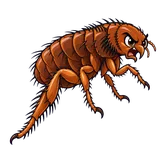
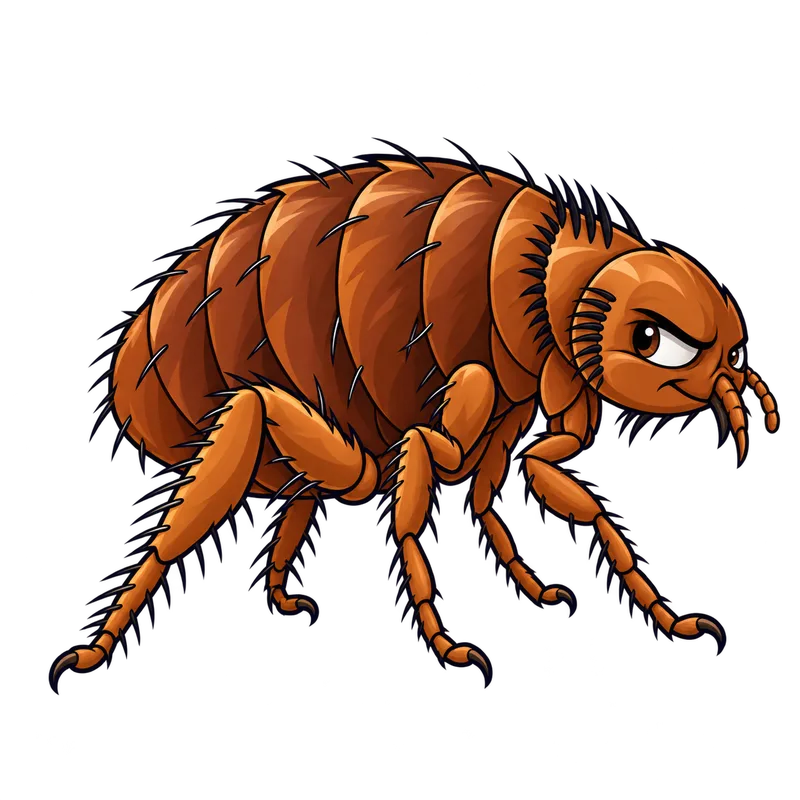
You are likely looking at a small, oval insect that is flattened from side to side, which is why it slips so easily between the hairs of a dog or cat. Without a hand lens, an adult dog flea looks like a tiny, moving speck, measuring less than 4 mm long with a brownish to dark reddish brown color. Under magnification, you would notice backward-projecting bristles and heavy spines that help it move through fur without losing its grip.
Identity
What most people call a dog flea is actually the cat flea, because that species takes over homes and yards even when the household pet is strictly a dog. Telling them apart requires examining the comb spines on the head under a microscope, something you rarely need to do unless you are working in a laboratory.
You might confuse a flea with a bed bug, but the differences are plain to see once you look closely. Bed bugs are flat from top to bottom, like an apple seed, and they only crawl. Fleas are pinched at the sides and possess powerful hind legs that let them jump almost 30 cm in a single bound.
Ticks are another frequent suspect, but they have eight legs as adults, move very slowly, and stay firmly anchored to the skin for days while feeding. Fleas do not anchor themselves in one spot for long stretches unless you are dealing with a stickfast flea, an unusual relative whose females cement their mouthparts into the host skin for up to 19 days.
Habitat & behaviour
Fleas live where their hosts spend time, which means your living room rug, your dog or cat sleeping mat, and the shaded soil outside the back door are prime real estate. They are active whenever conditions are warm and humid, though a climate-controlled house keeps them breeding right through the winter months.
People are often mystified by how an empty house can suddenly swarm with biting insects the moment they walk through the door after a vacation. The explanation lies in how pupae wait out absences. A mature larva spins a silken cocoon that gathers dust and dirt until it is thoroughly camouflaged on the floorboards or carpet base. Inside that shell, the developing adult can remain dormant for anywhere from 1 week to 1 year depending on conditions.
When you walk into the room, your footsteps create physical vibrations, your body heat radiates into the space, and your presence shifts the ambient light. Those three cues act as an alarm clock, causing a mass emergence of hungry adults that leap from the floor directly toward your ankles.
Visual variations
The life of a flea moves through four distinct physical stages, and none of them resemble one another. You never have to search for winged forms because fleas remain entirely wingless throughout every point of their existence.
Eggs appear as tiny, smooth, oval, and pale specks. Since female fleas drop them loosely into the fur, the eggs slide straight off and collect in pet bedding, furniture upholstery, and carpet fibers at a rate of up to 25 eggs each day for a single female.
Once the eggs hatch after roughly 2 weeks, they transform into larvae, which resemble slender, legless, worm-like creatures. Unlike the adults, larvae cannot bite and avoid your pet's blood entirely, choosing instead to crawl away from light into dark crevices to feed on organic dust and dried blood waste left behind by the mature fleas.
Following their time inside camouflaged cocoons, they step out as fully formed adults. Both males and females share the same appearance, along with the flattened bodies and piercing mouthparts needed to feed on blood.
Why it matters
An active infestation means your pets are suffering from irritated skin, while you likely deal with nuisance bites clustered around your lower legs between the ankle and knee. Those bites leave small red marks that itch fiercely, and scratching them can break the skin to invite secondary bacterial infections.
Beyond immediate discomfort, fleas act as intermediate hosts for the dog and cat tapeworm. If a child plays closely with an infected pet and accidentally swallows a stray flea, the parasite can transfer over.
If anyone in your home develops severe allergic reactions, widespread hives, or signs of a skin infection from scratching, consult a healthcare provider for proper evaluation. Never treat pets with over-the-counter chemical products without consulting a licensed veterinarian first, particularly because certain dog treatments can prove lethal to cats. Licensed pest management professionals should be brought in when heavy infestations take hold in subfloor spaces or stubborn indoor breeding sites resist standard household cleaning.