
Fleas
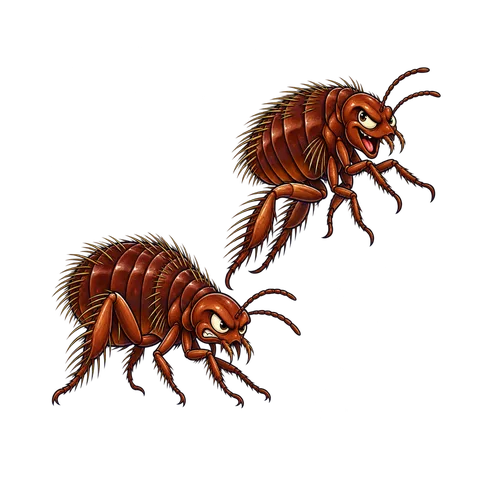
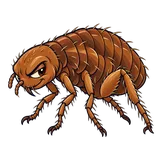
What pulls these creatures together into one category is their shared reliance on vertebrate blood paired with a distinct body shape and a remarkable talent for jumping. You usually spot them when you feel a sudden prick around your ankles after crossing a room where a family pet sleeps, noticing tiny, wingless insects compressed narrowly from side to side like dark punctuation marks. Instead of crawling across surfaces, they use specialized hind legs containing elastic proteins to launch themselves up to thirty centimeters into the air when disturbed.
Separating this group from other common household biters comes down to checking their physical posture and movement. If you find a crawling pest on a mattress that is flat from top to bottom like an apple seed, or an insect grasping hair fibers with stout claws, you are dealing with bed bugs or lice that can only crawl rather than jump. Fleas are much narrower, lack wings entirely, and rely on that explosive jump to reach passing hosts from carpets, floor cracks, and pet bedding.
Explore fleas
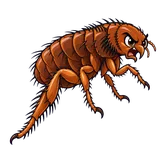 Cat fleaCtenocephalides felis
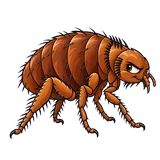 Dog fleaCtenocephalides canis
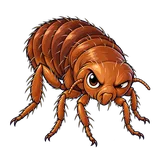 Human fleaPulex irritans
 Oriental rat fleaXenopsylla cheopis