
How do you deal with fleas in a bed?
To deal with fleas in a bed, you must treat the whole circuit at the same time rather than just the mattress. This requires getting every pet on a veterinarian recommended treatment, washing all bedding in hot water and drying on high heat for at least 30 minutes, and thoroughly vacuuming the mattress, frame, and floors.
What is actually going on
You wake up, swing your feet out of bed, and by the time you reach the kitchen there are three itchy red bumps around your ankles. You strip the sheets, check the mattress seams, find nothing obvious, and start wondering what exactly has moved into your bedroom. Here is the honest answer: if it is fleas, they have not moved into the bed. They have moved into your life, and the bed is just one of the stops.
That distinction matters because it changes everything about how you fix it. Fleas, almost always cat fleas even if you only own a dog, are not mattress pests. They live on your pets, and the eggs fall off the animals like dandruff. A female flea can lay up to 25 eggs a day, and those eggs roll off wherever the pet happens to be: the sofa, the rug, and yes, your duvet if the dog sleeps there. The eggs hatch into tiny larvae that do not bite anyone. They wriggle down into carpet fibers and floor cracks and feed on debris, including the dried blood droppings adult fleas leave behind. Then they spin cocoons, pupate, and wait. When the pupae sense vibration, body heat or the carbon dioxide you breathe out, they pop open and a fresh adult flea goes looking for a meal.
So the real answer to the question is: you deal with the whole circuit, not the bed. Treat the pets with a product your veterinarian recommends, wash all the bedding hot and dry it hot, vacuum the mattress, frame, floor and furniture thoroughly, and dispose of the vacuum contents properly. Do those things at the same time, because doing just one is like bailing out a boat without plugging the hole. Skip the pet, and it keeps reseeding the room with eggs every single day. Skip the room, and the pupae already hiding in the carpet will keep hatching onto your freshly treated cat.
One more thing worth knowing, because it surprises people. Those pupae can sit dormant for months, up to a year in some conditions. This is why families come home from a two-week vacation and get swarmed the moment they walk across the living room. The house was not clean while they were gone. It was armed.
How to tell for sure
Before you treat anything, catch one. Bites alone cannot tell you what bit you, and anyone who says otherwise is guessing. Reactions vary wildly from person to person, and a fair share of people show no visible reaction at all. Press a piece of clear tape onto whatever you find moving, or vacuum it up onto a white surface, and look at it properly.
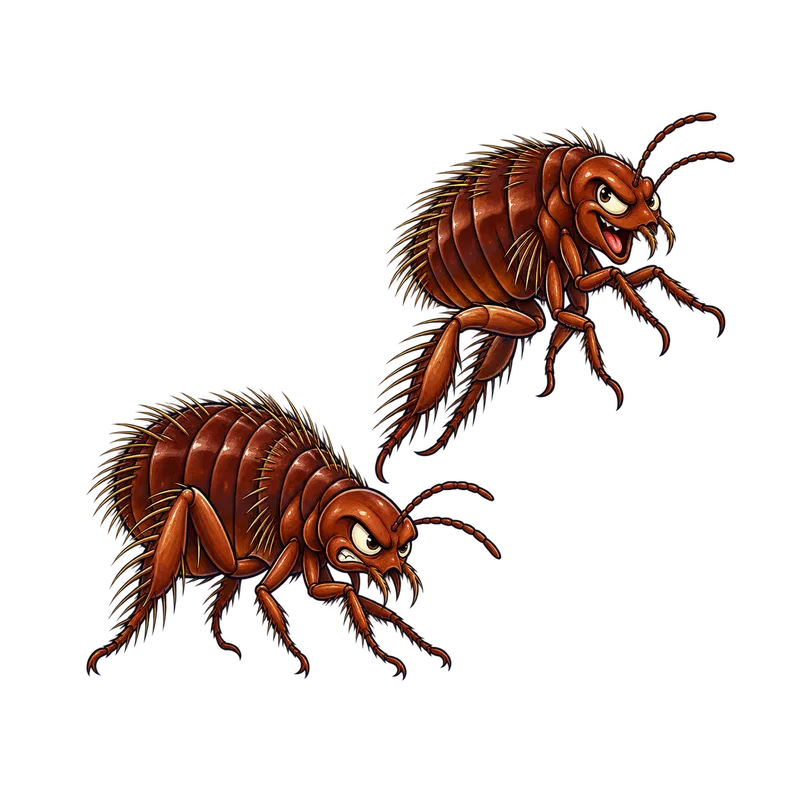
A flea is small, under 4 mm, brownish and flattened side to side, like a sesame seed that has been squeezed in a vice. It does not fly, but it jumps startlingly well for its size, up to about 30 cm, which is why you usually spot it mid-leap or feel it land rather than watching it stroll. A bed bug, the usual suspect in the same investigation, is built completely differently: flat top to bottom like a tiny lentil, roughly apple-seed sized, and it can only crawl. If the thing in your tape jumped, you are not dealing with bed bugs.
The bite pattern offers a supporting clue, though never a verdict. Flea bites usually cluster around the ankles, shins and lower legs, because that is where a jumping insect from floor level can reach. Bed bug bites usually show up on whatever skin was exposed while you slept: arms, shoulders, neck. Think red socks versus pajama outline. Useful as a hint, useless as proof.
Also check the pets. Part the fur on the belly or at the base of the tail and look for the fleas themselves or for flea dirt, which looks like ground black pepper. Put some of those specks on damp white paper and they usually smear reddish brown, because they are digested blood. And if you have no pets at all, do not assume fleas are ruled out. A previous tenant's infestation can linger in carpets, and rodents or birds nesting in an attic or wall void can carry their own fleas into the house.
What usually comes next
Once you know it is fleas, the plan is refreshingly unglamorous: run the whole circuit in the same week, and start with the animals. Call your veterinarian and get every cat and dog in the house on an appropriate treatment, because this is the anchor the rest of the plan hangs from. A vet-guided product is the one piece you should not improvise, no matter what the internet forum swears by.
While that takes effect, do the laundry relay. Strip the bed completely: sheets, pillowcases, duvet cover, blankets, plus the pet's bedding. Carry it straight to the machine, wash in hot water, and dry on high heat for a full cycle, at least a solid 30 minutes of real heat. The dryer does most of the killing, so do not baby it. Clean items go back onto the bed fresh from the dryer, not via a scenic detour across the bedroom floor.
Then vacuum like you mean it: the mattress surface and seams, the box spring, the bed frame joints, the carpet under and around the bed, the edges of the room, upholstered furniture. Use the crevice tool, the skinny nozzle attachment that actually gets into corners. Now the step everyone skips and then regrets: fleas and eggs can survive the trip through the vacuum. Seal the bag or empty the canister into a plastic bag, tie it shut, and get it into an outdoor bin straight away. Some people freeze the contents instead. Either way, do not leave it sitting in the closet vacuum, which otherwise becomes a flea nursery with wheels.
A word on bug bombs, because someone in your life will suggest one. Those total-release foggers spray product into open air, and fleas do not live in open air. They live inside carpet fibers and floor cracks, exactly where the fog never reaches. So you end up with chemical residue on every surface and live, unbothered fleas underneath it. If the situation calls for a residual spray or an insect growth regulator, which is a product that stops larvae from developing rather than killing adults on contact, follow the label to the letter, never spray anything onto sleeping surfaces that is not labeled for it, and honestly consider letting a licensed applicator handle that part. And brace yourself for the timeline: even done right, this takes a few weeks, because those dormant pupae hatch on their own schedule, not yours.
When to get help
Call in a professional pest control operator when you have treated the pets, done the laundry and vacuuming properly, and you are still finding fleas after several weeks. Persistent infestations often mean a reservoir you cannot reach, like subfloor voids, or a flea population that shrugs off the usual products, and that is a licensed applicator's call to make. The same goes for multi-unit buildings, where the source may be the apartment next door, and for any situation involving rodents or wildlife in the structure, which needs exclusion work, not just flea treatment.
On the health side, keep an eye on the bites. Scratching breaks the skin, and broken skin around itchy bites can turn into a bacterial infection, so if a bite area gets increasingly red, warm, swollen or starts weeping, see a clinician rather than toughing it out. Anyone who develops widespread hives or a strong allergic reaction to bites should get medical attention promptly. For the animals, a heavy flea load is more than an itch: puppies, kittens and small pets can become anemic, and fleas can carry tapeworm, so a pet that is lethargic, pale-gummed or losing condition needs the veterinarian, not just a better flea product.
Most bedroom flea situations, caught reasonably early, respond to the unglamorous routine: vet treatment, hot laundry, thorough vacuuming, patience. Nothing exotic about it. It just has to all happen at once.