
Cat flea vs dog flea: why does the common name cause confusion?
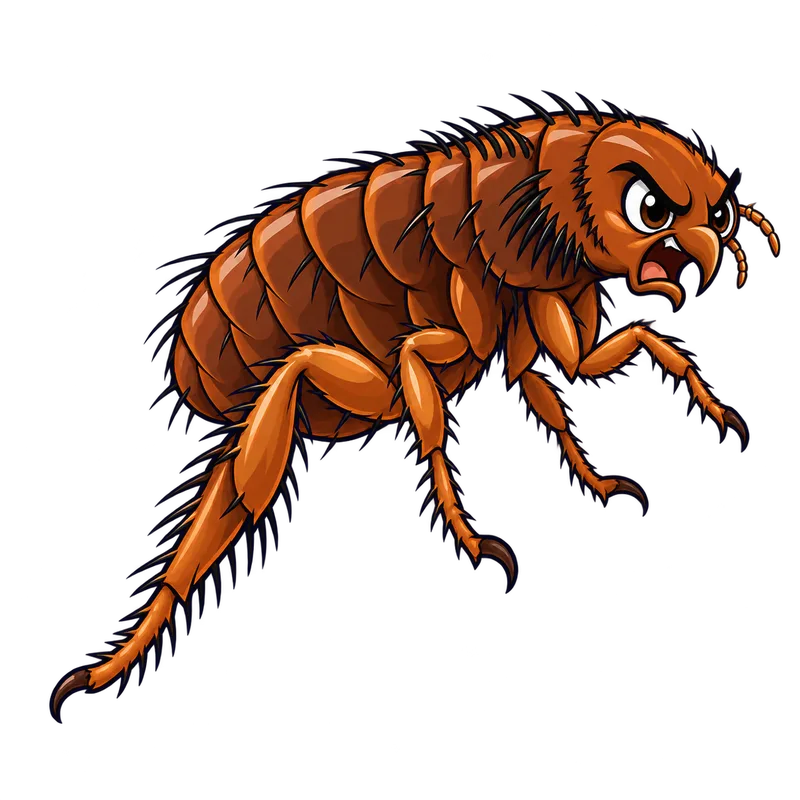
The common name cat flea causes confusion because early naturalists named the species after a single host even though it happily lives on dogs, raccoons, and possums too. In fact, this equal opportunity generalist is the species found nine times out of ten on pets, while the true dog flea is surprisingly rare.
What is actually going on
Imagine walking across the living room rug in your socks and suddenly noticing a dozen tiny, itchy red dots around your ankles. You check the family dog, find a few hopping passengers in his fur, and immediately assume you are dealing with dog fleas. The common name makes it sound like an open-and-shut case. But if you were to scoop up those tiny bugs and put them under a microscope, you would find something surprising. They are almost certainly cat fleas.
The confusion comes down to a misleading nickname that has stuck around for generations. Naming the species after a single host is a bit like calling a Panama hat by its geographic label when it actually comes from Ecuador. Early naturalists happened to collect their first reference specimens from felines and slapped a permanent label on them. In reality, the cat flea acts as an equal-opportunity generalist. It does not much care whether it lands on a domestic cat, a raccoon, a possum, or the family dog stretched out on the kitchen floor.
So why does everyone still call them cat fleas if they happily live on dogs? Because biology does not read the dictionary. While female cat fleas might lay slightly more eggs when feeding on a cat, their reproductive output on a dog is more than enough to cause a full-blown infestation. When pets pick up fleas in the backyard or at the park, they are hosting the very same species nine times out of ten. The true dog flea turns out to be surprisingly rare in typical residential settings, leaving the cat flea to run the entire show.
How to tell for sure
If you want to know what you are looking at, forget about the bite marks on your skin. It is usually impossible to identify any pest from a bite alone because human immune responses vary wildly. One person might develop angry welts while another feels nothing at all. You need to look at the physical insect, and that usually takes a magnifying lens.
Cat fleas are tiny, measuring less than 4 mm long, and they are flattened from side to side like a microscopic blade. That lateral compression helps them glide effortlessly through dense animal fur instead of getting tangled up. They do not have wings, but they possess powerful hind legs that let them jump nearly a foot between hosts or straight onto your socks. If you spot tiny white grains that look like salt rolling off your pet, those are flea eggs. If you see dark specks that look like black pepper, that is flea dirt, which is actually dried blood excreted by the adults. If you press that black pepper with a damp paper towel and it smears red, you have your confirmation.
What usually comes next
Tackling an infestation means breaking a stubborn life cycle rather than just vacuuming once and hoping for the best. Flea eggs fall off the animal by the thousands into carpets, rugs, and furniture crevices, where they hatch into legless larvae. These larvae avoid the light, crawl deep into floor fibers, and feed on organic dust and that dried blood left behind by the adults. After a couple of weeks, they spin sticky cocoons that attract dust and dirt, camouflaging them completely. Inside those cocoons, the pupae can wait for up to a year, treating the empty house like a sleeping giant.
The moment a human or an animal walks across the floor, the vibrations and body heat trigger every dormant adult to hatch at once, creating a sudden swarm. That is why treating just the pet or just the carpet usually fails. You have to handle both environments at the same time. Regular vacuuming helps pull up the debris, but you must seal the vacuum bag and throw it out immediately so the hatching pests do not crawl right back out into the room.
When to get help
There are moments when a DIY approach stops being practical and you need to bring in outside help. If you live in an apartment building with shared walls, or if an infestation has dug deep into structural voids and subfloors, a licensed pest control professional needs to step in with structured management techniques.
Safety requires extra caution when chemistry enters the picture. All treatments applied directly to an animal belong strictly under the care of a licensed veterinarian. Never try to improvise dosages or share products between species. Permethrin and certain other synthetic pyrethroids work well for treating canine spaces or premise surfaces, but permethrin is extremely toxic to cats. Applying a dog-formulated product to a feline can turn lethal very quickly. When treating carpets and baseboards with premise sprays, keep everyone out of the treated rooms until the surfaces are completely dry, and protect non-target household elements like fish tanks from accidental exposure.