
Why are there fleas in a house with no pets?
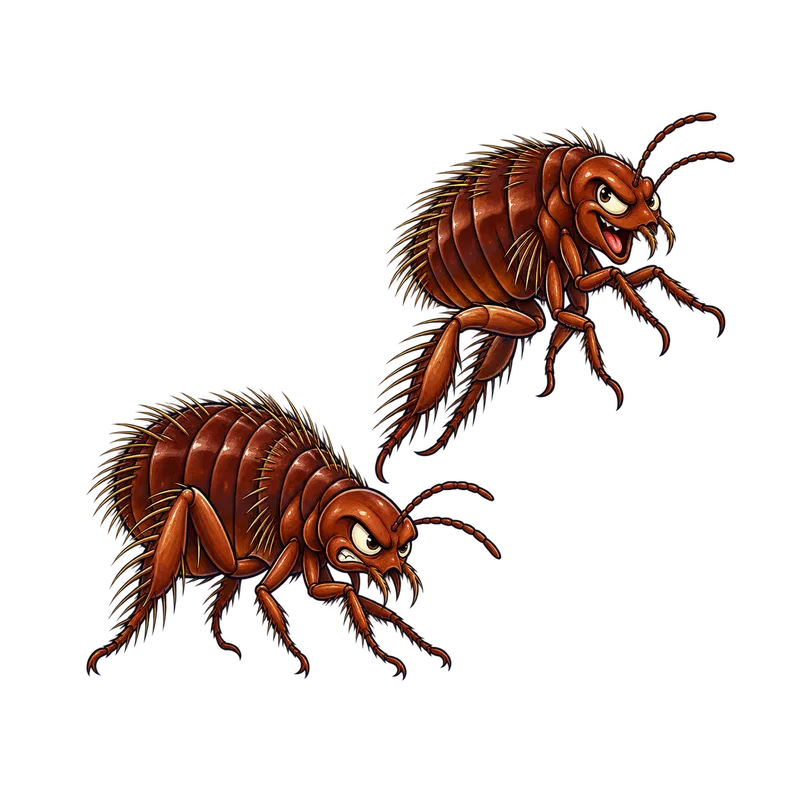
Fleas in a pet-free home usually come from lingering pupae left behind by a previous occupant's dog or cat, which hatch when they sense your body heat and footsteps. They can also arrive when wild animals like mice, rats, squirrels, or raccoons abandon nests in your attic or crawlspace and their hungry parasites wander inside.
What is actually going on
You just moved into a charming rental house that has sat vacant for six months, or perhaps you have lived in your pet-free home for years, only to find mysterious, itchy red welts around your ankles. Naturally, you check for pets, find none, and wonder how on earth fleas found their way inside. It feels like an impossible magic trick, but biology has a straightforward, if slightly unnerving, explanation.
Fleas in a pet-free home usually arrive via one of a few sneaky routes. Most commonly, the previous occupants had a dog or a cat, and their final generation of flea eggs dropped deep down into the carpet fibers and floor cracks. Those fleas did not just die off. Instead, they spun tiny silk cocoons and entered a state of suspended animation, waiting for the right moment to hatch. Think of them as tiny biological alarm clocks lying dormant in the floorboards.
When you walk across that empty floor for the first time, your footsteps send subtle vibrations through the structure. The pupae inside their cocoons sense that movement, along with the warmth of your body and the carbon dioxide you exhale, and they treat it as an all-clear signal. They all wake up and emerge at the exact same time, which explains why a newly occupied house can suddenly seem overrun with hungry adult fleas despite having no furry hosts.
If you have never had pets at all, the culprits are usually hiding just out of sight. Mice, rats, squirrels, or raccoons nesting quietly in your attic, chimney, or crawlspace will happily host fleas, bird mites, or rodent mites. When those wild animals move on or pass away, their hungry parasites abandon the empty nests and wander down through wall voids and ceiling gaps into your living areas looking for a meal.
How to tell for sure
Before you start tearing your house apart or buying bottles of spray, you need to know what you are actually looking at. Do not rely on how your skin feels. Human immune responses to insect and arachnid bites vary wildly, and a large percentage of people show no visible reaction at all to blood-feeding bites. Identifying a pest by a red mark on your arm is usually a guessing game that leads nowhere.
Instead, look for physical specimens. Adult cat fleas are small, measuring less than four millimeters long, reddish-brown, and flattened side-to-side rather than top-to-bottom. If you nudge them, they usually jump rather than crawl. However, biting pests in pet-free homes are frequently misidentified. You might actually be dealing with bat bugs, bird mites, rodent mites, or microscopic oak leaf itch mites drifting in from a tree outside.
To tell the difference between close relatives like bed bugs and bat bugs, you usually need a ten-power hand lens or a digital pocket microscope. Entomologists look closely at the tiny hairs right behind the insect head. Bat bugs have fringe hairs that are as long as or longer than the width of their eye, while common bed bugs have much shorter hairs. If you want to collect samples safely, press a strip of clear adhesive tape over a crawling insect or slip a thin nylon stocking inside your vacuum hose to trap a specimen without squishing it.
What usually comes next
Once you capture a physical specimen, your next practical decision is figuring out whether you are dealing with lingering flea pupae from an old pet or an active wildlife intrusion in your roof space. If you find fleas and the house used to have animals, your strategy will focus on cleaning up the dormant generation left behind. If you find mites or bat bugs, spraying your carpets will not help because the root cause is hiding in an attic or a wall void.
For fleas and general debris, systematic vacuuming is your best friend. Go over every square inch of your carpets, rugs, baseboard crevices, and upholstered furniture. The crucial step happens the second you finish. Immediately seal your vacuum bag inside a heavy-duty plastic bag and throw it in an outdoor trash bin. If you leave the bag sitting inside the vacuum, the insects and their eggs will simply crawl right back out through the hose.
For washable items like bedding, rugs, and curtains, thermal laundering does the trick. Toss them into a washing machine using water heated to at least one hundred twenty degrees Fahrenheit, and run the dryer on high heat for twenty to thirty minutes to eliminate every life stage.
When to get help
There are times when a do-it-yourself approach is simply not enough and you need to hand the reins to a professional. If wild animals have taken up residence in your attic or crawlspace, you need a licensed wildlife control operator. In many regions, bats and certain migratory birds are protected by strict state and federal conservation laws, meaning you cannot legally disturb active nests, remove nursing bats during maternity season, or spray prohibited areas.
Regarding chemical treatments, remember that the product label is the law. Never invent your own mixture ratios, and never use total-release foggers, often called bug bombs. University extension services and safety authorities consistently warn against them because they fail to penetrate hidden wall voids and instead drive pests deeper into your home while creating severe chemical and fire hazards.
If you or anyone in your household develops intense skin irritation that refuses to settle down, or if the bite sites show signs of secondary bacterial infection from scratching, step away from the pest control guides and talk to a primary care clinician or an urgent care center. When the infestation spans multiple apartments through shared wall voids, or when you simply cannot pin down the source of the biting pests, calling a licensed pest management professional is usually the fastest way to get your home back.