
How do you get rid of fleas in the house?
To get rid of fleas in the house, you must treat your pets, floors, and laundry all on the same day. Vacuum your carpets to suck up eggs and debris, wash all pet bedding in hot water, and apply a targeted spray containing an adulticide and an insect growth regulator.
What is actually going on
You walk across the living room rug in your socks, and a split second later, three tiny black specks launch themselves toward your ankles with impossible speed. That is usually how you find out you have company. Getting rid of fleas in the house is not a matter of grabbing the nearest aerosol can and spraying the baseboards until your eyes water. If you want them gone, you have to treat the whole mess at once, including your pets, your floors, and your laundry, all on the same day.
Think of a household flea infestation like an iceberg. The adult fleas you spot crawling on your dog or jumping at your shins make up only about five percent of the actual population. The other ninety-five percent are hiding right under your nose as eggs, larvae, and pupae tucked deep inside your carpets, upholstery seams, and floorboard cracks. As your cat or dog wanders around, they act like a walking salt shaker, dropping tiny white eggs that slide out of their fur and pepper the living room rug, the hallway, and the cushions of your favorite armchair.
Those eggs hatch into small worm-like larvae that avoid the light and burrow straight down into the fibers. They do not drink blood directly. Instead, they survive by eating organic dust and flea dirt, which is the dried, digested blood excreted by the adult fleas living on your pets. Once they eat their fill, they spin a silk cocoon and enter the pupal stage. This is where most do-it-yourself eradication efforts fail because a pupa wraps itself in a sticky coat of dust and debris, acting like tiny Velcro that grips the carpet fibers and shields the insect from many standard surface sprays.
Those cocoons can stay dormant for months, waiting for the right signal. When you walk across the floor, the physical vibration, the radiant heat from your skin, and the carbon dioxide in your breath act like an alarm clock. The adult fleas burst out of their cocoons all at once, hungry and looking for a host. That is why a single cleaning session or a random spray never finishes the job. You have to break a reproductive cycle that is cleverly engineered to outlast your patience.
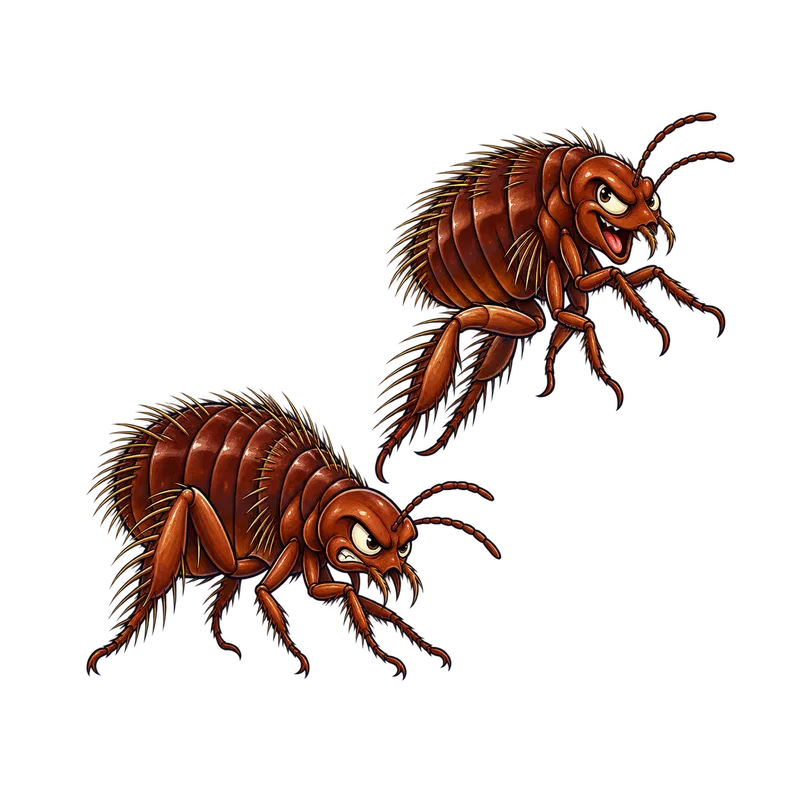
Before you start hauling furniture out to the porch, you need to make sure you are actually dealing with fleas and not something else like carpet beetle larvae or bird mites. Cat fleas are tiny, measuring less than 4 mm long, and they are reddish-brown. If you look at one closely, you will notice its body is flattened from side to side rather than top to bottom, which helps it slip through dense pet fur or carpet pile with ease. They do not have wings, but they possess powerful hind legs that let them jump nearly 12 inches vertically or horizontally. If the bug crawls slowly or has wings, you are looking at a different pest entirely.
You can usually confirm an infestation by checking your pets or combing through their resting spots. Run a fine-toothed flea comb through your dog or cat fur, especially around the base of the tail and the belly. If you see tiny black or reddish specks on the skin that look like ground pepper, drop them onto a wet paper towel. If those specks dissolve and turn a reddish-brown color, that is digested blood, or flea dirt.
You might also find physical evidence in your home without seeing a living insect. If you suspect a room where no pets go, remember that fleas usually arrive via a host animal. If you do not own pets but are finding biting pests, the source is usually wild animals such as rodents, squirrels, or raccoons nesting in a crawl space, attic, or chimney, dropping fleas as they move through the structure. Always catch a specimen on a piece of clear tape to inspect its shape and jumping ability before you buy any treatments.
How to tell for sure
Your single most important practical decision is to stop treating the house and the pet as two separate problems. If you spray every square inch of your carpets but leave your cat untreated, the animal will keep dropping fresh eggs, and you will be right back where you started in 2 weeks. Conversely, if you treat the dog with a veterinary product but leave the 90% of the population developing in your rugs, those new adults will emerge and jump right back onto the newly treated pet, confusing you into thinking the product failed.
To break this loop, you need to coordinate your actions into a single day of synchronized work. Call your veterinarian to get appropriate topical or oral treatments for every single cat and dog in the house, and administer them right away. While those treatments go to work on the animals, you need to turn your attention to the physical environment. Vacuum every inch of your carpets, hardwood floor gaps, and upholstered furniture to suck up eggs, larvae, and debris. The physical vibration of the vacuum cleaner is actually useful here because it tricks dormant pupae into hatching early so they hit the treated surfaces sooner.
Empty your vacuum canister or seal your vacuum bag in a plastic trash bag immediately, and take it out to an outdoor bin. If you leave the bag sitting in the kitchen pantry, the live fleas and larvae inside will simply crawl right back out through the hose. Follow this by washing all pet bedding, throw blankets, and cushion covers in hot water, drying them on high heat for at least 20 minutes to kill anything lingering in the fabric. Only after your floors are clean and your pets are treated should you apply a targeted premise spray containing an adulticide and an insect growth regulator to stop immature fleas from ever reaching adulthood.
What usually comes next
There are moments when a standard weekend cleanup is not enough and you need to hand the reins over to someone else. If your home is part of a multi-family building or an apartment complex, fleas can easily migrate through shared hallways or under adjoining walls via roaming pets or foot traffic. Treating your unit alone while your neighbor ignores theirs means the bugs will just march right back through your baseboards. In rental situations, property management often needs to coordinate a whole-building treatment strategy.
You should also involve professionals if the infestation traces back to wildlife. If raccoons, squirrels, or mice have taken up residence in your attic or crawl space, spraying your living room carpet will accomplish nothing. Attempting to trap or remove wild animals yourself can violate state wildlife laws, and disturbing protected nesting birds or bats requires specialized handling. In these cases, contact a licensed wildlife control operator to exclude the animals first, followed by a pest management professional to handle the remaining structural pest population.
When to get help
On the health side, if you or someone in your household develops a severe allergic reaction, a widespread rash, or signs of secondary bacterial infections from excessive scratching, stop worrying about the bugs for a moment and go see a clinician. Flea bites cause itchy red bumps, but broken skin can easily become infected, requiring medical care rather than household remedies. Always consult a veterinarian before putting any chemical product on a cat or dog, as formulations meant for dogs can be severely toxic to cats. When you do use premise sprays, read and follow every word on the product label, and let a licensed professional handle restricted-use chemicals if the infestation defies standard do-it-yourself methods.